
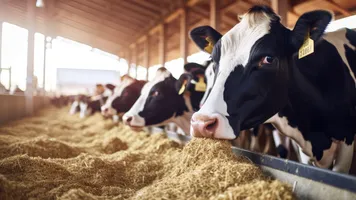
An investigation into the purity of milk distributed across the state has uncovered alarming details regarding the quality of cattle feed sold in the market. Laboratory testing of eight prominent cattle feed brands revealed that 50 percent of the tested brands contain substandard urea, far exceeding the legally permissible limit of 1 percent.
The testing found urea levels ranging from 1.5 to 4 percent in urban centers, while the situation is significantly worse in rural pockets, where up to 80 percent of the cattle feed currently sold contains these elevated, toxic levels of urea. Authorities have so far failed to enforce strict punitive measures against the responsible manufacturers.
Industrial Adulteration Driven by Cost Manipulation
The systemic addition of urea into cattle feed is driven by a desire to artificially inflate protein measurements using cheap substitutes. Instead of utilizing expensive oil cakes and high-quality protein materials, manufacturing companies are substituting them with cheap agricultural-grade urea. While technical-grade urea, which is safe for regulated feed blending, costs between ₹35 and ₹65 per kilogram, manufacturers are opting for highly subsidized agricultural urea, which costs only ₹5 to ₹6 per kilogram.
This substitution allows producers to lower their retail prices significantly, flooding the market with substandard feed that is 20 to 30 percent cheaper than compliant products. Standard, safe cattle feed retails between ₹24 and ₹26 per kilogram, whereas the heavily adulterated, high-urea feed is sold for as low as ₹15 to ₹16 per kilogram. According to market insiders, large volumes of this substandard feed are being transported into Rajasthan from Punjab via Hanumangarh and are being sold under no-name packaging across rural areas.
Severe Consequences for Maternal Health and Livestock Fertility
Medical experts warn that the consumption of milk from animals fed with this adulterated mixture poses an immediate threat to human health, with the most severe impact falling on pregnant women, unborn children, the elderly, and infants. Regular intake of this contaminated milk can disrupt the mental development of fetuses and is linked to a rapid increase in pediatric neurological, kidney, and liver disorders. In adults, the continuous ingestion of these chemical residues severely damages renal and hepatic functions, significantly increasing the risk of chronic kidney disease and malignant cancers.
The contamination has proven equally devastating to the regional dairy sector. Experts have noted that the fertility and reproduction rate among local cattle populations has plummeted by up to 60 percent due to the systematic ingestion of agricultural urea. Legally, technical-grade urea used in animal feed must have a minimum nitrogen content of 46 percent, and its inclusion must never exceed a maximum threshold of 1 percent. Proper feed manufacturing protocols also require blending the mixture with vital micronutrients, including Vitamin A, D3, and E, to bolster the animal’s immune system and ensure food safety.
Lack of Regulatory Oversight Threatens Large Livestock Population
Despite the massive scale of standard violations, regulatory bodies remain completely inactive. The Department of Animal Husbandry, the Bureau of Indian Standards (BIS), and state food safety agencies have failed to monitor or intercept the distribution of these toxic feed batches. Observers warn that if strict enforcement actions are not taken immediately, the situation will spiral from a localized dairy issue into a full-blown public health crisis.
The lack of regulatory oversight is particularly concerning given Rajasthan’s status as the country’s second-largest state in terms of livestock wealth. According to data from the 20th Livestock Census, the state is home to a massive population of 5.68 crore domestic animals, making the safety of its pastoral supply chains critical to the broader regional economy.
