
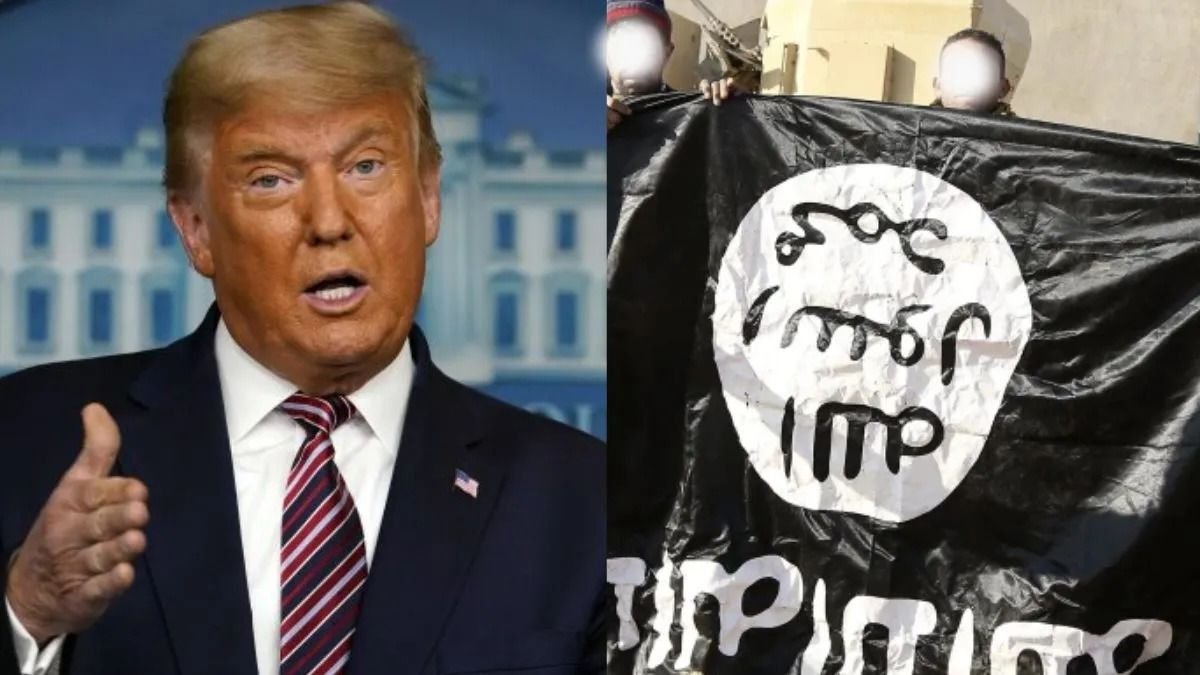
Washington/Nigeria: The United States has claimed a significant breakthrough in its counter-terrorism operations after ISIS’s second-highest global commander, Abu-Bilal al-Minuki, was killed in a joint military operation in Nigeria. US President Donald Trump confirmed the development, stating that the mission was a highly complex and coordinated effort carried out jointly by American forces and Nigerian security agencies.
Joint Operation Targets ISIS Command Structure
According to President Trump, the operation was based on long-term intelligence gathering and aimed at dismantling ISIS’s operational footprint across Africa. He said the action would deliver a serious blow to global terror networks and significantly weaken the group’s command and control structure.
FCRF’s Flagship Cyber Law Certification Returns With a New Four-Week Cohort
US officials identified Abu-Bilal al-Minuki as one of the most influential operational commanders of ISIS in the Sahel region of Africa. He was reportedly associated with the Islamic State West Africa Province (ISWAP) and played a key role in coordinating militant activities across the Lake Chad basin. Intelligence agencies believe he was involved not only in planning attacks but also in managing funding channels and recruitment networks for the group.
The Sahel region, stretching across a vast belt of West Africa, has long been a hotspot for extremist activity and insurgent movements. Officials said al-Minuki was deeply embedded in transnational terror logistics, helping facilitate financial transfers and operational directives across multiple countries in the region.
Long-Term Intelligence Surveillance Led to Strike
The US State Department had already designated him as a “Specially Designated Global Terrorist” (SDGT) in June 2023, following increased surveillance of his movements and communication networks. Since then, intelligence agencies had been tracking his location through coordinated multi-agency efforts.
President Trump described the mission as precise and carefully executed, praising both US and Nigerian forces for their coordination. He said al-Minuki believed he could evade capture by operating in remote parts of Africa, but sustained intelligence surveillance ultimately led to his neutralisation.
Security experts believe the operation could significantly disrupt ISIS-linked networks in West Africa, at least in the short term. However, they also caution that leadership eliminations in such organisations often lead to fragmentation, with smaller factions becoming more aggressive and unpredictable.
Regional Security Agencies Brace for Possible Retaliation
The Nigerian government has also acknowledged the operation, calling it an important step toward improving regional stability. The Sahel has witnessed a surge in terrorist violence, kidnappings, and armed attacks in recent years, placing immense pressure on local governments and security forces.
US authorities stated that the mission was not limited to targeting a single individual but was part of a broader strategy to dismantle interconnected terror ecosystems. Intelligence agencies are now assessing the long-term impact of the strike on ISWAP’s operational capabilities and allied militant groups.
According to security analysts, the operation reflects a modern counter-terrorism approach combining drone surveillance, satellite intelligence, and ground-level human intelligence networks. Experts suggest that similar targeted missions may continue in the future as part of sustained efforts to counter extremist groups globally.
Meanwhile, both US and Nigerian security agencies have intensified monitoring across the region to prevent possible retaliatory attacks. Security forces remain on high alert as they continue to track residual networks and potential splinter groups linked to ISIS operations in West Africa.
