
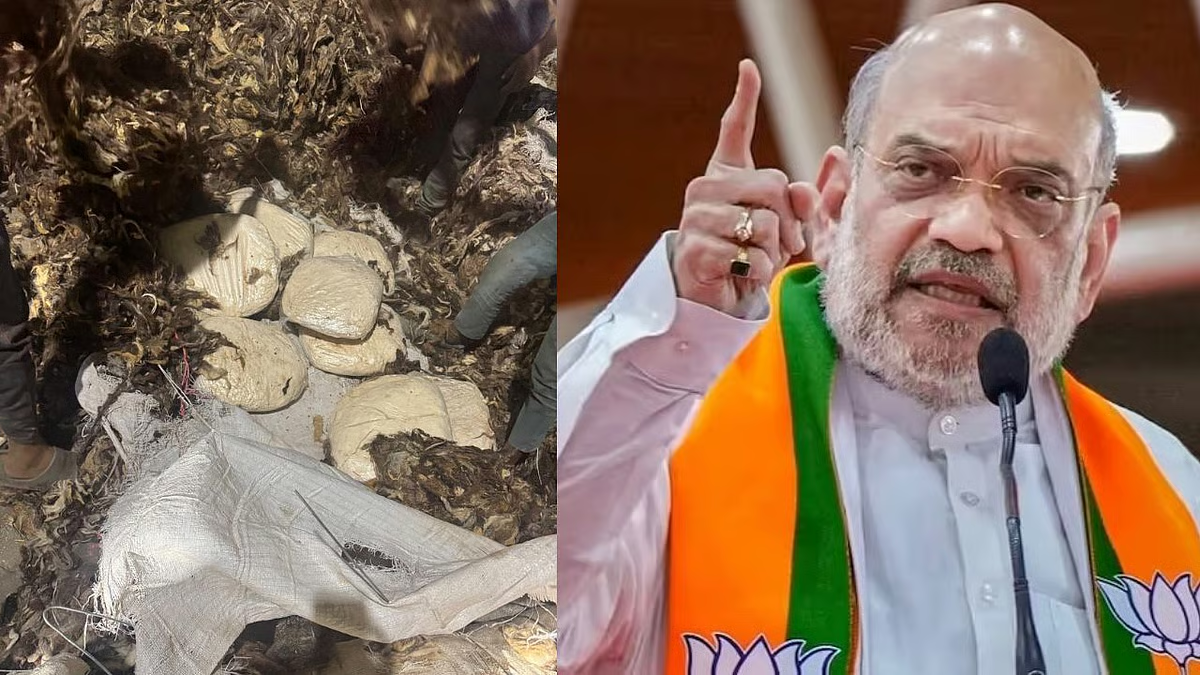
New Delhi: In one of the biggest breakthroughs against international narcotics trafficking networks operating in India, the Narcotics Control Bureau (NCB) has for the first time seized a massive consignment of the highly dangerous synthetic drug Captagon. The coordinated operation, codenamed “Operation Ragepill,” led to the recovery of narcotic tablets valued at approximately ₹182 crore and the arrest of a foreign national. The entire syndicate is believed to be operating from Gujarat’s Mundra Port to multiple locations in Delhi.
Registration Begins for FutureCrime Summit 2026, India’s Largest Cybercrime Conference
200 Kg Captagon Hidden in Tea Packets
According to officials, nearly 200 kilograms of Captagon tablets were recovered in the operation. The consignment had been cleverly concealed inside packets of tea leaves and falsely declared as a shipment of wool. The container was routed through Mundra Port in Gujarat in an attempt to evade detection. However, based on specific intelligence inputs, agencies intercepted the shipment and initiated a detailed inspection, leading to the massive recovery.
Further investigation led agencies to Delhi’s Neb Sarai area, where another linked consignment tied to the same network was uncovered. This confirmed that the syndicate was not limited to India but had an extensive international footprint. Preliminary findings indicate that the arrested accused is a Syrian national who was allegedly operating the entire network from Delhi, coordinating shipments and logistics across borders.
India Suspected as Transit Hub for West Asia-Bound Drugs
Captagon, a powerful synthetic amphetamine-type stimulant, is known for its highly addictive nature and severe impact on mental and physical health. It has often been referred to as the “jihad drug” due to allegations of its use by certain militant groups to enhance aggression, endurance, and reduce fear during combat situations. Security agencies therefore consider it a significant threat to regional and national security.
Officials from the NCB stated that the seized consignment was intended for multiple West Asian countries, particularly Saudi Arabia, with India being used as a transit hub. Investigators are now examining the financial trails, supply chains, and international links associated with the network. Digital transactions, cryptocurrency-based funding, and suspicious shipping routes are also under close scrutiny.
In response to the operation, the central government reiterated its commitment to building a “Drug-Free India.” Authorities emphasized that surveillance at ports and logistics corridors is being strengthened to prevent misuse of India’s trade infrastructure for illicit trafficking activities.
Probe Expands Into International Drug Network
India has witnessed several major drug seizures at its ports in recent years. Between 2020 and 2024, enforcement agencies reportedly intercepted narcotics and illegal substances worth around ₹11,311 crore through maritime routes. This has prompted a significant upgrade in port security systems, container scanning technologies, and intelligence-sharing mechanisms across agencies.
In a related development, the return of international drug trafficker Mohammad Saleem Dola to India has also been seen as a major success for enforcement agencies. Dola had been operating a global drug syndicate from abroad and was previously under an Interpol Red Corner Notice.
Authorities are currently working to dismantle the entire network layer by layer. Officials believe that further investigation may reveal deeper international linkages and expose the extent to which India has been exploited as a transit hub by global drug trafficking syndicates.
