

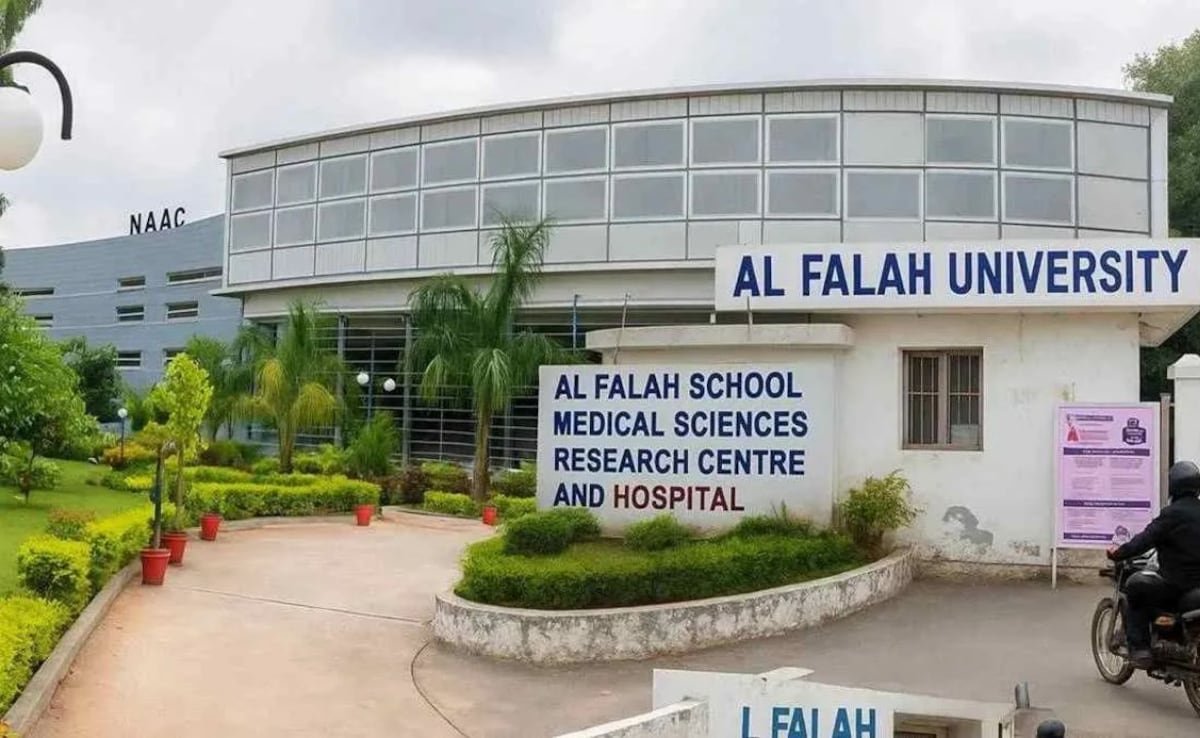
New Delhi: In a significant development in a high-value financial crime case, a Delhi court has denied regular bail to Jawad Ahmad Siddiqui, chairman of Al-Falah University, in connection with an alleged ₹415 crore money laundering case. The court termed the matter a “serious and organised economic offence,” observing that the gravity of allegations does not justify granting relief at this stage.
FCRF Academy Launches Premier Anti-Money Laundering Certification Program
Prima Facie Evidence of Laundering
The order was passed by a bench at the Saket court, which stated that, based on available material, there is prima facie evidence suggesting that the accused generated proceeds of crime and attempted to project them as legitimate through complex financial transactions. The court highlighted that the structure of entities involved, the pattern of fund transfers, and the overall financial trail raise substantial suspicion.
According to the prosecution, the case originates from allegations that the university falsely claimed accreditation from the National Assessment and Accreditation Council and recognition from the University Grants Commission. These representations were allegedly used to mislead students and parents into enrolling in various courses, thereby enabling the institution to collect significant amounts in tuition and related fees.
Investigators claim that between 2018 and 2025, the university and its associated institutions generated over ₹415 crore through such means. Authorities contend that these funds qualify as “proceeds of crime,” as they were allegedly obtained through deception and misrepresentation regarding statutory recognition and academic credentials.
Funds Allegedly Routed Through Linked Companies
The court further noted that the accused, in his capacity as chairman and managing trustee, allegedly misused his fiduciary position by treating educational and charitable institutions as instruments for personal and commercial gain. It was observed that instead of being utilized for institutional purposes, the funds were diverted through a network of companies linked to family members and close associates.
As per the investigation, multiple entities, including construction and business firms, were used to route the funds in layers, a process commonly associated with money laundering. These entities, though formally owned by relatives or associates, were allegedly under the effective control of Siddiqui. The funds were transferred across accounts to obscure their origin and were later invested in movable and immovable assets, both within India and abroad.
Authorities have already attached immovable properties worth approximately ₹139.97 crore in connection with the case. In addition, several shell companies are under scrutiny for their suspected role in facilitating the diversion and concealment of funds.
Bail Plea Rejected
The court also took note of witness statements and financial records indicating that key monetary decisions within the university and its affiliated bodies were made under the direct supervision of the accused. This, the court said, points to an active and decisive role rather than a merely administrative position.
Notably, the accused had earlier been granted interim bail for a limited period on humanitarian grounds. However, during the hearing of the regular bail plea, the court emphasized that the seriousness of the allegations and the scale of the alleged fraud outweigh such considerations at this stage.
The case had initially drawn attention following a separate investigation that triggered a closer examination of the university’s financial records. This led to the discovery of alleged discrepancies, including fund diversion and misleading claims made to regulatory authorities.
