Stay ahead with our breaking stories and exclusive coverage prioritized on Google.
Add The420 on Google →Police in Jharkhand’s Deoghar district have arrested seven suspected cybercriminals accused of supplying fraudulently obtained SIM cards to online fraud networks operating across different states. Investigators believe the group used other people’s identities to obtain mobile connections before selling them to criminals involved in financial scams.
The arrests were made on Friday, November 27, in the Palajori police station area. Police announced the operation on Saturday, November 28, confirming the seizure of 32 SIM cards and eight mobile phones.
According to investigators, four of the suspects came from West Bengal to supply the SIM cards, while three residents of Jharkhand’s Dumka district allegedly travelled to purchase them.
Police said technical examination of the seized devices revealed links to cybercrime complaints registered in different states.
FCRF Launches Certified Chief Risk Officer (CRO) Program for India’s Risk Leaders
Seven Arrested As Police Uncover Interstate SIM Supply Network
The operation followed information received by Deoghar Police about an alleged illegal SIM-card trading network.
Acting on the directions of Superintendent of Police Praveen Pushkar, a team led by Cyber DSP Kailash Prasad Mahato conducted searches in the Palajori police station area.
Police arrested Hasib Momin, Sarjahan Momin, Kamal Momin and Rajababu Momin, all residents of Rampur village in West Bengal’s Birbhum district.
Three other suspects, identified as Azrul Ansari, Nizam Ansari and Sarfuddin Ansari, were arrested from the same location.
They are residents of Khutojori village under Masalia police station in Jharkhand’s Dumka district.
According to police, the four Birbhum residents allegedly obtained SIM cards using identities belonging to people in West Bengal.
The three Dumka residents reportedly arrived to purchase these connections for cyber fraud activities.
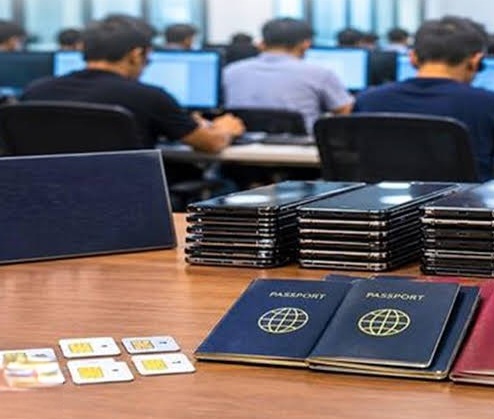
Investigators recovered 32 SIM cards and eight mobile phones from the suspects.
The accused were subsequently questioned by cybercrime investigators and sent to judicial custody, according to local reporting.
However, the authorities have not disclosed the total number of SIM cards previously supplied or the money earned through the alleged operation.
Fake Government Messages Used To Target Bank Customers
The investigation suggests that the suspected network was not limited to selling mobile connections.
According to Dainik Jagran, police questioning revealed that the three Dumka-based suspects were allegedly involved in online fraud using malicious Android application files.
The accused reportedly sent victims messages pretending to relate to government schemes, electricity bills and traffic penalties.
Some messages allegedly referred to PM-KISAN benefits, while others impersonated electricity departments or Regional Transport Offices.
Recipients were persuaded to download Android Package Kit files, commonly called APK files.
An APK file is used to install an application on an Android phone.
While APK files can be legitimate, criminals sometimes distribute malicious versions through messages and unfamiliar websites.
Police suspect the fraudulent applications were used to gain access to sensitive information, including banking details and one-time passwords.
Such information can help criminals attempt unauthorised financial transactions.
However, investigators have not disclosed the number of victims or the total financial losses linked to these particular suspects.
How Fake SIM Cards Help Cybercriminals Hide Their Identity
Mobile numbers play an important role in many online fraud operations.
Criminals use them to create messaging accounts, impersonate customer-care representatives and contact potential victims.
Some also use fraudulently obtained SIM cards to receive verification codes or register accounts without exposing their own identities.
When a SIM card is registered using someone else’s identification details, investigators may initially trace suspicious activity to an innocent person.
This creates difficulties for law enforcement agencies attempting to identify the actual users.
In the Deoghar investigation, police examined the International Mobile Equipment Identity, or IMEI, numbers associated with seized phones.
An IMEI is a unique identifier assigned to a mobile device.
Unlike a phone number, which can change when a SIM card is replaced, the IMEI helps investigators identify a particular handset.
Police said checks involving mobile numbers and device identifiers revealed connections to complaints filed in other states.
However, those links do not independently establish the involvement of every arrested suspect in each reported fraud.
Latest Arrests Follow Earlier Jharkhand SIM Fraud Investigations
The operation comes amid continuing police action against cybercrime networks operating across Jharkhand.
On November 25, Jamtara Police arrested 10 suspects in separate cases involving fake customer-care numbers, malicious applications and SIM-card supplies.
Deoghar Police have also investigated other suspected SIM procurement networks, including a November case involving connections allegedly activated through unauthorised identity use.
These cases demonstrate why investigators are increasingly examining the suppliers of mobile connections alongside people directly contacting fraud victims.
The latest Palajori operation is a separate case, and police have not established whether the arrested suspects were connected to those earlier investigations.
Authorities are now examining where the SIM cards originated, who ultimately received them and whether the network supplied additional cybercriminal groups.
The seized devices may provide further evidence about transactions, communication records and possible victims.
For now, the allegations remain under investigation, and the arrested individuals have not been convicted.
What this means for you:
Never allow another person to obtain or use a SIM card in your name. Avoid installing APK files sent through unexpected messages claiming to offer government benefits, unpaid electricity bills or traffic challans.