
Stay ahead with our breaking stories and exclusive coverage prioritized on Google.
Add The420 on Google →Following the bust of an international cyber fraud and human trafficking network in Noida, Delhi Police have intensified efforts to trace the financial trail behind the operation. The probe comes after 164 foreign nationals, comprising 92 Indonesian and 72 Malaysian citizens, were rescued from a facility in Sector 136. Investigators suspect these individuals were brought to India under false promises of lucrative employment and forced to conduct online scams against their will.
Law enforcement agencies are now working to determine the total amount defrauded through this network, identify the bank accounts where the funds were deposited, and trace the final beneficiaries. Police are also investigating whether cryptocurrency or other financial channels were used to conceal the illicit proceeds and transfer money across international borders.
Job Promises and Forced Cyber Operations
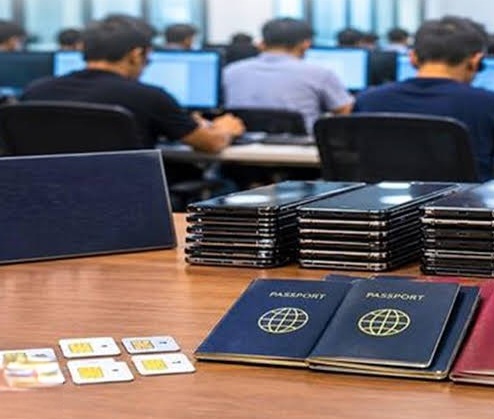
Preliminary inquiries indicate that the foreign nationals were lured to India with offers of attractive salaries and better career opportunities. Upon arrival, their passports were allegedly confiscated and strict restrictions were placed on their movement. They were reportedly compelled to live and work within a designated compound under poor conditions, lacking adequate facilities and proper food.
According to police, the rescued individuals were forced to target citizens in Indonesia and Malaysia using fake investment schemes, suspicious platforms, and mobile applications. Their assigned role involved contacting potential targets and persuading them to deposit money under the guise of investments. Investigators are currently identifying who trained these workers in fraudulent techniques and who directed the overall campaign.
Tracing Bank Accounts and Financial Layers
The Delhi Police Crime Branch is examining bank accounts, shell companies, and financial transactions linked to intermediaries in the case. During the investigation, the name of a firm called SKV Global Ventures surfaced. Police identified a bank account belonging to this company, which was allegedly used to pay rent for the Sector 136 premises and cover operational expenses. The account has since been frozen.
Authorities are working to clarify whether this account merely handled routine call center expenses or formed part of a larger laundering network. Police are mapping transactions across multiple bank accounts to identify senders and recipients, while checking if funds were layered through several accounts to obscure their origin.
Digital Forensics and Local Facilitators
Investigators seized mobile phones, desktops, laptops, and servers from the facility. Forensic analysis is underway to extract call records, chats, contact lists, and transaction logs to determine how many potential victims were targeted. Findings suggest that perpetrators used fake identities and fictitious female social media profiles to befriend targets and lure them into fraudulent investments. Digital records are being scanned for thousands of phone numbers and investment logs.
Police are also probing the roles of Indian facilitators, recruiters, and two suspected operators who arranged housing, transport, salaries, and technical infrastructure. Roughly 40 taxis were reportedly used to ferry the foreign workers between their accommodations and the call center under tight surveillance. Authorities are further checking whether the identity documents of the rescued nationals were misused to open bank accounts, obtain SIM cards, or register companies, while coordinating with Indonesian and Malaysian officials to assess the full scale of the fraud.