
Stay ahead with our breaking stories and exclusive coverage prioritized on Google.
Add The420 on Google →Haryana Police have frozen ₹26 crore and traced another ₹40 crore reportedly returned by banks during an investigation into the suspected diversion of ₹100.85 crore from government panchayat accounts. Investigators are now examining why payment alerts failed to reach local officials and how hundreds of unauthorised transactions bypassed security checks.
The fresh findings emerged on Saturday, November 28, 2026, as police widened their investigation into the alleged cyber fraud involving Punjab National Bank (PNB) accounts belonging to Haryana’s Development and Panchayats Department.
Investigators identified 1,897 suspicious transactions involving 523 bank accounts over six days. Eight people have been arrested, while nearly 70 police personnel are investigating the financial trail.
The investigation has also raised questions about banking oversight, delayed reporting and the possible involvement of insiders.
FCRF Launches Certified Chief Risk Officer (CRO) Program for India’s Risk Leaders
₹26 Crore Frozen As Police Trace More Suspicious Transfers
Police have so far frozen approximately ₹26 crore linked to the suspected fraud and are attempting to secure another ₹10–15 crore.
Investigators have also learnt that transactions involving around ₹40 crore were returned to PNB by other banks after irregularities were detected.
However, authorities have not clarified whether the returned amount overlaps with the money already frozen. The figures should therefore not be added together as a confirmed total recovery.
A senior police officer told The Indian Express that authorities were informed about the suspicious transfers nearly two days late.
According to the officer, quicker reporting might have allowed police to freeze as much as ₹75 crore.
The alleged transactions took place between November 9 and 14, involving accounts used to manage public funds allocated to panchayats.
Police have deployed 10 teams across different states to trace beneficiaries and identify additional suspects.
Nearly half a dozen people have also been detained for questioning.
Mule Accounts Rented For ₹15,000 Used To Move Crores
Investigators have uncovered details of how the suspected fraudsters allegedly moved money through accounts belonging to ordinary citizens.
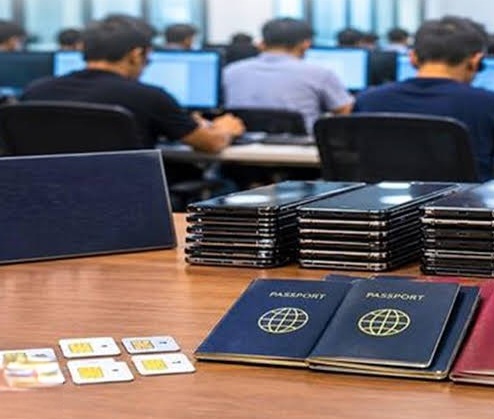
According to police, criminals purchased or rented bank accounts by offering account holders between ₹10,000 and ₹15,000.
In return, the individuals allegedly surrendered control of their bank accounts, mobile SIM cards and ATM cards.
These accounts were then used to receive and transfer suspected fraud proceeds.
Police identified one such account through which transactions worth approximately ₹6 crore were reportedly conducted.
Such accounts are commonly called money mule accounts.
A money mule account allows criminals to move stolen money through another person’s banking identity, making it harder for investigators to trace the original perpetrators.
Some account holders knowingly participate for commissions, while others may be deceived into providing access.
Investigators are now examining the roles of those who supplied accounts and the people who controlled the transactions.
Missing OTP Alerts Raise Questions About Payment Security
One of the most serious findings concerns the apparent failure of transaction alerts.
Police officials said sarpanches were not receiving OTP notifications even when money was being deducted from accounts linked to their panchayats.
Investigators are examining whether the attackers bypassed mandatory digital signatures and multiple levels of payment approval.
A digital signature is an electronic method used to verify that an authorised person has approved a transaction or document.
Haryana’s Fund Disbursement Management System normally requires designated officials to approve payments before money is released.
However, the suspected fraudulent transfers reportedly took place without the required authorisations appearing in the departmental system.
Police are examining whether the breach originated within PNB’s banking infrastructure, the department’s payment portal or software connecting the two systems.
The role of a private technology company operating the payment platform is also under scrutiny.
These possibilities remain under investigation. No particular technical failure or deliberate involvement by bank officials has been conclusively established.
Bank Officials Under Scrutiny As Investigation Expands
Investigators are also questioning why unusually large transfers into beneficiary accounts did not trigger timely warnings to PNB.
According to police, managers at some receiving banks allegedly failed to flag transactions involving substantial amounts.
Officers are examining whether these failures resulted from negligence, weak monitoring or possible collusion.
The investigation follows earlier concerns about the handling of Haryana’s public funds.
In 2026, authorities investigated a separate banking fraud involving government accounts maintained with IDFC First Bank and AU Small Finance Bank.
Following that case, Haryana shifted several panchayat accounts to PNB in June.
The latest suspected fraud has renewed questions about whether security checks were strengthened sufficiently during the transition.
The state government has since ordered wider cybersecurity assessments and daily reconciliation of financial transactions across departments.
Police are also examining possible links with other cybercrime investigations, although no connection has been conclusively established.
For now, the recovery of funds offers some progress, but the central question remains unresolved: how did transactions worth nearly ₹101 crore pass through government-linked banking systems without the required approvals?
What this means for you:
Never rent or sell access to your bank account, ATM card or SIM card, even for a commission. Account holders should enable transaction alerts and immediately report unauthorised debits to their bank and the national cybercrime helpline, 1930.