
Follow us on Google News

A 56-year-old widow from Kolkata has allegedly lost ₹1.78 crore after cybercriminals posing as police officers subjected her to 42 days of intimidation, falsely accused her of drug trafficking and threatened to kill her if she refused to transfer money.
The alleged fraud continued from August 27 to October 7, 2026. The woman, who lives in a government colony in Barisha, Behala, eventually approached police on November 19.
According to a Times of India report published on November 22, the fraudsters used repeated telephone calls and WhatsApp video conversations to frighten the woman into transferring her savings to multiple bank accounts.
The case is particularly disturbing because the criminals allegedly escalated from threatening arrest to issuing direct death threats, leaving the victim afraid to seek help.
Police have registered a case against unidentified suspects and begun examining the financial transactions and international telephone number used in the alleged operation.
FCRF Launches Certified Chief Risk Officer (CRO) Program for India’s Risk Leaders
Fake Drug Trafficking Charges Begin 42-Day Ordeal
According to the woman’s complaint, the ordeal began on August 27 when she received a call from an unknown number.
The caller allegedly impersonated a police officer and accused her of involvement in an illegal drug trafficking case.
The allegation was presented as a serious criminal investigation, creating fear that she could face arrest and prosecution.
Over the following six weeks, the fraudsters allegedly maintained contact and subjected her to repeated threats.
The intimidation intensified between September 30 and October 7, when the accused began contacting her through WhatsApp video calls.
The calls reportedly originated from a number carrying Cambodia’s international country code.
During these conversations, the woman was allegedly forced to remain online under constant virtual surveillance.
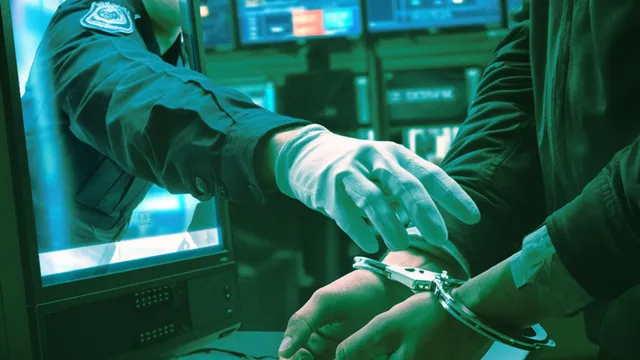
Such tactics are commonly associated with digital arrest scams, in which criminals impersonate law enforcement officials and convince victims that they are under investigation.
However, digital arrest is not a legally recognised procedure in India. Police cannot place someone under arrest simply by ordering them to remain connected through a video call.
Fraudsters Allegedly Threatened To Murder Victim
The case took a more serious turn when the woman reportedly began suspecting that she was being cheated.
Instead of ending the deception, the fraudsters allegedly increased the pressure.
According to her complaint, they threatened to murder her if she refused their financial demands or disclosed the situation to anyone.
The threats allegedly prevented her from seeking immediate assistance.
Fearing for her safety, the woman began transferring money from multiple bank accounts into accounts specified by the callers.
Her husband, who was a doctor, had died, and the money reportedly included her accumulated savings.
Investigators found that approximately ₹1.78 crore was transferred through six major transactions during September and early October.
The payments were made through Real Time Gross Settlement, or RTGS, a banking system commonly used for transferring large amounts of money.
The final reported transaction took place on October 7.
However, the woman did not approach police until November 19, more than a month later.
The complaint indicates that prolonged intimidation had left her mentally exhausted and frightened.
Cambodia-Linked Calls And Bank Accounts Under Investigation
Police have registered a case involving allegations of criminal conspiracy, impersonation, cheating, extortion and criminal intimidation.
Investigators are examining call records, the WhatsApp number used to contact the victim and the accounts that received the money.
They are also contacting banks to trace the transferred funds and identify the account holders.
Although the number reportedly carried Cambodia’s country code, this does not independently establish that the callers were physically operating from Cambodia.
The actual location and identities of the suspects remain under investigation.
No arrests or recoveries have been confirmed in the available reporting.
The case follows earlier investigations involving international digital arrest networks.
In July 2025, a West Bengal court convicted nine people in a separate ₹1 crore digital arrest fraud involving calls linked to Cambodia.
In August 2026, Kolkata Police also investigated a separate case in which a resident allegedly lost ₹3.26 crore to criminals impersonating Mumbai Crime Branch officers.
Neither investigation has been linked to the latest complaint.
Prolonged Digital Arrest Scams Raise Questions About Victim Protection
The Kolkata case highlights how criminals can maintain control over victims through fear rather than physical confinement.
By repeatedly impersonating police officials, making serious criminal allegations and threatening violence, fraudsters can pressure people into transferring their savings.
The alleged 42-day intimidation also demonstrates why victims may delay reporting such incidents.
Investigators will now need to establish who controlled the beneficiary accounts, how the money was moved and whether the callers were part of a larger organised network.
The reported loss remains an allegation supported by the complainant’s account and transaction details cited in the news report. Its full circumstances have not yet been independently established through a publicly available police statement.
For now, the investigation remains focused on identifying the suspects and tracing the ₹1.78 crore allegedly taken from the woman.
No police, CBI or other law enforcement agency can legally place you under digital arrest or demand money to clear criminal allegations over a video call. If someone threatens you, disconnect, contact the police independently and report the incident immediately through 1930 or cybercrime.gov.in.