
Follow us on Google News

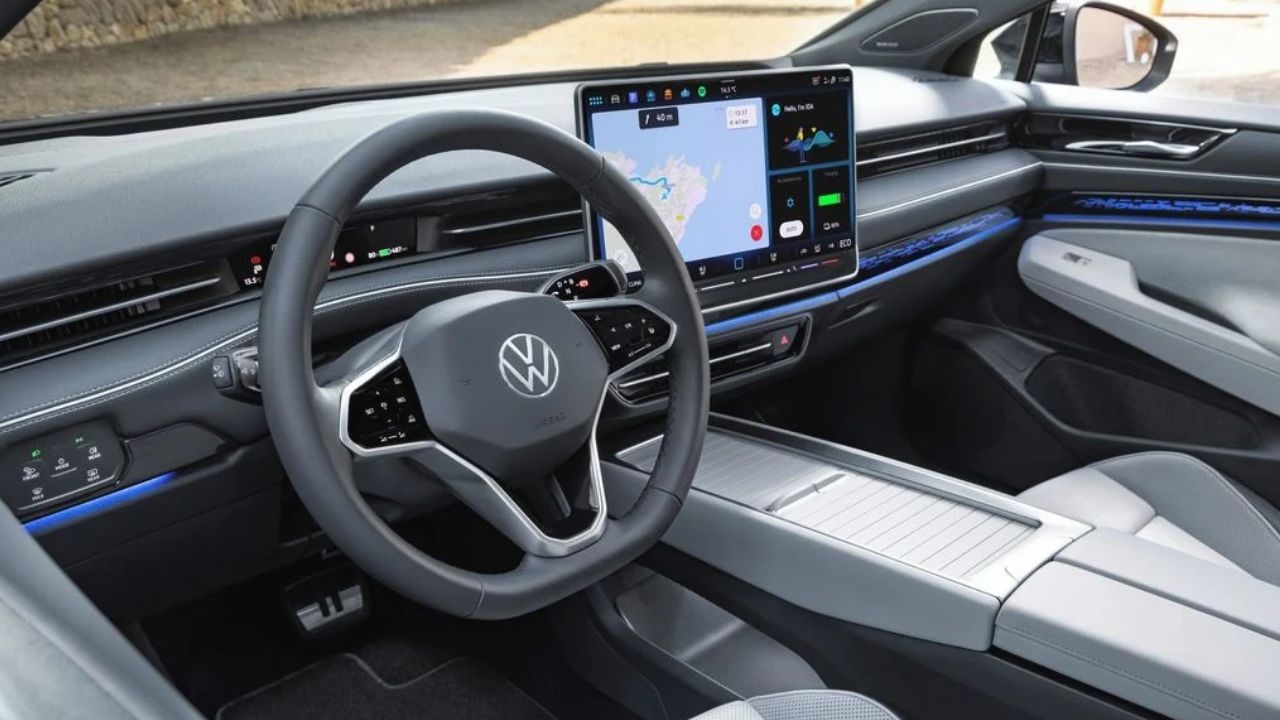
Cybersecurity researchers remotely compromised a Volkswagen ID.4 electric vehicle through Bluetooth-related vulnerabilities, allowing them to track the car, access data from a connected phone, record conversations inside the vehicle and control functions including the heating, windscreen wipers and sunroof.
The researchers demonstrated the attack in a laboratory after discovering a flaw in Volkswagen’s Bluetooth software in 2025. Once they gained initial access, they found that an administrator account had no password, enabling them to expand their privileges and exploit two additional vulnerabilities in the vehicle’s systems.
Volkswagen has said there was no risk to the safety of its customers or vehicles. The company is now rolling out software updates for hundreds of thousands of affected vehicles worldwide, around 18 months after the vulnerabilities were identified.
FCRF Launches Certified Chief Risk Officer (CRO) Program for India’s Risk Leaders
Researchers Accessed Messages, Microphone and Vehicle Location
The Bluetooth vulnerability allowed the researchers to access text messages and contacts stored on a phone connected to the vehicle.
They were also able to use a microphone intended for emergency-service communications to record a conversation between the driver and passenger. The researchers demonstrated that the vehicle’s exact location could be tracked while it was moving.
The compromise extended to the car’s infotainment and comfort systems. Researchers could remotely increase the heating, operate the wipers and sunroof, send a voice message into the vehicle using text-to-speech technology and display a message on the infotainment screen.
The cybersecurity firm said the Bluetooth flaw had been reported to car manufacturers after its discovery, while Volkswagen had to be informed separately about the vulnerabilities affecting its vehicles.
Danila Parnishchev, head of security assessment at the firm, criticised the time taken to address the problem, saying vulnerabilities needed to be fixed more quickly as advances in artificial intelligence accelerated the discovery of security flaws.
Volkswagen, however, maintained that the issue did not create a safety risk for customers or vehicles.
Attack Required Bluetooth Range and Pairing
The demonstrated attack had important practical limitations. An attacker would need to be within Bluetooth range of the target vehicle, potentially by travelling close to it, and the car or its driver would also have to be persuaded to accept the Bluetooth pairing.
Despite those restrictions, the findings highlight the growing cybersecurity risks associated with modern connected vehicles, which increasingly rely on software-controlled systems and over-the-air updates.
Greater software integration allows manufacturers to add functions and distribute updates without replacing physical components, but researchers warn that vulnerabilities can provide attackers with access to multiple vehicle systems once an initial breach succeeds.
The Volkswagen case also demonstrated how a weakness associated with one connectivity feature could potentially expose information beyond the vehicle itself, including data stored on a paired mobile phone.
Automotive Vulnerabilities Rise Sharply in 2026
The findings come amid a broader increase in reported security weaknesses affecting connected vehicles.
According to PCA’s Global Automotive Threat Intelligence Report, 345 new automotive vulnerabilities were discovered during the second quarter of 2026, an increase of 30 per cent from the first quarter.
The number of high-severity findings more than doubled, rising from 75 to 161 during the period.
Researchers have also recently demonstrated attacks against connected vehicles from two other major automakers by bypassing firewall protections and exploiting a default password. Those weaknesses allowed vehicles to be remotely tracked, unlocked and started.
The two manufacturers, which were not identified, fixed the vulnerabilities roughly two hours after receiving the researchers’ findings.
The Volkswagen case underscores the expanding security challenge facing the automotive industry as vehicles become increasingly dependent on connected software. While the demonstrated ID.4 attack required close-range Bluetooth access and successful pairing, the researchers showed that a single entry point could expose vehicle controls, location information, conversations and data from a connected phone.
About the author — Suvedita Nath is a science student with a growing interest in cybercrime and digital safety. She writes on online activity, cyber threats, and technology-driven risks. Her work focuses on clarity, accuracy, and public awareness.