
Follow us on Google News

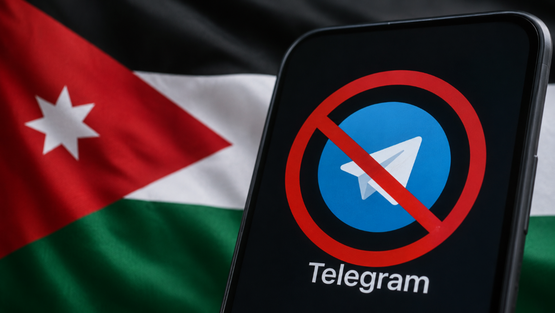
Jordan and Iraq have announced restrictions on messaging platform Telegram over national security concerns, citing the spread of extremist content, illegal activities and alleged failures to comply with domestic regulations.
The decisions, announced on Monday, represent a fresh challenge for Telegram as governments intensify scrutiny of messaging services over criminal activity, online radicalisation and the responsibilities of technology companies to cooperate with law enforcement agencies.
Jordan’s Public Security Directorate said the proposed restrictions were intended to protect society from content and activities that could threaten public security. Iraqi authorities separately accused Telegram of failing to address content that violated the country’s laws.
The developments come amid wider international investigations involving Telegram and its founder, Pavel Durov, although the company has consistently denied allegations that it fails to meet its legal obligations.
FCRF’s Chief AI Officer Certification Returns on November 14 to Prepare Future AI Leaders
Jordan Cites Extremism And Security Threats Behind Telegram Restrictions
Jordanian authorities said the decision to block Telegram was intended to prevent the platform from being used to facilitate cybercrime, threats, extortion and the distribution of extremist material.
The Public Security Directorate said such content could threaten national security and public order, adding that the measure was being pursued under existing legislation.
The agency also urged citizens to exercise caution when interacting with unfamiliar accounts, links and groups on social media platforms.
The announcement follows two serious security incidents in Jordan in recent weeks.
In October, an attack on a church in southern Jordan killed nine people, prompting a major security response. Jordan subsequently carried out airstrikes against suspected Islamic State militants in neighbouring Syria.
On November 5, a security officer was killed and another injured in a stabbing incident in the capital, Amman, which authorities described as a terrorist attack.
No organisation has claimed responsibility for either attack.
While the restrictions were announced against this security backdrop, authorities have not publicly established that Telegram was directly used to organise either incident.
The distinction is important because the platform’s historical misuse by extremist groups does not, by itself, establish its involvement in particular attacks.
Iraq Gives Telegram 30 Days To Address Content Violations
Iraq announced similar restrictions, with its Media and Communications Authority accusing Telegram of failing to comply with Iraqi laws and regulations.
According to the regulator, the messaging company had not taken sufficient measures to address content considered unlawful under the country’s rules.
Iraqi authorities said the restrictions were intended to compel Telegram to review locally accessible material and introduce safeguards against further violations.
The regulator gave Telegram 30 days to comply with its requirements but did not specify what would happen if the company failed to act within that period.
Iraq has previously restricted access to the platform.
In August 2023, authorities temporarily blocked Telegram, citing national security concerns and allegations involving the exposure of sensitive government information and citizens’ personal data.
Access was restored approximately one week later after Iraqi authorities said the company had responded to security requirements.
The latest move therefore renews a dispute over the responsibilities of international messaging services operating within Iraq.
It also raises questions about how governments can enforce local content regulations against platforms whose users, infrastructure and management operate across national borders.
Telegram Faces Increasing Scrutiny Over Criminal Misuse
Telegram has become an important communication platform for individuals, businesses, news organisations and online communities because of its large group functionality, channels and file-sharing capabilities.
Those same features can also be exploited by criminal organisations to distribute fraudulent investment offers, stolen information, malicious software and extremist propaganda.
Militant groups, including Islamic State, have previously used Telegram and other messaging platforms to distribute statements and publicity material.
However, the presence of unlawful activity on a platform does not establish that its operators knowingly support or participate in those activities.
The company did not immediately respond to Reuters’ request for comment on the latest decisions by Jordan and Iraq.
Telegram founder Pavel Durov has faced investigations in several countries concerning allegations that the service has been used for criminal purposes.
In July 2026, Russian authorities said they had charged Durov with facilitating terrorist activity, alleging that Ukrainian intelligence operatives had used Telegram to organise attacks inside Russia.
Durov denies wrongdoing and maintains that Telegram has fulfilled, and in some cases exceeded, its obligations to moderate content and cooperate with law enforcement.
The allegations remain distinct from any established finding that the platform itself has committed a criminal offence.
Messaging App Restrictions Raise Questions Over Digital Rights
The decisions by Jordan and Iraq reflect a continuing debate over how governments should respond when communication platforms are used for activities that threaten public safety.
Authorities argue that restrictions may be necessary when companies fail to remove unlawful material or cooperate with investigations.
However, blocking an entire messaging service can also affect ordinary users who rely on it for personal communication, business transactions, journalism and access to information.
The effectiveness of such restrictions depends on their implementation, the availability of alternative services and whether users can circumvent technical blocks.
Neither announcement establishes that all users in both countries have already lost access to Telegram. The precise implementation and duration of the restrictions remain unclear from the initial official statements.
For India, the developments are relevant to continuing discussions over intermediary accountability, cybercrime investigations and the responsibility of messaging platforms to act against unlawful content.
Indian authorities have repeatedly warned about the misuse of messaging applications for investment fraud, phishing, impersonation and the distribution of malicious software.
However, the actions announced by Jordan and Iraq do not indicate any corresponding decision by India to restrict Telegram.
What This Means For You:
Users should avoid unfamiliar Telegram groups, suspicious links and unsolicited financial offers, regardless of whether a platform is restricted in a particular country. Businesses using messaging applications should maintain alternative communication channels in case regulatory action affects access.