
Follow us on Google News

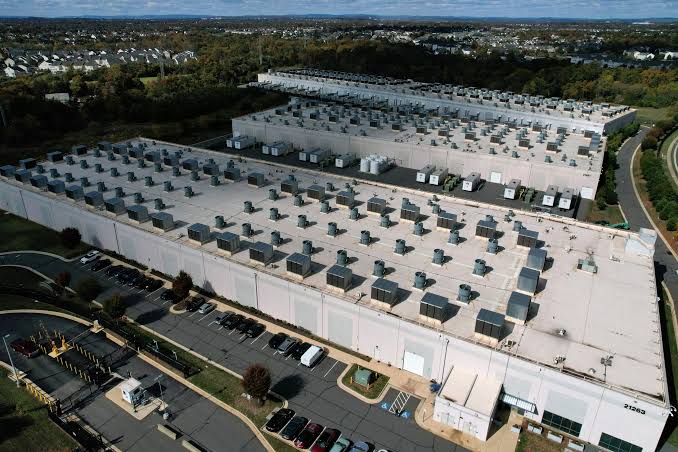
The rapid expansion of artificial intelligence and cloud computing infrastructure in the United States is generating carbon emissions comparable to those of an entire country, according to a new peer-reviewed study by researchers from Harvard University and other institutions.
Published on Monday in the journal Nature Sustainability, the study estimates that 403 hyperscale data centres operating across the United States generated approximately 25.7 million tonnes of carbon dioxide emissions between May 2024 and April 2025, an amount comparable to Denmark’s annual emissions.
The findings come amid growing concerns about the environmental consequences of artificial intelligence infrastructure, particularly the increasing dependence on fossil fuels to meet the electricity requirements of large-scale computing facilities.
The research also raises questions about the transparency of technology companies’ environmental disclosures as governments worldwide compete to attract investment in AI infrastructure.
FCRF’s Chief AI Officer Certification Returns on November 14 to Prepare Future AI Leaders
US Data Centres Consume Nearly 2% Of National Electricity
The researchers estimated that the 403 hyperscale data centres consumed approximately 82 terawatt-hours of electricity during the study period, accounting for around 1.8% of total US electricity consumption.
Depending on assumptions about how intensively the facilities operated, estimated electricity consumption ranged between 68 and 99 terawatt-hours. Associated carbon dioxide emissions ranged between 21 million and 31 million tonnes.
The central emissions estimate was approximately three times higher than the level recorded in an earlier peer-reviewed assessment of data centre emissions in 2018.
Hyperscale data centres are large computing facilities designed to support extensive cloud services, artificial intelligence applications and other digital operations. They house thousands of servers that require substantial electricity for processing information, storing data and maintaining cooling systems.
Unlike conventional office buildings, these facilities operate continuously and require highly reliable electricity supplies.
The increasing deployment of powerful graphics processing units for AI training and other computational tasks has further intensified their energy requirements.
Importantly, the study does not attribute all electricity consumption to artificial intelligence alone. Hyperscale facilities also support conventional cloud computing, enterprise applications and other internet-based services.
Fossil Fuels Supply More Than Half Of Electricity Requirements
The study found that fossil fuels supplied approximately 54% of the electricity attributed to the hyperscale data centres examined.
Natural gas remains an important source of electricity for these facilities, despite commitments by major technology companies to reduce emissions and expand renewable energy procurement.
Researchers also identified significant geographical differences in electricity consumption and associated emissions.
Virginia, Oregon, Ohio and Iowa collectively accounted for more than half of the electricity consumed by the facilities included in the study.
The environmental consequences of a data centre depend partly on the sources of electricity available in the region where it operates.
A facility drawing power from a grid dominated by renewable or nuclear energy may generate substantially lower electricity-related emissions than a similar facility operating in a region heavily dependent on fossil fuels.
The study estimated an average carbon intensity of approximately 314 grams of carbon dioxide per kilowatt-hour for the facilities examined, compared with a national electricity generation average of approximately 348 grams.
This suggests that although hyperscale data centres generate substantial emissions because of their enormous electricity requirements, their average electricity supply was not necessarily more carbon-intensive than the national grid.
AI Infrastructure Expansion Raises Pressure On Energy Systems
The findings arrive as electricity demand from data centres continues to increase worldwide.
The International Energy Agency’s updated assessment projects that global data centre electricity consumption could rise from approximately 485 terawatt-hours in 2025 to 950 terawatt-hours by 2030.
Electricity consumption specifically associated with AI-focused facilities is projected to triple during this period.
The expansion is creating challenges for electricity utilities, which must accommodate large industrial-scale customers while maintaining reliable and affordable power supplies for households and existing businesses.
In the United States, opposition to new data centre projects has intensified over concerns about electricity prices, environmental impacts and the additional infrastructure required to support these facilities.
Several candidates advocating stronger regulation or temporary restrictions on data centre construction secured victories in the November 3 midterm elections.
The latest research also coincides with discussions at the COP31 climate conference in Antalya, Turkey, where governments and international organisations are examining ways to reduce the environmental footprint of artificial intelligence.
A voluntary clean AI initiative launched during the conference seeks to encourage greater use of clean energy, efficient electricity and water consumption, and improved environmental disclosures.
Findings Hold Lessons For India’s Growing Data Centre Industry
The US experience is particularly relevant to India, where technology companies are expanding cloud infrastructure and investing in AI computing capacity.
Large data centre projects can create employment, support digital services and strengthen domestic computing capabilities. However, they also require long-term access to electricity, cooling infrastructure and reliable transmission networks.
For India, the challenge will be ensuring that additional computing demand does not undermine electricity affordability or wider environmental objectives.
Renewable energy procurement, energy-efficient cooling systems and appropriate selection of data centre locations could help limit the environmental consequences of expansion.
Greater transparency regarding facility-level electricity consumption and associated emissions would also help policymakers evaluate infrastructure requirements more accurately.
The researchers acknowledge that their findings are based on estimated facility consumption rather than comprehensive public disclosures from individual operators.
Moreover, the study period ended in April 2025, meaning the findings do not capture the full extent of subsequent infrastructure expansion.
As AI investment accelerates, the actual electricity requirements of the sector could already be considerably higher than those reflected in the study.
What This Means For You:
Technology companies and policymakers should incorporate electricity availability, carbon emissions and environmental transparency into data centre investment decisions. India’s AI infrastructure expansion should prioritise energy efficiency and cleaner electricity sources alongside computing capacity and technological innovation.