
Follow us on Google News

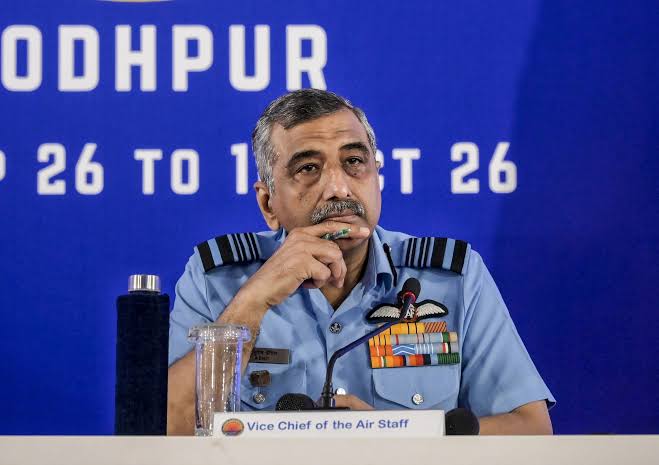
Indian Air Force Chief Air Chief Marshal Ashutosh Dixit has warned that foreign intelligence networks are increasingly using cyber espionage, financial inducements and insider recruitment to target India’s defence establishment, extending beyond conventional honey-trapping operations.
Speaking at the ANI National Security Summit 3.0 in New Delhi on Monday, Dixit said security agencies were closely monitoring threats involving loan sharks, multi-level marketing schemes and other methods of enticing individuals with access to sensitive military information.
His remarks come amid several investigations involving alleged attempts by Pakistani intelligence operatives to obtain classified information from Indian military personnel through social media and other digital communication channels.
FCRF’s Chief AI Officer Certification Returns on November 14 to Prepare Future AI Leaders
Espionage Threat Extends Beyond Conventional Honey Traps
Responding to a question about the vulnerability of India’s defence industry to honey-trapping operations, Dixit stressed that romantic entrapment represented only one element of a much broader intelligence challenge.
“It is basically cyber espionage,” the IAF chief said, explaining that foreign intelligence networks employ multiple methods to manipulate individuals and obtain sensitive information.
He also highlighted the involvement of loan sharks and multi-level marketing schemes, saying authorities were aware of these threats and had put systematic measures in place to address them.
Financial vulnerabilities can create opportunities for intelligence operatives to manipulate individuals facing debt, repayment difficulties or other personal pressures.
Unlike conventional cyberattacks that primarily target computer systems, these operations may focus on establishing relationships with individuals who already possess legitimate access to protected information.
Such approaches can involve fraudulent online identities, promises of financial assistance or investment opportunities and the gradual development of personal relationships.
For defence personnel, even seemingly routine conversations with unknown individuals can become a security concern if they involve operational information, workplace details or access to restricted facilities.
Isolated Military Networks Face Persistent Insider Threats
Dixit said military communication networks are air-gapped, meaning they are physically isolated from the public internet to reduce exposure to external cyberattacks.
However, he acknowledged that foreign intelligence networks were attempting to exploit insider vulnerabilities by targeting individuals with authorised access to military systems.
An air-gapped network is designed to prevent direct communication with external networks. Such systems are commonly used in sensitive environments where unauthorised access could have serious operational or national security consequences.
Physical isolation, however, does not eliminate every security risk.
Sensitive information may still be compromised through unauthorised removable storage devices, infected equipment, improper handling of documents or deliberate disclosure by individuals working within an organisation.
The IAF chief said technical and institutional safeguards were already in place to address such threats.
His remarks underline the importance of combining network security with personnel awareness, access controls and procedures for reporting suspicious approaches.
Recent Espionage Case Highlights Risks To Classified Military Information
The warning follows a recent chargesheet filed by the Delhi Police Special Cell against IAF Wing Commander Manorath Singh Sabharwal under the Official Secrets Act.
Police have alleged that the officer shared classified operational information with a suspected Pakistani intelligence operative after establishing contact through WhatsApp.
According to the chargesheet, the information allegedly disclosed included military deployment details, drone capabilities, operational plans and information concerning combat aircraft movements.
Investigators have also alleged that the officer attempted to install malicious software on a colleague’s mobile phone.
The allegations, which remain subject to judicial proceedings, highlight how personal digital communication can become a channel for intelligence gathering.
In a separate investigation in October, Andhra Pradesh Police arrested Indian Navy sailor Pradeep Mukherjee and a contractual driver in Visakhapatnam over allegations involving espionage.
Mukherjee was allegedly contacted online by a suspected Pakistani operative who developed a relationship with him over several months.
The investigations have renewed concerns about foreign intelligence agencies targeting serving military personnel and individuals working around sensitive defence installations.
Neither case establishes that India’s core military communication networks were directly breached.
Private Defence Companies And Research Laboratories Also Face Risks
Dixit emphasised that cybersecurity precautions must extend beyond military establishments to public-sector research institutions and private defence manufacturers.
He said protective arrangements were already in place for laboratories operated by the Defence Research and Development Organisation (DRDO), with certain measures also covering private-sector organisations.
The IAF chief stressed the importance of using appropriate software and following security guidance provided to defence industry participants.
India’s growing emphasis on indigenous defence manufacturing has increased the involvement of private companies in developing military equipment, software, electronic systems and advanced technologies.
This expansion creates additional responsibilities for protecting sensitive research, intellectual property and technical information across a wider network of contractors and suppliers.
While these organisations may not operate directly within military communication networks, their employees and systems can possess commercially and strategically sensitive information.
Security weaknesses within a contractor’s operations could therefore create risks extending beyond the company itself.
Dixit’s remarks indicate that authorities recognise espionage as a challenge involving both technological vulnerabilities and human behaviour. However, specific details about the safeguards, monitoring mechanisms and institutional arrangements remain undisclosed.
What This Means For You:
Defence personnel and employees of military contractors should exercise caution when receiving unsolicited social media requests, financial offers or requests for workplace information. Organisations handling sensitive defence data should enforce strict access controls, secure software practices and confidential reporting mechanisms for suspected intelligence approaches.