

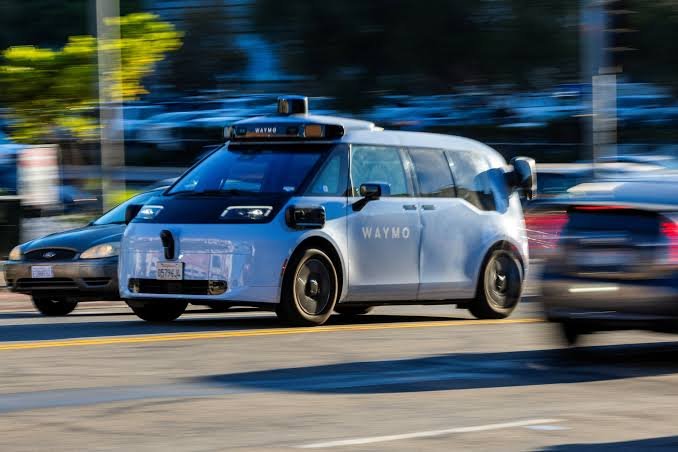

Alphabet-owned Waymo plans to launch its first Canadian robotaxi service in Toronto in 2028, expanding its autonomous ride-hailing business beyond the United States.
The company said it will begin preparing for the rollout immediately by sending vehicles onto Toronto roads for high-definition mapping and supervised testing.
Waymo will initially operate the vehicles with trained specialists behind the wheel.
The company says the staged approach will help its autonomous driving system adapt to Toronto’s traffic patterns, road conditions and weather before passengers are allowed to use the service.
FCRF Launches CP-FRM to Build India’s Next Generation of Fraud Risk Professionals
Toronto Testing Will Begin With Human Drivers
Waymo vehicles are expected to appear on Toronto streets in the coming days.
The first stage will involve manually driven vehicles collecting detailed information about local roads.
Those maps will later be used by the Waymo Driver, the company’s autonomous driving system.
After the mapping phase, Waymo plans to begin testing vehicles in autonomous mode with trained safety operators inside.
Only after that validation work is complete would the company move toward fully driverless operations.
The first public passengers are expected in 2028.
Waymo has received approval to participate in Ontario’s automated vehicle pilot programme, allowing it to begin testing under provincial rules.
Toronto will also present a different challenge from many of Waymo’s existing US markets.
Heavy snow, ice, road salt and rapidly changing winter conditions can make lane markings, signs and road edges harder for autonomous systems to detect.
That makes the Canadian deployment an important test of how well robotaxis can operate in colder and less predictable environments.
Element Fleet Management Will Support Local Operations
Waymo has partnered with Toronto-based Element Fleet Management to support its Canadian expansion.
Element will help manage fleet maintenance and other operational requirements.
Waymo also expects the Toronto programme to create hundreds of jobs over time.
These roles could include fleet maintenance, validation driving, customer service and operational support.
The partnership reflects a strategy Waymo has increasingly used as it expands into new cities.
Rather than operating every part of a robotaxi network itself, the company can rely on local partners for fleet management while retaining control of the autonomous driving technology.
That can make expansion faster and reduce the need to build every operational capability from scratch.
Waymo has already announced or begun expansion into several markets outside its original US cities, including London and Tokyo.
Toronto will become its first planned Canadian market.
What Makes a Robotaxi Different From Driver-Assistance Systems
A robotaxi is designed to operate without a human driver controlling the vehicle during normal service.
That is different from driver-assistance technology used in many modern cars.
Systems such as adaptive cruise control or lane-centering can help a driver but still require the person behind the wheel to remain responsible for the vehicle.
Waymo’s system is designed for fully autonomous operation within areas where the company has mapped and validated the technology.
The vehicle uses cameras, radar, lidar and detailed maps to understand its surroundings and decide how to move through traffic.
Lidar uses laser pulses to measure the distance between the vehicle and surrounding objects.
Combining several types of sensors allows the system to detect cars, pedestrians, cyclists and road infrastructure even when one sensor has difficulty.
Waymo has been operating commercial driverless services in several US cities and is now accelerating its expansion into new markets.
Canadian Rules Still Need to Evolve Before 2028 Launch
The company’s 2028 target is not guaranteed.
Ontario’s existing automated vehicle pilot programme allows approved companies to test autonomous vehicles, but the current framework is scheduled to expire in October 2027.
That creates a regulatory gap between the end of the present pilot programme and Waymo’s planned commercial launch.
Ontario could extend the existing rules or introduce a permanent framework before then.
The province will also need to address questions around insurance, accident responsibility, safety reporting and commercial passenger services.
Those issues become more complicated when no human driver is controlling the vehicle.
Toronto’s dense traffic, streetcars, cyclists and winter conditions could also make the deployment one of Waymo’s more demanding technical tests.
The company says it will work with local authorities as testing expands.
The rollout therefore remains a multi-stage plan rather than a guaranteed 2028 launch date.
Still, the announcement shows that fully autonomous transport is moving from experimental pilots toward broader international deployment.
What this means for you:
Robotaxis are moving closer to mainstream transport, but commercial deployment still depends on local safety rules and successful testing. Toronto will be an important test of whether autonomous vehicles can handle dense traffic and harsh winter conditions reliably.
Follow for daily updates on cybercrime, corporate fraud, DFIR, hacking, investigations, and digital forensics
