

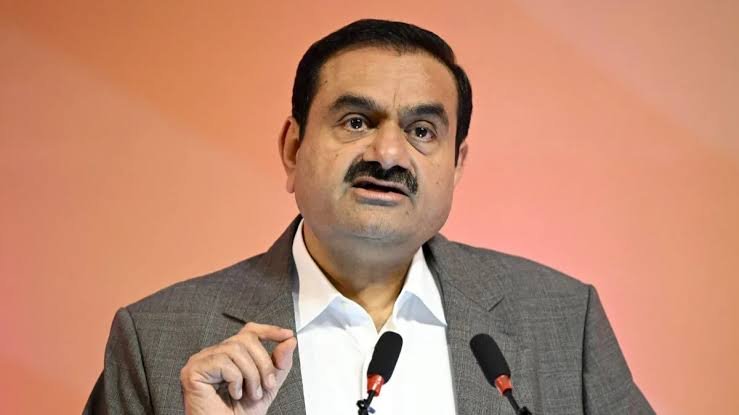

A United States federal court has thrown a fresh wrench into the Department of Justice’s attempt to drop bribery charges against Indian billionaire Gautam Adani. Judge Nicholas G. Garaufis of the Eastern District of New York flagged glaring discrepancies in how the US government resolved the indictment. The judge ordered US Attorney Joseph Nocella Jr. to submit a sworn declaration clarifying his exact role in the decision. This dramatic intervention prolongs a complex legal battle that has captivated financial markets across India.
The case unsealed in late 2024 accused Gautam Adani, his nephew Sagar Adani, and several others of orchestrating a massive bribery scheme. US prosecutors alleged the group planned to pay over ₹2,100 Crore in bribes to secure state solar contracts. Civil proceedings by the Securities and Exchange Commission were settled in May 2026 with the Adanis agreeing to pay a ₹150 Crore penalty. Almost immediately after, the Justice Department moved to dismiss the corresponding criminal charges with prejudice.
The Friction in the Eastern District of New York
However, the federal court refused to immediately allow the government’s request to abandon the prosecution. Judge Garaufis described the department’s brief to dismiss as overly generic and conclusory. The court directed the prosecution to provide a comprehensive explanation for dropping a case of such scale. Under federal rules, the court must satisfy itself that the reasons advanced represent the actual grounds for dismissal.
The Justice Department responded on July 4, characterising the case as a name-and-shame prosecution with little prospect of trial. Principal Associate Deputy Attorney General Trent McCotter argued that since the case was overwhelmingly foreign in character, further resources were unwarranted. McCotter strongly rejected media speculation that Adani’s investment plans in the United States influenced the decision. He asserted that he alone was the sole decision-maker behind the push to withdraw the charges.
The Question of Sole Decision-making Authority
The narrative became more complex when Adani’s defence counsel submitted a fresh declaration containing private email correspondences. Robert Giuffra Jr., representing the industrialist, placed on record a May 11 email from US Attorney Joseph Nocella. In this communication, Nocella rejected a proposal by the joint defence to resolve the charges through commercial investments. The court noted this correspondence directly contradicts the claim that McCotter acted as the exclusive decision-maker.
Judge Garaufis pointed out that Nocella was actively negotiating the resolution just one week before the government moved to dismiss. This apparent contradiction has raised serious concerns within the court regarding the transparency of the administration’s legal strategy. The judge criticised both sides for presenting vital case details in a piecemeal fashion. He remarked that each subsequent disclosure seemed to generate more questions than answers.
The Shadow of a Ten Billion Dollar Pledge
Central to the judicial skepticism is whether Gautam Adani’s public pledge to invest over ₹83,000 Crore in America was linked to the dismissal. Gautam Adani submitted a personal sworn affidavit on July 15, categorically denying any knowledge of such an agreement. He clarified that his investment announcement in November 2024 was made well before the US indictment was unsealed. The billionaire maintained he was entirely unaware of any active criminal or civil proceedings at that time.
However, the court has refused to accept these assurances without further sworn corroboration from the federal prosecutors. Nocella’s May 11 email confirmed that while he rejected the investment-linked settlement proposal, other avenues for resolving the charges were explored. Consequently, the court ordered Nocella to submit a detailed declaration stating if he agrees with McCotter’s reasoning. The US Attorney must also declare under oath whether any unstated grounds influenced the dismissal.
The unfolding drama highlights the delicate balance between prosecutorial power and judicial oversight in international cases. Legal observers note that the court’s insistence on absolute clarity reflects a desire to protect the institutional integrity of the justice system. As the deadline for the sworn statement approaches, the corporate world in India continues to watch closely. The final outcome will determine whether the Adani Group can put its legal challenges behind it.
