
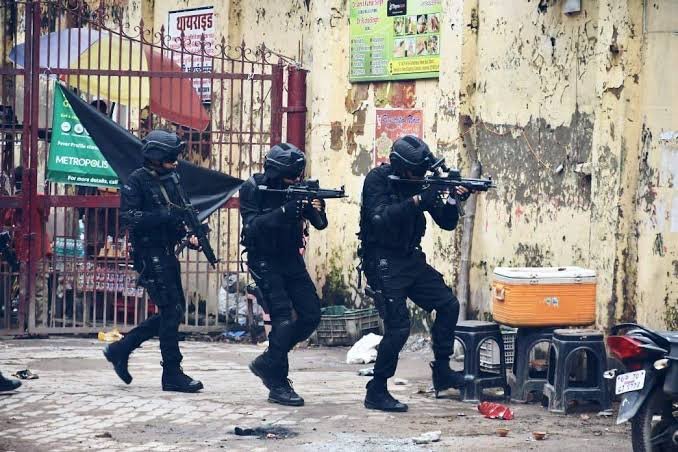
Lucknow, Uttar Pradesh: The Uttar Pradesh Anti-Terrorism Squad (UP ATS) has carried out a counter-terrorism operation leading to the arrest of two suspected terrorists allegedly linked to a Pakistan-based gangster network and the Inter-Services Intelligence (ISI). The arrests were made on May 5 and 6, 2026, from Barabanki and Kushinagar districts, officials said.
The accused have been identified as Danial Ashraf and Krishna Mishra. Investigators said both were allegedly in contact with foreign handlers operating through encrypted social media platforms. The operation is being viewed as part of a broader effort to dismantle online radicalisation and sleeper cell recruitment modules targeting youth in Uttar Pradesh. Authorities stated the module was under surveillance for several weeks before coordinated arrests were executed.
FCRF Academy Launches Premier Anti-Money Laundering Certification Program
Social Media Used to Recruit Youth
Investigators said preliminary findings suggest the suspects were being influenced through Instagram, encrypted messaging apps, and voice calls routed through foreign servers. The handlers allegedly attempted to recruit young individuals by promising financial rewards and portraying violent activities as “heroism.” The duo is suspected of collecting sensitive information, including photographs and videos of police stations and strategic locations, which were shared with handlers based in Pakistan.
Officials added the accused were instructed to identify vulnerable targets and assess security arrangements in public places. Intelligence inputs indicated the network was attempting to establish a sleeper cell structure in the region.
Pakistan-Based Operative Links Under Investigation
Further investigation revealed alleged links to Pakistan-based operative Shahzad Bhatti and an ISI-associated coordination network. Electronic devices seized during arrests contained chat records, video calls, and audio messages suggesting sustained communication with foreign handlers. One accused allegedly requested funds and weapons for a planned attack, while training videos related to target practice were also recovered.
ATS believes the module was in the early stages of operationalisation and attempting to expand across eastern Uttar Pradesh. Officials are verifying financial trails and digital footprints to identify additional members connected to the network.
During the operation, law enforcement recovered a pistol, a country-made firearm, and live cartridges from the accused. These recoveries have been sent for forensic examination. ATS officials stated the accused were radicalised through online engagement and psychological manipulation by handlers.
They were allegedly promised recognition and monetary incentives for disruptive activities. Authorities suspect more individuals may have been recruited through similar online channels and are tracing IP addresses, digital wallets, and communication logs linked to the case.
Agencies Probe Wider Cross-Border Radicalisation Network
Security agencies believe the case reflects a growing trend of cross-border digital radicalisation, where foreign operatives use social media platforms to influence and recruit young individuals in India. The use of encrypted communication, anonymous accounts, and cryptocurrency-based funding mechanisms has made detection complex.
Officials noted such networks often operate in small fragmented cells to avoid detection while maintaining contact with central handlers abroad. The Uttar Pradesh ATS is coordinating with central intelligence agencies to map the entire network and identify potential sleeper cells active in other districts.
A senior ATS official said the investigation is ongoing and more arrests cannot be ruled out as digital evidence is being analysed. The accused will be produced before the court for further legal proceedings, and custodial interrogation is expected to provide additional insights into recruitment methods and operational planning.
