
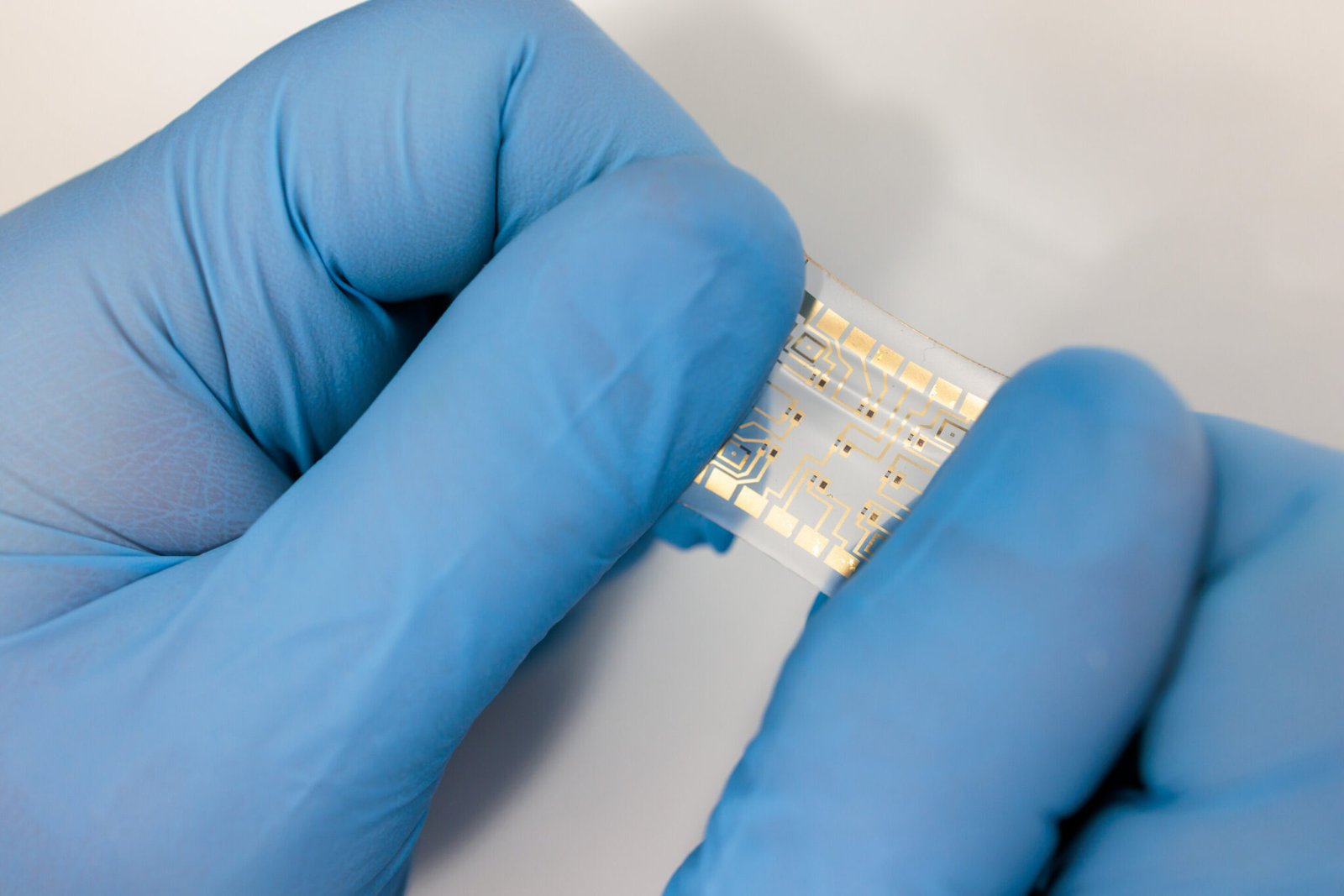

Medical technology is taking a significant leap forward in the space of real-time cardiac monitoring and preventative healthcare. Researchers at the University of Chicago Pritzker School of Molecular Engineering have developed a stretchable, skin-like computing patch capable of detecting life-threatening heart rhythms. Developed in collaboration with the Argonne National Laboratory, this non-invasive device is designed to function as an instantaneous personal doctor for high-risk patients. By monitoring cardiac activity directly on the skin, it overcomes the significant technological barriers that have long limited outpatient heart surveillance.
Most current wearable devices, such as high-end smartwatches and fitness trackers, serve primarily as passive data collectors. These devices must transmit information to external servers or cloud-based systems for interpretation, a process that introduces a dangerous delay of several seconds or even minutes. This latency is entirely unsuited for managing critical medical emergencies like ventricular fibrillation, where the heart’s electrical activity becomes chaotic and potentially fatal.
To resolve this, the new patch utilizes neuromorphic computing to run artificial intelligence algorithms directly on the human body, providing diagnostic results within mere milliseconds.
The system’s performance is driven by thousands of organic electrochemical transistors printed onto flexible, skin-conforming surfaces. Unlike standard computer chips that require rigid silicon, these transistors use a combination of electrical signals and the movement of ions through a specialized polymer gel. This architecture mimics the function of synapses in the human brain, giving each transistor built-in memory that allows the device to physically store and process learned patterns. Because the computation happens at the source, the patch remains highly power-efficient and offers enhanced data privacy, as sensitive health information is never transmitted across unsecure wireless networks.
The device is specifically engineered to address the fast-moving electrical wavefronts associated with cardiac disturbances. Using real cardiac mapping data derived from a donor human heart, researchers demonstrated that the device could locate abnormal electrical wavefront positions with 99.6% accuracy.
Remarkably, this diagnostic precision remains consistent even when the patch is stretched to more than 150% of its resting length. This speed allows for the theoretical application of precise, localized electrical pulses to stop arrhythmias before they can spread across the entire heart, potentially preventing sudden cardiac arrest.
The utility of this stretchable computing platform extends well beyond basic arrhythmia detection. In clinical evaluations, a neural network encoded within the transistor array successfully analyzed a broad spectrum of vital signs and personal health indicators. The system evaluated ECG readings, blood sugar levels, and cholesterol to estimate a patient’s overall heart attack risk with 83.5% accuracy.
Researchers believe that this breakthrough paves the way for a new generation of integrated biosensors. These devices could eventually manage everything from continuous glucose monitoring for diabetes to real-time tracking of electrolyte levels in critical care patients
Follow for daily updates on cybercrime, corporate fraud, DFIR, hacking, investigations, and digital forensics
