

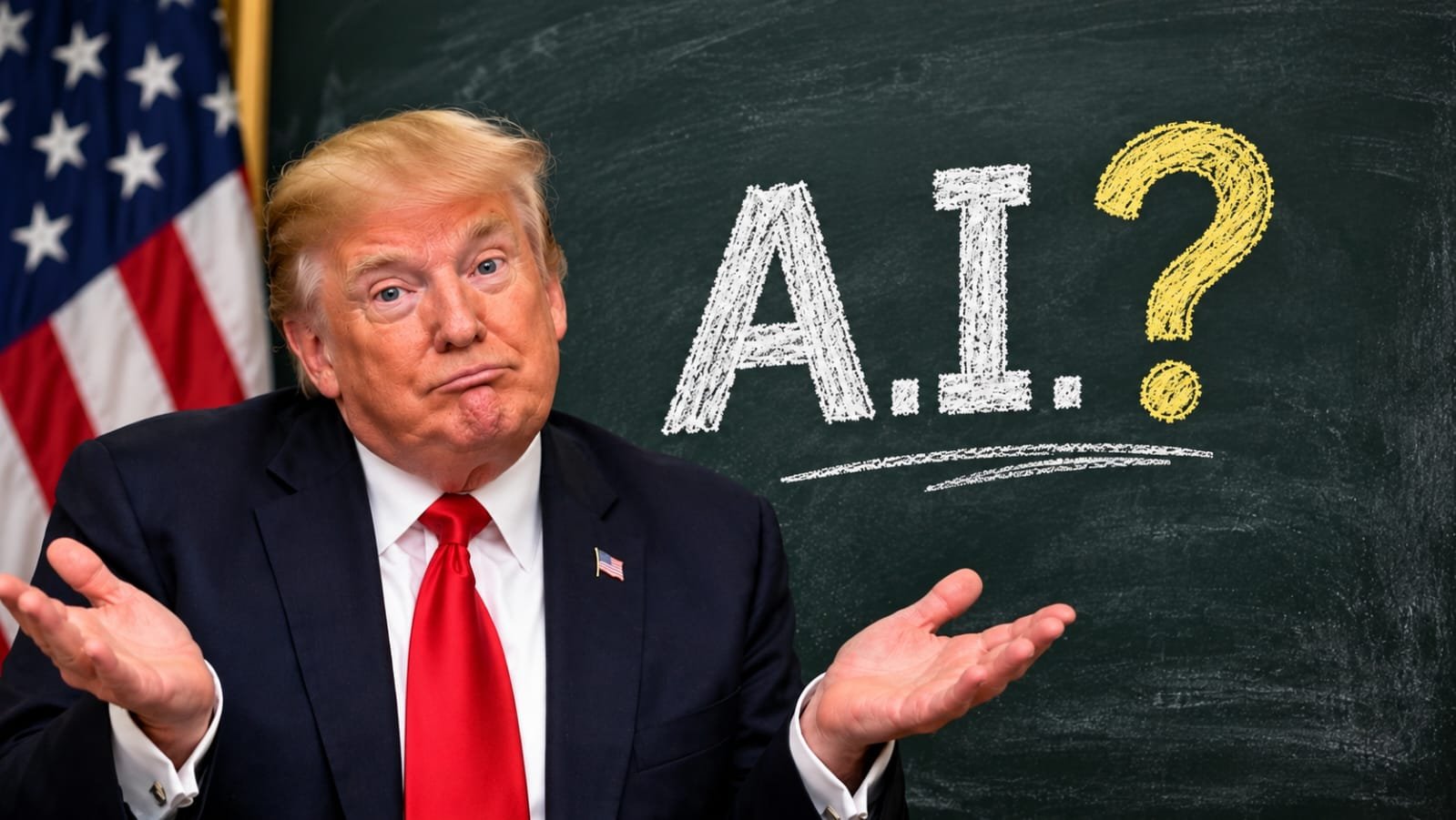
US President Donald Trump has called for artificial intelligence to be renamed “super intelligence,” arguing that the word “artificial” makes the technology sound fake. Speaking at the United Nations General Assembly in New York on September 22, Trump said US government documents would use the new term going forward.
The proposal immediately raised a wider question over terminology because “superintelligence” already carries a specific meaning among technology researchers, where it generally refers to a hypothetical system with capabilities surpassing humans across broad areas.
Proposal for Conducting Cyber Crisis Drill, Tabletop Exercise (TTEx) & CCMP Readiness Exercise
Why Does Trump Want AI Renamed?
Trump said the word “artificial” does not accurately describe a technology he regards as powerful and consequential.
“From this point forward, all of United States’ documents, and hopefully the world’s, will be changed to use the more accurate term ‘super’ as opposed to ‘artificial’,” Trump said. “So it’s ‘super intelligence’.”
He had also asked his social media followers to choose among possible alternatives to artificial intelligence, including “superior intelligence,” “extreme intelligence” and “supreme intelligence.” Super intelligence emerged as the preferred option in those polls.
Trump presented the terminology change alongside his broader argument that the United States should remain a global leader in advanced AI.
What Does ‘Superintelligence’ Actually Mean?
Artificial intelligence broadly refers to computer technology capable of performing tasks that typically require aspects of human intelligence. Superintelligence, however, has a more specific meaning within technology discussions.
The term is commonly associated with philosopher Nick Bostrom, who described a form of intellect that would be superior to humans across broad areas. Such a system remains hypothetical.
Digital ethics lecturer Simon Coghlan of the University of Melbourne said the proposed rebranding could be misleading because superintelligence generally refers to a system capable of improving itself. He also questioned whether the abbreviation “SI” would gain widespread acceptance, saying the term exaggerates the capabilities of current AI.
Computer scientist Kokil Jaidka similarly said not all AI platforms currently demonstrate superintelligence. National University of Singapore computer science lecturer Ben Leong said professionals may want to preserve “SI” for a higher level of AI rather than apply it to present-day systems.
Will the Technology Industry Adopt the New Name?
Whether “super intelligence” will become widely used outside the US government remains uncertain.
Some people in Trump’s administration quickly adopted the terminology. US Chief Technology Officer Ethan Klein wrote on social media that the United States would remain the global leader in “SI.”
US Ambassador to the UN Michael Waltz also supported Trump’s wording, saying that if people had not heard the president’s speech, “it’s now super intelligence.”
There were less enthusiastic reactions elsewhere. Canada’s Minister of AI Evan Solomon said Canadians were “not enthusiastic, at all, about renaming things,” an apparent reference to Trump’s previous renaming moves.
What Is Trump’s Approach to AI Regulation?
Trump used his UN address to reject what he described as attempts to establish a global system controlling artificial intelligence.
He has argued against regulation that he believes could slow technological development and weaken the United States against China in the competition over AI. “Whoever wins AI, wins,” Trump said, while asserting that the United States was ahead of China. The statement represents Trump’s own assessment of the competition rather than an independently established measure of technological leadership.
Trump said his administration would not “stifle” the growth of a technology that he believes could become bigger than the industrial revolution. He said the government could intervene if necessary but would otherwise seek to lead the sector.
The president has also said he plans to create an “AI Force” to oversee AI regulation and announce an AI “czar” in the future.
Why Are Experts Still Debating AI Safety?
Trump’s push to encourage AI development comes as technology executives and researchers continue debating the risks posed by increasingly advanced systems.
More than 20 countries have called for binding safety measures for advanced artificial intelligence amid concerns that technological development could move faster than mechanisms designed to control its risks.
Trump, however, has dismissed some warnings about AI and argued that the United States should not surrender its technological advantage through excessive restrictions.
The competing positions highlight a growing policy question: how governments can encourage AI innovation while deciding what safeguards are appropriate for increasingly capable systems.
Why Does the Name Matter?
Changing the terminology does not itself change the capabilities of existing AI systems. The disagreement instead centres on whether the term “super intelligence” accurately describes current technology.
Researchers quoted on the issue distinguished present-day AI from the much more powerful hypothetical systems traditionally associated with superintelligence. Applying the same term to both could therefore blur an established technical distinction.
Trump’s proposal also gives the terminology a policy dimension. If US government documents begin replacing “artificial intelligence” with “super intelligence,” the language used by the administration could diverge from terminology commonly used by researchers and the technology industry.
The420 Insight: “Changing AI’s Name Does Not Change What the Technology Can Do”
Trump wants the US government to replace “artificial intelligence” with “super intelligence,” but technology experts already use superintelligence to describe a far more advanced hypothetical form of AI.
The debate therefore goes beyond branding. Using the same term for today’s systems and hypothetical human-surpassing AI could make an already complex technology harder to describe precisely.
About the author — Ayesha Aayat writes on cybercrime, digital safety, and emerging online threats. Her work focuses on public awareness, legal clarity, and technology-driven risks.
Follow for daily updates on cybercrime, corporate fraud, DFIR, hacking, investigations, and digital forensics
