
Stay ahead with our breaking stories and exclusive coverage prioritized on Google.
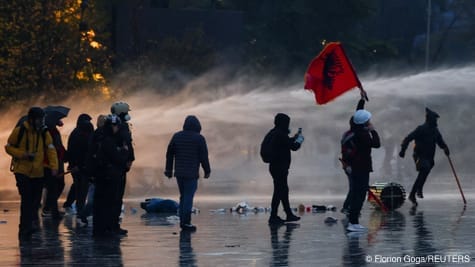
Add The420 on Google →Anti-government protests in Albania turned violent on Saturday as thousands of demonstrators marched through the capital city of Tirana demanding the resignation of Prime Minister Edi Rama. What began as a peaceful gathering escalated when masked protesters threw stones and petrol bombs at government buildings. Security forces responded with tear gas, water cannons, and rubber bullets to disperse the crowds, filling several central streets with smoke and causing widespread disruption.
Demonstrators used wooden sticks to smash glass panels outside ministry buildings and destroy street surveillance cameras. Ahead of the rally, police had tightened security across major routes and set up checkpoints on main roads entering and exiting Tirana. Alongside citizens from across Albania, members of the Albanian diaspora also traveled from abroad to join the demonstration.
Independence Day Marked by Clashes
The protest took place on the 114th anniversary of Albania’s declaration of independence, a public holiday typically marked by nationwide celebrations. Instead of festivities, central Tirana echoed with anti-government slogans as crowds gathered at Skanderbeg Square calling for Rama to step down.
Erion Leshi, 33, who traveled from Britain to attend the rally, said citizens have endured prolonged hardship, forcing many Albanians to migrate to Europe and elsewhere in search of better prospects. He stated that the current political system has failed to meet public expectations and called for a new generation to take over leadership.
Anger Over Corruption, Living Costs, and Emigration
The unrest against Rama’s administration traces back to late May, initially sparked by opposition to a proposed luxury tourism project along Albania’s southern coast. Linked to an investment firm founded by Jared Kushner, son-in-law of United States President Donald Trump, the project drew criticism over environmental concerns and local interests. By September, students joined the movement demanding education reforms and improved living standards, with isolated incidents of violence occurring during student rallies before demonstrations spread to other cities.
Today, protesters are demanding systemic political change rather than the cancellation of a single project. Student demonstrator Juna Vasili noted that daily life has grown increasingly difficult for ordinary citizens, prompting people to take to the streets for their rights. Older citizens and pensioners also joined the march. Retiree Suzana Gjeta stated she was protesting for youth and low-income pensioners, noting her monthly pension of 120 euros, roughly 12,500 rupees, is insufficient. Similarly, 45-year-old engineer Eralda Baje voiced frustration over corruption, poverty, and ongoing emigration, arguing that the political establishment has neglected basic public needs like healthcare and employment.
Government Rejects Allegations and Urges Dialogue
Prime Minister Edi Rama’s government has denied the corruption allegations and appealed to protesters for dialogue. To ease economic pressures, authorities have introduced measures such as subsidized fuel and additional financial aid for low-income families, though these steps have failed to quell public anger.
In power since 2013, Rama secured a fourth consecutive term in last year’s parliamentary elections and aims to bring Albania into the European Union by 2030. However, recurring corruption scandals and analyst concerns regarding organized crime and money laundering tied to drug and arms trafficking continue to shadow his administration. Rama maintains that his government is tackling corruption more aggressively than its predecessors and defended the southern coastal development as legal and environmentally safe. Despite these assurances, Saturday’s violent clashes underscore deep political and social discontent facing the administration.