

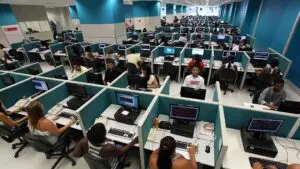
Telangana Cyber Security Bureau (TGCSB) officials have busted an alleged cybercrime network operating through three fraudulent call centres in Delhi, arresting 21 Telugu-speaking women tele-callers and a male bank account holder. Investigators have linked the network to 22 cybercrime cases across Telangana and identified three alleged organisers who are currently absconding.
The call centres had allegedly been operating for about one-and-a-half years and used Telugu-speaking women aged between 25 and 40 to gain the confidence of potential victims. The callers targeted people across Telangana by posing as representatives of Bajaj Finance and offering attractive loan approvals.
Three Call Centres Raided in Delhi
TGCSB officials conducted coordinated raids at three alleged cybercrime call centres in Delhi as part of the operation. Those arrested included team leaders, tele-callers and a bank account holder.
Investigators identified three alleged organisers who owned and operated the call centres and are currently absconding. The centres were operating from Shiva Market in Delhi under separate teams allegedly headed by Lalith Singh, Kuldeep Singh and Anil.
During the raids, officials seized 23 mobile phones and two bank passbooks. Links to 22 cybercrime cases registered across Telangana have so far been established, while further investigation is continuing.
TGCSB Director Shikha Goel said the investigation indicated that the three organisers had allegedly established a structured cyber fraud network by recruiting Telugu-speaking women living in Delhi as tele-callers.
Many of the recruited women were from Korutla in Jagtial district, Saidabad and Borabanda in Hyderabad, and Mahabubnagar district.
Victims Lured With Loan Offers and False Charges
According to investigators, the fraudsters followed a scripted process in which callers allegedly posed as representatives of Bajaj Finance and offered loans to prospective victims.
Once victims showed interest, they were allegedly induced to transfer money under various pretexts, including loan processing fees, verification charges, documentation fees, insurance premiums and other fabricated charges.
After receiving the money, the accused either stopped communicating with victims or continued seeking additional payments by making further false promises regarding loan approval.
Investigators alleged that the use of Telugu-speaking women was intended to establish familiarity and confidence among people targeted in Telangana. Police said cybercriminals are increasingly recruiting regional-language speakers as part of attempts to gain victims’ trust.
Victims Allegedly Threatened When They Sought Refunds
The investigation further found that when victims questioned the transactions or sought refunds, the accused allegedly resorted to intimidation and blackmail.
Goel said victims were threatened with legal action and reputational damage, while their personal information and identity documents were allegedly misused in an attempt to discourage them from approaching police or reporting the fraud.
She urged citizens to independently verify the authenticity of callers and lending companies before paying processing fees, verification charges or other amounts in response to loan offers.
Police also cautioned people against trusting callers merely because they are women or speak Telugu or another familiar regional language, warning that cybercriminals increasingly use regional-language speakers to build trust before carrying out fraud.
