

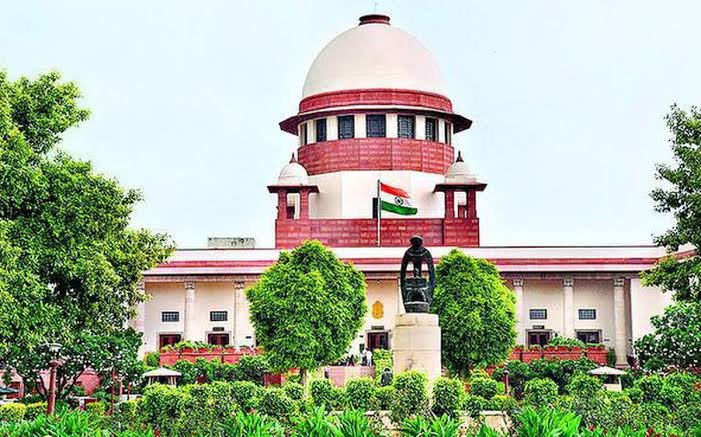

The Supreme Court has pulled up the Uttar Pradesh Police over a slipshod probe that kept an innocent man behind bars for six years as an undertrial in a murder case, directing the state government to pay him ₹6 lakh in compensation. A bench of justices JB Pardiwala and K Vinod Chandran observed that the state police required training in crime investigation methods, holding that six years had been erased from the life of a citizen on the strength of a concocted story built entirely on surmises and conjectures. Stating that the case was a classic example of how an investigation should not be proceeded with, the bench ordered the compensation to be disbursed within one month, failing which the amount will carry an annual interest rate of 18 per cent.
Top Court Castigates Investigating Agencies Over Presumption of Innocence
Castigating both the investigators and the prosecution for failing to establish even the most basic facts of the crime, the bench stressed that investigating agencies cannot view their role merely as securing convictions by whatever means. The court reiterated that investigating and prosecuting authorities are essential stakeholders in the justice delivery system, responsible for ensuring justice not only to victims and complainants but also to those accused of crimes. The judges emphasised that every person arraigned in a criminal case is presumed innocent until proven guilty, and the state cannot shirk its fundamental responsibility to protect its citizens from flawed and arbitrary prosecutions. To ensure institutional correction, the bench directed that copies of the judgment be forwarded to the Director General of Police and the Principal Secretary (Home) of Uttar Pradesh to ensure police personnel receive proper training in lawful investigation methods.
Arrest in 2019 Agra Case Built on Conjectures and Missing Linkages
The matter arose from an October 2019 case registered in Agra district concerning the alleged kidnapping, murder, and destruction of evidence. The man was arrested on November 14, 2019, despite not being named in the first information report or in the initial statement recorded by the complainant. Investigators subsequently implicated him solely on the basis of unclear CCTV footage and the alleged confession of a co-accused. He remained in custody as an undertrial until March 2026, when the Supreme Court, while hearing his bail plea, ordered the trial court to conclude the proceedings within three months. The trial culminated in his complete acquittal after the prosecution failed to substantiate its charges, prompting the top court to scrutinise the records and evidence marshalled during the proceedings.
Catalogue of Failures in Forensic and Electronic Evidence Exposed
Upon examining the trial record, the bench uncovered a comprehensive catalogue of investigative failures that crippled the prosecution from the outset. The prosecution examined only six witnesses, leaving vital links connecting the accused to the alleged crime entirely unproved. The recovered charred bones were never conclusively identified as those of the missing victim, and investigators made no attempt to match the remains through DNA sampling with the victim’s father. Neither the time nor the cause of death could be established through medical testimony, and the claim that petrol was used to burn the body remained unsupported by forensic findings. Furthermore, the findings of the forensic science laboratory regarding the bones were not disclosed at trial. The call detail records produced by investigators lacked the mandatory certificate under Section 65B of the Evidence Act, the CCTV footage remained unproved under the law, and the alleged ransom demand was submitted without any credible evidence.
Follow for daily updates on cybercrime, corporate fraud, DFIR, hacking, investigations, and digital forensics
