
Follow us on Google News

Prime Minister Narendra Modi has stated that artificial intelligence and other emerging technologies are rapidly transforming the functioning of financial markets. While these technological advancements create new opportunities, they also raise critical questions regarding cybersecurity, market transparency, and the protection of investor interests. Addressing the expansion of technology across financial systems, he emphasized that ensuring market security and reliability remains essential.
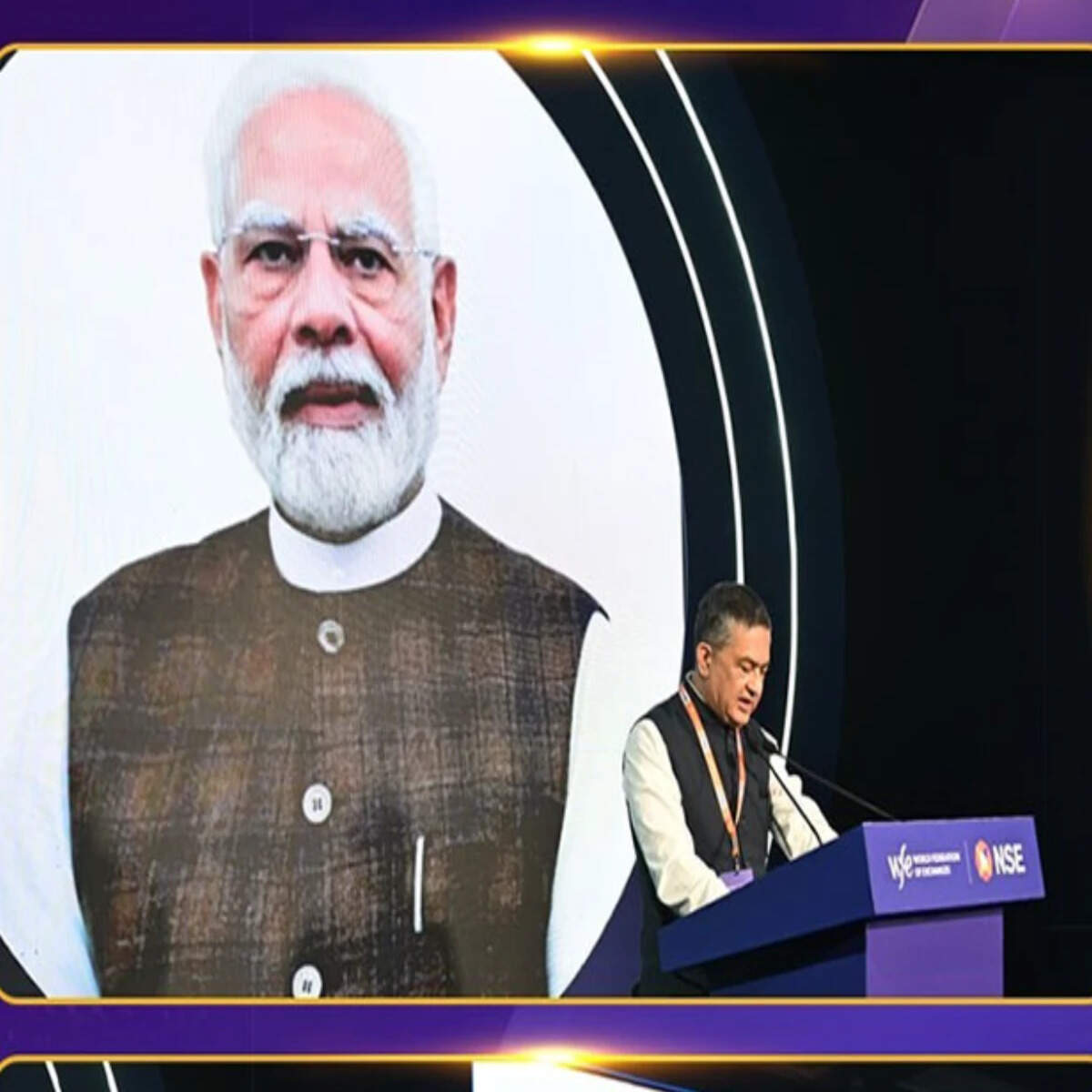
The Prime Minister shared these views in a written message sent for the 65th General Assembly and Annual Meeting of the World Federation of Exchanges, held in Mumbai on Wednesday. The message, originally issued on November 15, was read out at the event by the Managing Director and Chief Executive Officer of the National Stock Exchange. Modi noted that as reliance on technology grows within financial operations, developing robust frameworks to address emerging risks becomes necessary.
Global Market Interconnectedness and Long-Term Capital
Highlighting the changing dynamics of global finance, Modi observed that international financial markets are far more interconnected today than in the past. Because of this close integration, turbulence in one market can quickly spread to others across the globe. Given these rising linkages, he stressed the need for comprehensive preparedness to counter financial instability and new risks, calling for stronger cooperation among nations and financial institutions.
The Prime Minister also underscored the importance of mobilizing long-term capital through financial markets. According to his message, providing sustained capital is vital for projects tied to infrastructure, innovation, new technologies, and sustainable development. Amid global economic shifts and technological expansion, financial markets can play a decisive role in supporting growth across these critical sectors.
India’s Capital Market Growth and Financial Inclusion
Referring to the progress of India’s capital markets, Modi noted that stock exchanges have grown alongside the broader expansion of the national economy. These markets have enabled companies to raise capital and scale their businesses. At the same time, an increasing number of ordinary citizens are participating in capital markets through investment avenues such as mutual funds.
He also described the expansion of banking, insurance, and digital financial services as key drivers of financial inclusion. Digital payment systems like the Unified Payments Interface have played a significant role in widening public access to financial services. Together with improved market infrastructure and easier access to investment platforms, these developments have brought more citizens into the formal financial system. Modi added that India’s experience demonstrates how financial inclusion and financial innovation can mutually reinforce each other, expanding the overall reach of markets.
Trust as the Foundation of Financial Stability
Noting that the World Federation of Exchanges meeting is taking place in India after two decades, Modi said such gatherings offer valuable opportunities for regulators, exchanges, and financial institutions from different countries to deliberate on shared challenges. He remarked that India’s experience in combining technology, financial inclusion, and rising retail participation can contribute meaningfully to global discussions.
In his message, the Prime Minister identified trust as the central foundation for the growth of financial markets. While technology may determine the pace at which markets evolve, trust will always remain essential for the strength and expansion of the entire financial ecosystem. In an era marked by the growing adoption of AI-based systems and digital services, maintaining investor confidence is crucial for long-term market stability. He concluded that technological innovation must go hand in hand with safety, transparency, investor protection, and stronger international cooperation.