

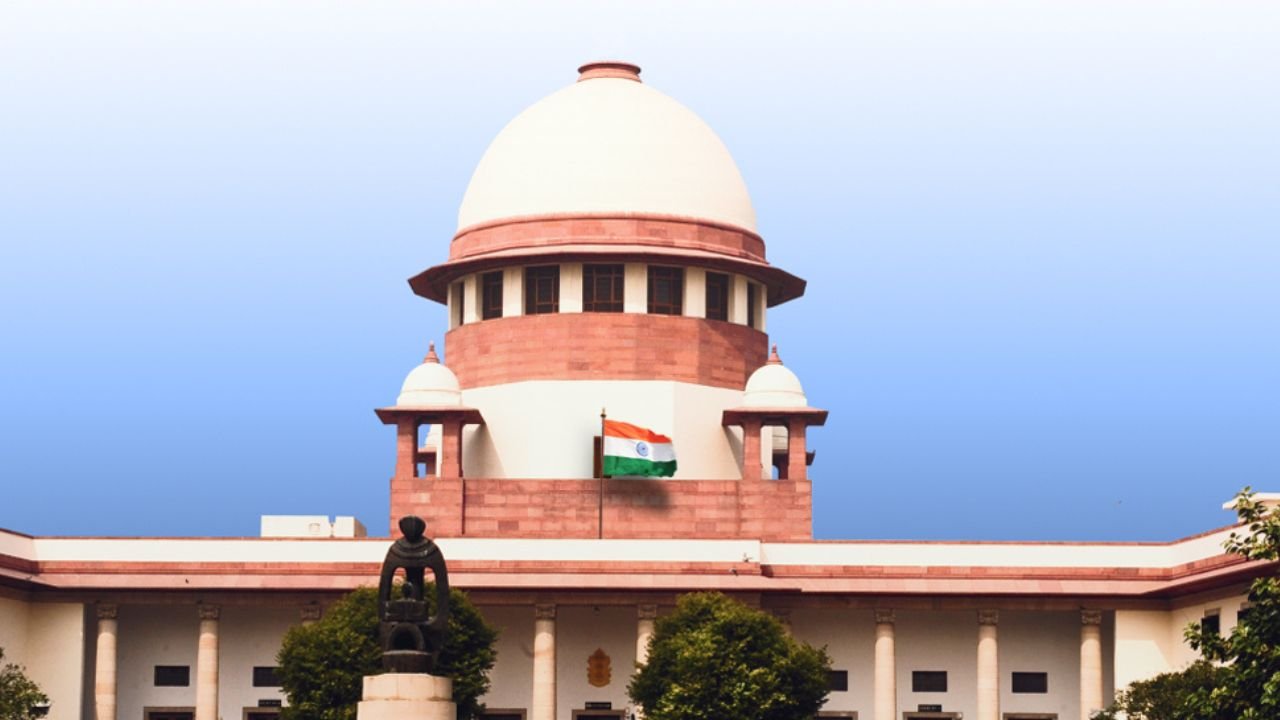

New Delhi | In a significant development involving digital governance and public funds, the Supreme Court has adopted a strict stance by staying the ongoing arbitration proceedings in the alleged ₹37 crore e-challan scam linked to Andhra Pradesh. The dispute concerns the State government and Dataevolve Solutions, the developer associated with the Digi Yatra platform, over allegations of continued system operation and diversion of funds even after the expiry of a formal contract.
Hearing the State’s appeal, the Supreme Court has put a temporary halt on the arbitral tribunal proceedings and issued notice to the company. The court has indicated that when a matter involves public money and potential criminality, it cannot be confined to arbitration alone and may require broader judicial examination.
FCRF Academy Launches Premier Anti-Money Laundering Certification Program
2018 contract at the root of the dispute
The controversy traces back to a 2018 agreement under which Andhra Pradesh Police awarded Dataevolve Solutions the contract to develop and maintain an e-challan software system. The contract was valid for a fixed term of three years and expired on December 31, 2021.
According to the State government, despite the expiry of this agreement, the company allegedly continued operating the system. During this period, significant irregularities were detected in the handling of traffic challan collections, leading to allegations of diversion of approximately ₹37 crore from public funds.
Company claims continuation was approved
Dataevolve Solutions, however, has denied the allegations and maintained that it continued providing services based on oral instructions from the State authorities even after the formal contract ended. The company claims that this arrangement functioned on an ad hoc basis under a revenue-sharing model.
It further argued that disputes later arose regarding payments and reconciliation of accounts, prompting it to seek resolution through arbitration. This led to legal proceedings before the High Court.
High Court order challenged in Supreme Court
The Andhra Pradesh High Court, without delving into the merits of the allegations, appointed a former judge as the sole arbitrator to resolve the dispute between the two parties.
Challenging this order, the State government approached the Supreme Court, arguing that the matter was not merely contractual but involved serious allegations of misuse of public funds and potential criminal offences. It contended that such issues should not be adjudicated through arbitration.
Supreme Court signals stricter scrutiny
Taking note of the State’s arguments, the Supreme Court stayed the arbitration proceedings at the preliminary stage. The court emphasized that cases involving public exchequer and alleged misuse of digital systems require deeper investigation beyond private dispute resolution mechanisms.
The move reflects a clear judicial intent to prioritize accountability and transparency in cases where government funds and public-facing digital platforms are involved.
Questions over digital governance systems
The case goes beyond a contractual disagreement and raises broader concerns about the reliability and oversight of digital governance systems. Platforms like e-challan systems directly interface with citizens and involve substantial financial transactions on a daily basis.
Experts point out that without robust auditing and monitoring mechanisms, such systems may become vulnerable to misuse, leading to financial losses for the public exchequer.
Investigation and next steps
The matter will now proceed before the Supreme Court, where it will be determined whether the dispute falls within the realm of criminal investigation or requires an alternative legal framework for resolution. Meanwhile, authorities are examining transaction trails, technical operations, and compliance with contractual obligations.
If the allegations are substantiated, the case could lead to serious legal consequences for the parties involved, including potential criminal liability.
