

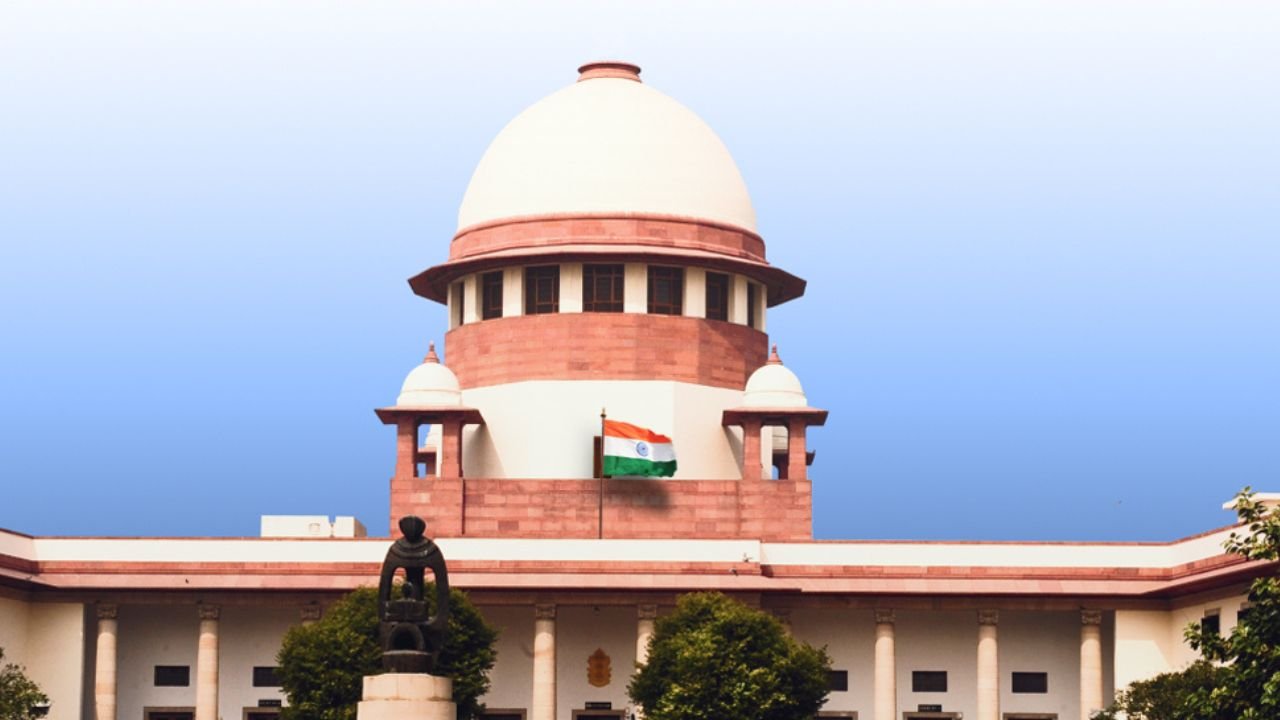

New Delhi: The Supreme Court has decided to await the final investigation report into the Air India Flight AI171 crash in Ahmedabad before considering whether an independent investigation or a Court of Inquiry is required. The court deferred the hearing on petitions seeking a court-monitored probe to October 13, after noting that the Aircraft Accident Investigation Bureau (AAIB) had made substantial progress in its investigation.
During the hearing, the Central Government informed the Bench that the AAIB’s draft final investigation report would be submitted to the court in a sealed cover during the first week of October. Based on this assurance, the Supreme Court postponed further proceedings until the report is available for consideration.
The case arises from multiple petitions filed by an NGO, a law student, and Pushkar Raj Sabharwal, the father of deceased pilot Captain Sumeet Sabharwal. The petitioners have sought the constitution of an independent committee headed by a retired Supreme Court judge to conduct what they describe as a fair, transparent and technically robust investigation into the fatal crash.
The Bench also recorded the submission of Solicitor General Tushar Mehta that the Federation of Indian Pilots (FIP) is free to submit its technical observations and suggestions to the AAIB. The Bureau may examine and consider those inputs during the course of the investigation if it finds them relevant.
During the proceedings, the government clarified that the AAIB investigation is not an internal exercise limited to officials of the Directorate General of Civil Aviation (DGCA). According to the government, the investigation includes aviation experts and representatives from countries whose citizens were among those killed in the accident.
Authorities further informed the court that investigators are conducting technical simulations, forensic examinations and detailed analysis to reconstruct the sequence of events leading to the crash and determine its probable cause.
In a counter-affidavit filed earlier, the AAIB opposed demands for an independent judicial inquiry, stating that the investigation is expected to be completed within approximately six weeks, subject to the resolution of certain external dependencies.
The Bureau argued that the Chicago Convention, ICAO Annex 13, the Bharatiya Vayuyan Adhiniyam, 2024, and the Aircraft (Investigation of Accidents and Incidents) Rules, 2025, together provide a complete statutory framework for aircraft accident investigations. It maintained that this legal framework leaves no gap requiring the creation of a parallel investigative body and that investigative authority rests exclusively with the AAIB.
The AAIB also opposed the petitioners’ request for public disclosure of cockpit voice recorder (CVR) recordings and black box data. The Bureau told the Supreme Court that Rule 17(5) of the Aircraft (Investigation of Accidents and Incidents) Rules, 2025, imposes an absolute prohibition on making cockpit voice recordings and airborne image recordings public. It argued that releasing such material would violate the statutory protections provided under the Rules.
The London-bound Air India Flight AI171, a Boeing 787-8 Dreamliner, crashed into the BJ Medical College hostel complex less than a minute after taking off from Ahmedabad on June 12, 2025. Of the 242 people on board, 241 lost their lives, while 19 people on the ground were also killed, making it one of India’s deadliest aviation disasters in recent years.
The Supreme Court will now take up the matter on October 13, when it is expected to consider the AAIB’s final findings before deciding whether any additional investigation or judicial intervention is necessary.
About the author — Suvedita Nath is a science student with a growing interest in cybercrime and digital safety. She writes on online activity, cyber threats, and technology-driven risks. Her work focuses on clarity, accuracy, and public awareness.
