
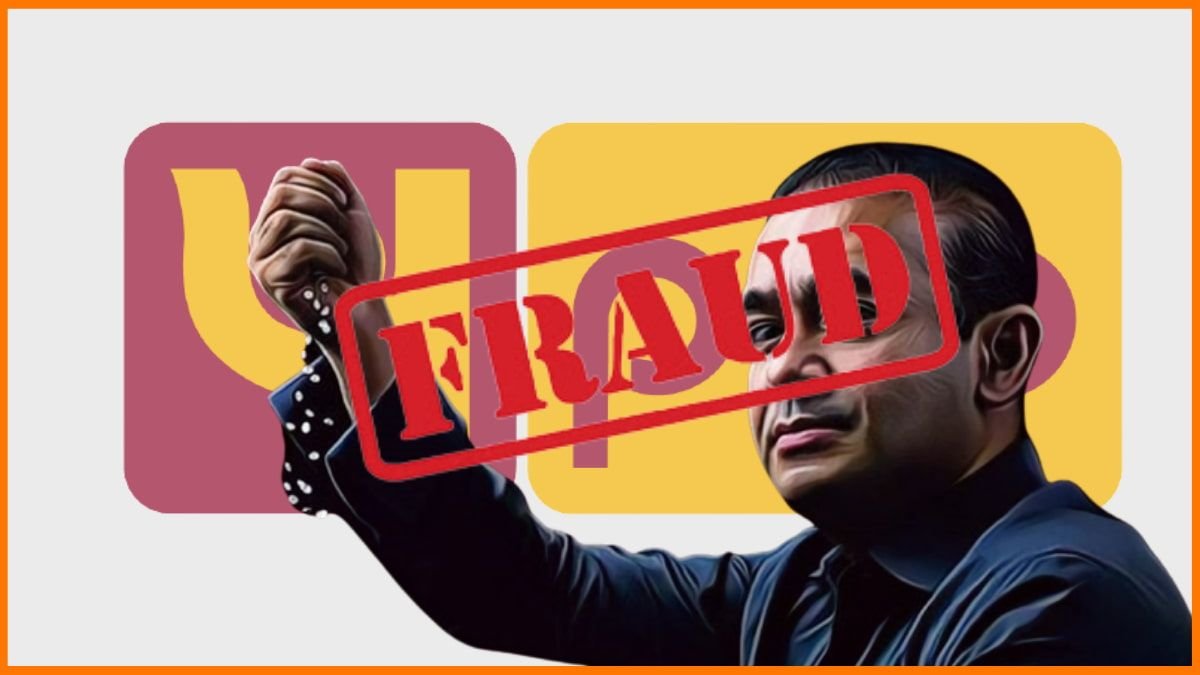
A significant legal development has emerged in the ₹321.88 crore alleged bank fraud case involving fugitive diamond businessman Nirav Modi, one of India’s most high-profile financial scandals. A special CBI court has transferred the matter to a magistrate court after the investigating agency informed the court that it had found insufficient evidence to sustain corruption charges against bank officials. The move changes the legal trajectory of the case, with proceedings now expected to continue under general criminal law provisions relating to fraud and conspiracy.
The case originated from a complaint filed by Punjab National Bank (PNB), which alleged that credit facilities extended to companies linked to Nirav Modi were misused, causing a loss of ₹321.88 crore to the bank. Based on the complaint, the Central Bureau of Investigation registered a case against Nirav Modi, directors of firms associated with him, and certain unidentified bank officials.
Registration Begins for FutureCrime Summit 2026, India’s Largest Cybercrime Conference
Circular Transactions in the Firestar Group
Investigators initially alleged that a network of suspicious financial transactions and circular fund movements among multiple business entities had been used to misuse banking facilities. According to the complaint, partnership firms promoted by Nirav Modi, including Solar Exports, Stellar Diamonds, and Diamond R US, were involved in transactions with other companies within the Firestar business group, raising questions about the movement and utilization of funds.
At the beginning of the investigation, the accused were booked under provisions related to cheating and criminal conspiracy under the Indian Penal Code, along with sections of the Prevention of Corruption Act. Investigators suspected that collusion between bank officials and private individuals may have facilitated the alleged financial irregularities, bringing the matter within the jurisdiction of a special CBI court.
Absence of Anti-Corruption Evidence
However, after an extensive investigation, the CBI informed the court that it had not found any incriminating material sufficient to prosecute bank officials or other individuals under the Prevention of Corruption Act. According to the agency, a detailed review of banking records, financial documents, and other evidence failed to establish corruption-related offences. As a result, the CBI requested that the case be transferred out of the special court’s jurisdiction and be heard by a magistrate court instead.
During the proceedings, the prosecution submitted that the forthcoming charge sheet would be filed only against private individuals. Since the anti-corruption charges could not be substantiated, the matter no longer fell within the jurisdiction of a special CBI court. Accepting the agency’s submissions, the court approved the transfer of the case to a magistrate court.
Altered Legal Trajectory and Trial Scope
Legal experts note that the decision does not bring the case to an end but instead changes its legal character. The focus of the prosecution will now remain on allegations of fraud, criminal conspiracy, and financial misconduct. If charges are framed after the filing of the charge sheet, the accused individuals will face trial under the applicable criminal provisions. The development is not expected to have a direct impact on other cases involving Nirav Modi or on the ongoing extradition-related proceedings against him.
Forensic Realities of Economic Tracking
Renowned cybercrime expert and former IPS officer Prof. Triveni Singh said that forensic examination of fund flows, shell companies, related business entities, and banking transactions is crucial in large-scale financial fraud investigations. He noted that economic offenders often use complex transaction structures and corporate networks to obscure the identities of beneficiaries and conceal the ultimate destination of funds. According to him, money trails, digital records, banking documentation, and transaction mapping frequently become the most critical forms of evidence in such investigations. Prof. Singh added that major financial crimes affect not only individual institutions but also public confidence in the broader financial system, making transparent investigations and accountability essential.
The matter will now proceed before a magistrate court, where future legal action will depend on the charge sheet and evidence presented by the CBI. As one of India’s most closely watched banking fraud cases, the proceedings underscore how major financial crime investigations can span years, with every allegation ultimately required to withstand judicial scrutiny based on documentary and evidentiary proof.
