
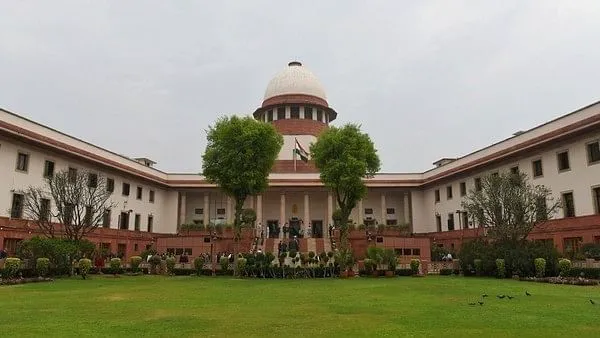
New Delhi: In a significant step toward integrating technology into India’s judicial system while preserving judicial independence, the Supreme Court has released draft regulations governing the use of Artificial Intelligence (AI) in courts. The 35-page framework, prepared by the court’s Artificial Intelligence Committee, outlines both permissible and prohibited uses of AI and invites comments from stakeholders and the public until June 20.
At the heart of the proposed regulations is a clear principle that no judicial outcome, judgment, order, or finding of fact or law can be determined solely by an AI system or algorithm. The Supreme Court has emphasized that AI may assist judges and court staff, but it cannot replace human judgment in any adjudicatory function.
According to the draft, AI tools can be deployed to improve efficiency in administrative and procedural aspects of the justice delivery system. Courts may use AI for case management, identification of defects in new filings, preparation of cause lists, scheduling of hearings, and prioritization of pending matters. The framework aims to reduce delays and improve operational efficiency without compromising judicial accountability.
Permissible AI Tools and Guardrails
The proposed regulations will apply to the Supreme Court, High Courts, subordinate courts, tribunals, and statutory commissions performing adjudicatory functions across India. The draft stresses that all AI systems must operate strictly in an assistive capacity and remain subordinate to judicial authority at all times.
The move comes amid growing discussions within the legal community regarding the opportunities and risks associated with AI adoption. In recent years, several courts have expressed concerns over the misuse of AI-generated content after instances emerged in which AI tools produced inaccurate legal references and even cited non-existent case laws. Such incidents highlighted the need for a structured regulatory framework governing the technology’s use within judicial institutions.
While drawing a firm line around decision-making functions, the draft regulations encourage the use of AI in several non-adjudicatory areas. These include automated transcription of court proceedings, translation of judgments and legal documents into regional languages, legal research assistance, citation verification, precedent retrieval, document summarization, and AI-powered chatbots designed to help litigants navigate court procedures.
Strict Prohibitions and Data Protections
One of the most significant provisions is contained in the proposed restrictions on AI usage. The draft explicitly prohibits the use of AI for determining judicial outcomes, assessing the credibility of witnesses, recommending sentences, evaluating evidence independently, or preparing judgments without human oversight. Under the proposed framework, every adjudicatory function must follow a “Human-in-the-Loop” approach, ensuring that final authority remains exclusively with a duly appointed judicial officer.
Data protection has also been given substantial importance. The draft states that personal data cannot be used to train, test, or refine AI systems without prior approval from the appropriate authority and compliance with applicable data protection laws. The provision is intended to safeguard sensitive judicial records and personal information from unauthorized use.
Three-Tier Governance and Monitoring
To oversee AI adoption across the judiciary, the Supreme Court has proposed a three-tier governance structure. A permanent apex regulatory authority headed by a Supreme Court judge would establish standards and supervise implementation at the national level. Separate AI committees would be created in every High Court to monitor compliance and deployment within their jurisdictions.
The draft also proposes the establishment of a “Centre of Research and Excellence on Artificial Intelligence,” which would conduct research, provide technical guidance, and support responsible AI adoption throughout the judicial system. Additionally, all AI tools used within courts would be subject to mandatory internal audits at least once every year.
Legal and technology experts view the initiative as a balanced attempt to modernize India’s justice system while protecting core judicial principles. By permitting AI to improve efficiency and accessibility, while simultaneously prohibiting algorithm-driven judgments, the proposed framework seeks to ensure that technology remains a tool for justice rather than a substitute for judicial reasoning. As consultations continue, the regulations are expected to shape the future of AI governance within India’s courts for years to come.
