
Follow us on Google News

Singapore Police have arrested a 44-year-old woman linked to an international investigation into Cambodia-based Prince Holding Group, as authorities disclosed that assets seized or placed under restrictions in the wider case have exceeded S$700 million.
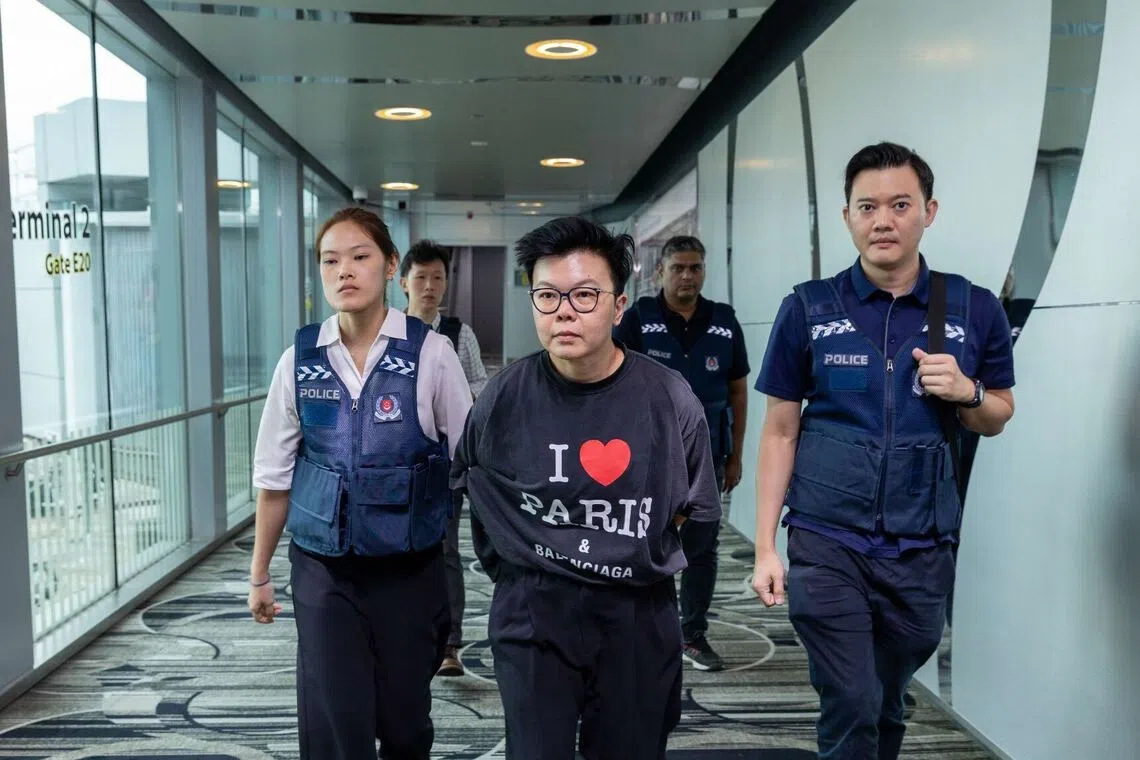
Chen Xiuling, also known as Karen Chen, was arrested at Changi Airport on November 5, 2026, under a warrant issued during investigations into the business network associated with Cambodian tycoon Chen Zhi.
Chen is scheduled to appear in court on November 6 to face one count of instigating another person to falsify accounts and another of attempted cheating.
The arrest marks a new development in a long-running investigation involving alleged financial misconduct, company ownership structures and suspected links to transnational online fraud.
Although Singapore authorities are investigating companies associated with Prince Holding Group, the charges announced against Chen concern an allegedly falsified property-related agreement. She has not been convicted, and police have not accused her in this announcement of personally operating online scam compounds.
Former Company Director Accused Of Falsifying Agreement
According to investigators, Chen served as a director of several Singapore-registered companies believed to be beneficially owned by Chen Zhi, the founder and chairman of Prince Holding Group.
These companies included Skyline Investment Management and Capital Zone Warehousing.
Police allege that in September 2022, Skyline submitted a business plan and an agreement to JTC Corporation, a Singapore government agency responsible for industrial infrastructure and development.
The documents were submitted as part of an application seeking approval to take over the lease of a property.
Investigators believe the agreement was falsified and that Chen had instigated an officer of Capital Zone Warehousing to prepare the false document with the intention of defrauding the authorities.
She is also accused of submitting the allegedly falsified agreement in an attempt to deceive JTC Corporation.
These allegations form the basis of the two charges she is expected to face.
Under Singapore law, instigating another person to falsify accounts can result in imprisonment of up to 10 years, a fine or both.
Attempted cheating also carries a potential prison sentence of up to 10 years and a fine.
The allegations remain subject to court proceedings, and police investigations into the wider corporate network are continuing.
Arrest Follows Months Of Investigation Across Singapore
Singapore Police began investigating Chen Zhi, his associates and related companies in 2024 after receiving financial intelligence concerning suspected criminal activity.
The investigation expanded in October 2025, when police conducted operations at multiple locations across Singapore.
Authorities initially seized or restricted more than S$150 million in assets, including properties, vehicles, financial accounts and luxury items.
Additional enforcement actions followed as investigators examined company records, suspected financial flows and the ownership of assets connected to the network.
Between November 2025 and January 2026, police arrested three Singaporean men during the investigation.
They included businessman Tan Yew Kiat, Nigel Tang Wan Bao Nabil and Yeo Sin Huat Alan, who were investigated for suspected money-laundering offences.
In March 2026, police publicly identified Chen as a wanted suspect and disclosed that an arrest warrant had been issued against her.
At the time, investigators believed she had left Singapore before the October 2025 operations and was in Cambodia.
Her arrest at Changi Airport on November 5 brings a previously wanted suspect within the jurisdiction of Singapore’s courts.
Police have not publicly explained the circumstances of her return to Singapore.
Assets Under Investigation Exceed S$700 Million
The latest arrest comes alongside an expansion of financial enforcement measures involving the Prince Holding Group investigation.
Since June 2026, Singapore Police have issued additional orders restricting the disposal of 14 properties and seized various bank and securities accounts.
The newly identified assets have an estimated combined value of approximately S$100 million, equivalent to about US$78 million.
These measures bring the total value of assets seized or placed under restrictions in the wider investigation to more than S$700 million.
A prohibition of disposal order prevents certain assets from being sold, transferred or otherwise disposed of while investigations continue.
Such an order does not automatically establish that an asset was acquired through criminal activity.
Likewise, the S$700 million figure relates to the broader investigation and should not be interpreted as the amount allegedly stolen by Chen or personally held by her.
The investigation forms part of wider international efforts targeting Prince Holding Group and individuals associated with its operations.
US authorities have accused the group of facilitating large-scale cryptocurrency investment scams and using trafficked workers in compounds where victims were allegedly forced to conduct online fraud.
Prince Holding Group has previously denied allegations of criminal involvement.
Its founder, Chen Zhi, was transferred from Cambodia to China in January 2026 and subsequently arrested by Chinese authorities.
Other jurisdictions have also taken action against assets linked to the group’s associates.
For investigators, the financial structures surrounding alleged scam networks have become an important part of efforts to identify how businesses, property holdings and banking relationships may have been used to conceal criminal proceeds.
The proceedings against Karen Chen will focus on the specific offences alleged by Singapore Police, while the separate investigations into suspected money laundering and the wider Prince Holding Group network continue.
What This Means For You:
Large online fraud investigations increasingly extend beyond scam operators to companies and financial intermediaries that may support their activities. Anyone approached to lend their identity, company documents or bank accounts to another party should verify the arrangement carefully and avoid concealing beneficial ownership.