
Stay ahead with our breaking stories and exclusive coverage prioritized on Google.
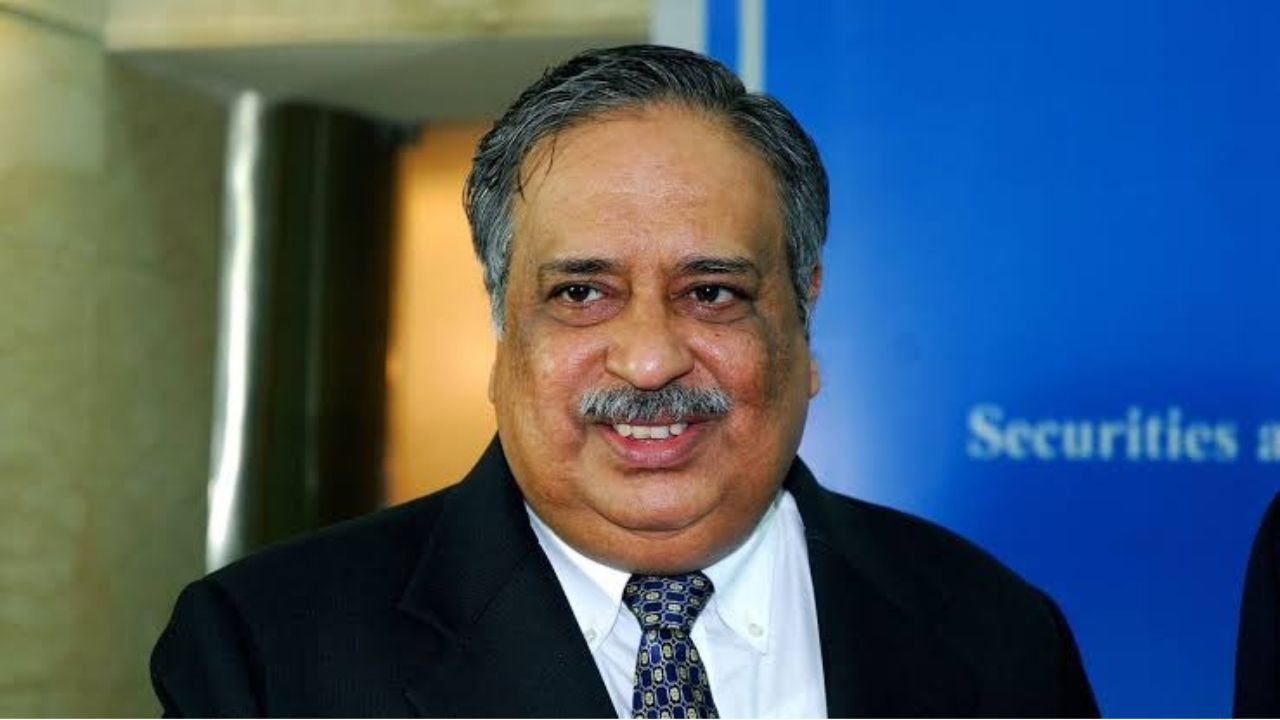
Add The420 on Google →Former Securities and Exchange Board of India (SEBI) Chairman M. Damodaran has called for stronger regulatory action against public sector undertakings (PSUs) that repeatedly fail to comply with corporate governance requirements, suggesting that suspending one or two major government-owned companies could compel others to follow mandatory board composition rules.
His remarks come amid concerns over the shortage of independent directors in listed public sector companies. According to corporate governance findings discussed in an interview, 16 of the 17 Nifty 100 companies that lacked the mandated number of independent directors during FY2025-26 were public sector entities, while four PSUs operated without any independent directors.
Damodaran, who also heads Excellence Enablers, questioned the effectiveness of monetary penalties against companies that have remained non-compliant for years. He argued that the government must take greater responsibility for ensuring that enterprises under its ownership meet the governance standards imposed on listed companies.
FCRF Launches Certified Chief Risk Officer (CRO) Program for India’s Risk Leaders
The former regulator also raised concerns about the functioning of independent directors, inadequate representation of women on boards and the tendency of companies to treat corporate governance as a procedural obligation rather than a responsibility towards shareholders and other stakeholders.
Why Does the Former SEBI Chief Want Non-Compliant PSUs Suspended?
Damodaran criticised the continuing failure of several government-owned companies to meet mandatory board composition requirements despite being subject to the same regulatory framework as other listed entities.
He pointed out that the government, as the sole or majority shareholder in many PSUs, has a responsibility to ensure that its companies comply with rules requiring independent directors and women directors.
According to him, the government cannot expect private companies to observe governance standards while allowing its own enterprises to remain in violation of those requirements.
The issue becomes particularly complicated because appointments to PSU boards are often controlled by government ministries, even though the listed companies themselves remain responsible for complying with SEBI regulations.
Damodaran acknowledged this difficulty but maintained that PSU managements and boards should press the government to fill vacancies and meet their statutory obligations.
He argued that repeated financial penalties have failed to produce meaningful changes in companies that continue to violate governance norms.
“If I were in SEBI at this point in time, I would have suspended at least one or two large public sector undertakings which are not complying,” Damodaran said.
He observed that some companies had remained non-compliant for years while facing relatively small fines, which they appeared willing to absorb without correcting the underlying deficiencies.
The former SEBI Chairman suggested that stronger enforcement could demonstrate that governance requirements apply equally to public sector and private sector companies.
His remarks were a recommendation for regulatory action rather than an announcement of any suspension by SEBI.
Are Independent Directors Performing Their Responsibilities Effectively?
Damodaran also questioned whether the emphasis on training independent directors would address the deeper challenges affecting corporate governance.
His comments followed SEBI Chairman Tuhin Kanta Pandey’s announcement of consultations on a proposed Capacity Building Network for the continuous training of company directors.
While acknowledging that independent directors have generally become more aware of their responsibilities and more willing to question management decisions, Damodaran argued that technical training alone would not guarantee independent judgment.
He suggested that the more important question was how to encourage directors to exercise genuine independence and discharge their responsibilities without fear or favour.
The governance findings cited in the interview also raised concerns about the frequency and effectiveness of meetings held exclusively by independent directors.
According to the findings, 40 of the top 100 companies held only one such meeting annually across four years, while 32 companies consistently scheduled the meeting in March.
Damodaran linked this practice to provisions of the Companies Act that require at least one separate meeting of independent directors.
He argued that companies frequently use these meetings to complete annual board evaluations rather than conduct substantive discussions on governance and oversight.
As an alternative, he suggested that independent directors should meet before every board meeting to discuss important matters among themselves before participating in the formal proceedings.
He also criticised the practice of conducting audit committee meetings lasting only 10 to 15 minutes without meaningful agendas.
According to Damodaran, merely holding the prescribed number of meetings and maintaining the required committee composition does not necessarily demonstrate effective corporate governance.
What Changes Does Damodaran Recommend for Corporate Governance?
The former SEBI Chairman called for a broader change in how companies approach board oversight, arguing that compliance with statutory requirements should be treated as the minimum standard rather than the ultimate objective.
He observed that many companies continue to focus on satisfying formal requirements, including constituting audit committees, holding mandatory meetings and completing board evaluations, without sufficiently examining whether these measures improve decision-making.
Damodaran also advocated greater representation of women on company boards.
He suggested that listed companies should have at least two women directors, with at least one serving as an independent director.
Although statutory requirements concerning women’s representation already exist, he argued that many companies treat the minimum requirement as a limit rather than seeking broader participation.
He acknowledged that regulators can enforce compliance and impose penalties but noted that financial penalties ultimately affect shareholders and other stakeholders.
Damodaran maintained that corporate governance standards have improved over time, with directors becoming more conscious of their responsibilities and companies paying greater attention to regulatory expectations.
However, he expressed concern that many organisations still equate governance with compliance.
Drawing a distinction between the two, he said compliance involves responding to rules imposed by lawmakers and regulators, while meaningful governance requires companies to take initiatives independently in the interests of their stakeholders.
His comments underline the continuing debate over accountability in listed public sector enterprises, particularly where government-controlled appointments, regulatory obligations and board independence intersect.
The former regulator’s central argument was that stricter enforcement and more responsible boardroom practices are necessary to move corporate governance beyond routine compliance.
About the author — Suvedita Nath is a science student with a growing interest in cybercrime and digital safety. She writes on online activity, cyber threats, and technology-driven risks. Her work focuses on clarity, accuracy, and public awareness.