
Follow us on Google News

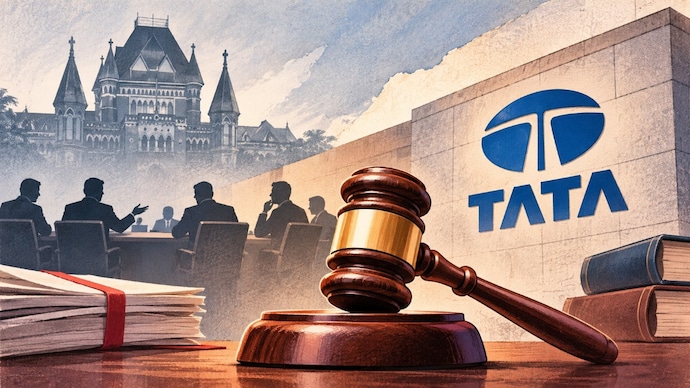
The Securities and Exchange Board of India (SEBI) is closely examining the structure of the proposed Rs 28,000 crore transaction between Tata Steel and APL Apollo Tubes. Questions have emerged over the two-stage announcement of the deal, raising concerns about whether the structure sidesteps related-party transaction norms. While the regulator has not yet confirmed any rule violation or initiated formal action, it remains in a wait-and-watch mode as the deal structure could undergo changes.
The central question surrounding the transaction is whether the separate deals announced by the two companies should be viewed as part of a single business plan. According to reports, Tata Steel first announced the sale of two of its businesses to APL Apollo. Since the two companies were not related parties at that stage, the sale required only board approval rather than the consent of minority shareholders. A day later, Tata Steel announced the acquisition of the promoter’s stake in APL Apollo, a move that could trigger an open offer.
Market Reaction and Governance Concerns
The market response to the transaction has been sharp. Over the past two trading sessions, shares of APL Apollo Tubes dropped 31.32 percent, while Tata Steel shares lost 12 percent. Investors appear concerned about the financial structure of the deal, potential debt levels, and broader corporate governance standards.
Corporate governance experts have specifically flagged the financial capacity of APL Apollo to fund such a large acquisition. JN Gupta, founder and managing director of Stakeholders Empowerment Services (SES), questioned whether APL Apollo’s standalone balance sheet supports borrowing of this magnitude. He noted that the board was unlikely to approve such a large transaction unless it had comfort regarding Tata Steel’s subsequent acquisition of the company. According to Gupta, either the board was misled or it had prior information, and the latter scenario would make it a related-party transaction.
Unequal Exit Options for Shareholders
Another major issue involves the disparity in exit opportunities between the outgoing promoter and minority shareholders. Under securities regulations, acquiring control of a company typically triggers an open offer for public shareholders. However, an open offer does not always allow minority investors to sell their entire holdings. Based on the company’s assessment, the promoter can monetise most of his stake, whereas minority shareholders may only be able to sell about a third of their holdings.
Investors who remain with the company will face the financial consequences of the acquisition. Funding the purchase through debt will leave APL Apollo’s balance sheet more leveraged, and higher interest costs could weigh on future profitability. As a result, the outgoing promoter stands to monetise his holdings substantially, while minority shareholders face limited exit routes and higher financial risk.
Regulatory View and Management Transition
Management changes at APL Apollo have also drawn investor attention. While Sanjay Gupta is stepping down as chief executive officer, he will retain roughly a 4.5 percent stake and remain actively involved with the management to oversee the transition and help achieve the company’s Rs 10,000 crore EBITDA target. His ongoing commercial relationship with Tata Steel through another entity has added to investor scrutiny.
Legal experts indicate that regulators can assess connected transactions collectively. Pranav Srivastava, partner at Phoenix Legal, pointed out that SEBI’s definition of related-party transactions includes dealings with unrelated parties if the purpose and effect benefit a related party of a listed entity. Regulators can examine the timing, commercial intent, and actual economic impact of the arrangements rather than treating them purely as standalone deals. Although any final conclusion on compliance remains premature while SEBI monitors the situation, the Rs 28,000 crore proposal has placed corporate governance, acquisition financing, and minority shareholder protection firmly under the spotlight.