

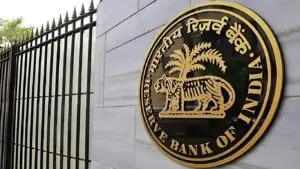
Amid a sharp rise in online financial fraud, the Reserve Bank of India (RBI) is considering a series of enhanced security measures to strengthen the country’s digital payment ecosystem. The central bank has invited public suggestions on proposals aimed at preventing cyber-enabled financial fraud and reducing losses suffered by digital payment users. Among the measures under consideration are a brief cooling-off period for high-value digital transactions, additional authentication requirements, and a trusted-person approval mechanism for large payments.
In its consultation paper, the RBI noted that India’s digital payment infrastructure has earned global recognition for promoting financial inclusion and providing a low-cost payment system. However, the rapid expansion of digital payments has also been accompanied by a significant increase in online fraud. According to available estimates, cybercriminals defrauded digital payment users of nearly US$3 billion (approximately ₹25,000 crore) in 2025, representing almost a 40-fold increase compared with 2021.
The central bank observed that the growing potential of digital payments is being undermined by the rising number of fraud complaints. According to the RBI, most online frauds are not caused by technical breaches of payment systems but by social engineering, impersonation, psychological manipulation, fear, coercion, and deception, which compel victims to voluntarily transfer money. Cases involving so-called “digital arrest” scams, impersonation of police and government officials, fake KYC updates, fraudulent investment schemes, and part-time job scams have witnessed a steady increase in recent years.
To address these challenges, the RBI is examining the possibility of introducing a short delay before processing high-value digital payments. The central bank believes that such a cooling-off period could provide users with an opportunity to reconsider suspicious transactions and break the psychological pressure exerted by fraudsters. According to the RBI, the measure could serve as an effective preventive control against social engineering-based financial fraud.
The RBI is also evaluating the concept of Trusted Person Authentication for high-value digital transactions. Under this proposal, users would be able to nominate a trusted individual whose additional approval would be required before certain high-value payments are completed. Experts believe the mechanism could provide an extra layer of protection, particularly for senior citizens, first-time digital payment users, and individuals considered more vulnerable to cyber fraud.
The central bank further acknowledged the extraordinary growth of India’s digital payment ecosystem. Over the past decade, the volume of digital transactions has increased by nearly 38 times, while the total value of such transactions has more than tripled. Experts believe that as digital adoption continues to accelerate, the country’s security framework must evolve at the same pace to effectively counter emerging cyber threats.
Renowned cybercrime expert and former IPS officer Prof. Triveni Singh said that the majority of modern cyber frauds no longer rely on sophisticated hacking techniques but instead exploit human behaviour through fear, urgency, and deception. He noted that fraudsters often manipulate victims into transferring money voluntarily by impersonating law enforcement agencies or government officials. According to him, stronger verification mechanisms, risk-based security controls, and time-based safeguards for high-value transactions could significantly reduce online financial fraud. He also advised citizens never to transfer money solely on the instructions of anyone claiming to represent the police, RBI, CBI, ED, or any other government agency without independently verifying the claim.
The RBI will review the suggestions received through the consultation process before finalising its policy. If implemented, the proposed safeguards are expected to significantly strengthen consumer protection and enhance trust in India’s rapidly expanding digital payments ecosystem.
