

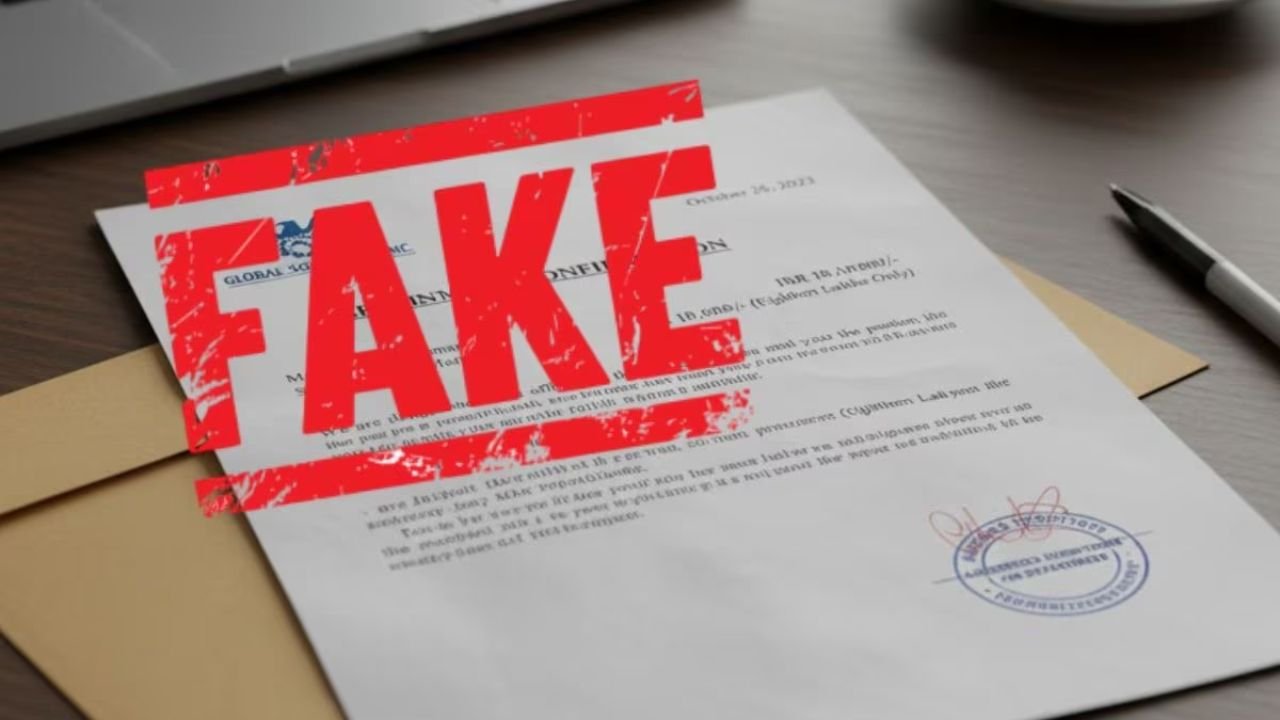

Raipur | A major recruitment scam has been exposed in the rural outskirts of Chhattisgarh’s capital Raipur, where a gang allegedly used fake government appointment letters to cheat 34 unemployed youths of nearly ₹1.5 crore. Police have arrested a government school teacher and a private school clerk in connection with the case.
According to the investigation, the accused created forged documents in the name of the General Administration Department, Nava Raipur, and designed them to closely resemble authentic government appointment orders. Digital signatures were also allegedly copied to make the documents appear genuine, increasing their credibility among unsuspecting job seekers.
FCRF Academy Launches Premier Anti-Money Laundering Certification Program
The main accused has been identified as Rajesh Sharma alias Raju, a government school teacher. He was arrested from the Dongargarh area in Rajnandgaon district. During questioning, he reportedly admitted that financial pressure and personal debt led him to plan the fraud. His associate, Manoj Kumar Srivastava, a clerk at a private school, also played a key role in executing the scam.
Both accused allegedly used computers, printers, and editing software to prepare highly convincing fake appointment letters. These forged documents were then circulated through WhatsApp groups and personal contacts, targeting unemployed youth. Victims were assured that their government jobs were already confirmed, and they were asked to pay only “processing fees” and other formal charges to complete the appointment process.
Police investigations further revealed that the accused collected money in multiple installments and repeatedly demanded payments from several victims. Over time, the total amount extorted rose to approximately ₹1.5 crore. Many victims began to suspect irregularities when their joining process was repeatedly delayed and responses from the accused became inconsistent.
The case came to light after some victims verified the authenticity of the documents and raised concerns about possible fraud. A formal complaint was then filed, prompting law enforcement agencies to launch a detailed investigation using mobile data, digital transactions, and technical evidence. This helped investigators trace and arrest the accused.
Police have seized computers, printers, and other digital equipment used in preparing the forged appointment letters. Preliminary findings suggest that more individuals may be involved in the racket, and further investigation is underway to identify additional suspects.
Cases have been registered against both accused under multiple sections of the Bharatiya Nyaya Sanhita and the Information Technology Act. Investigators are now tracking the bank accounts where the cheated money was transferred and are working to uncover the full network behind the scam.
The incident has once again raised serious concerns over recruitment-related frauds targeting unemployed youth. Experts advise job seekers to verify any appointment letter or offer only through official government websites or authorized departmental channels before making any payments.
Following the exposure of the scam, tension and concern have spread in the region. Victim families are now looking towards legal action and recovery of their lost money, hoping for strict punishment against those involved in the fraud network.
