

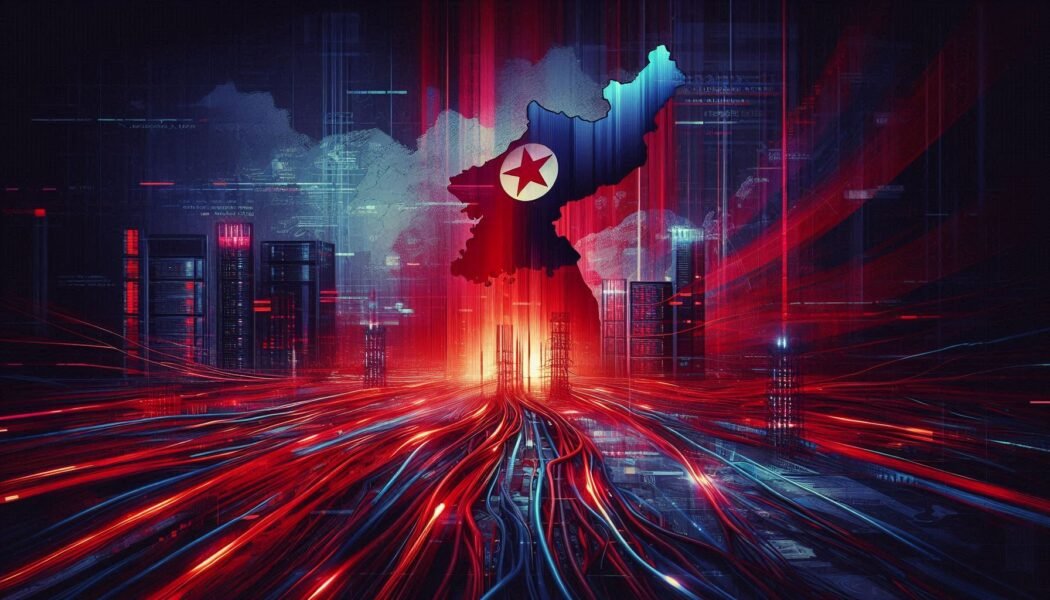
Washington: A new investigation has revealed that North Korea is expanding its global remote IT job fraud operations by recruiting skilled workers from Iran, highlighting a sophisticated cyber-enabled employment scam aimed at infiltrating Western companies.
Fabricated Careers: The Multi-Step Process of Creating Ghost Employees
According to findings by cybersecurity firm Flare, North Korean operatives have been actively targeting Iranian IT professionals through platforms like LinkedIn, guiding them through recruitment, interview preparation, and even identity fraud to secure remote jobs in U.S. and European firms.
Internal documents reviewed by researchers show a well-organized system where facilitators used coded aliases such as “Sea,” “Eugene,” and “Fineboy” to coordinate recruitment efforts. These operators tracked candidates, job applications, and progress through detailed spreadsheets. In one instance, a recruiter documented reaching out to more than 50 Iranian developers, data engineers, and .NET specialists within a single week.
FCRF Launches Premier CISO Certification Amid Rising Demand for Cybersecurity Leadership
The report identified at least 14 Iranian individuals who had entered formal recruitment pipelines, with at least two successfully receiving job offers from U.S.-based employers. The targeted roles were often within sensitive sectors, including defense contractors, cryptocurrency exchanges, and financial institutions—raising serious concerns about potential national security risks.
A key component of the operation involved asking recruits to assume fabricated identities to bypass international sanctions. North Korean facilitators reportedly coached candidates on how to present themselves during interviews, manage technical assessments, and navigate onboarding procedures. This included assistance from U.S.-based accomplices who helped with logistical challenges such as obtaining company-issued laptops and completing mandatory employment checks.
One documented case involved the use of a fake persona named “Jack Long,” under which more than 100 job applications for C# and .NET roles were submitted. Iranian recruits were then trained to assume this identity during interviews and subsequent employment. Payment structures were also outlined in the documents, with recruits earning approximately $500 per month during the application phase as “interview associates,” and between $2,700 and $5,000 monthly once successfully employed.
Researchers noted that much of the uncovered activity dates back to 2024, prior to recent geopolitical tensions involving Iran. However, experts believe that ongoing disruptions, including internet restrictions and communication challenges, are unlikely to completely halt such operations. Despite crackdowns, alternative connectivity solutions—such as smuggled satellite internet devices—continue to enable limited access.
The investigation also highlighted an unusual detail: many internal records maintained by North Korean operators were written in English rather than Korean. Analysts suggest this may reflect an effort by operatives to improve their English proficiency, a critical requirement for successfully navigating international job markets. Fluency in English was reportedly a key selection criterion, with several candidates rejected due to inadequate language skills.
The Blur Between Crime and Espionage: Corporate Systems as Geopolitical Targets
Cybersecurity experts warn that this scheme represents a growing trend in which state-linked actors exploit remote work ecosystems to generate revenue and potentially gain access to sensitive corporate systems. By embedding operatives within legitimate organizations under false identities, such campaigns blur the line between cybercrime and espionage.
The findings underscore broader vulnerabilities in global hiring practices, particularly in remote technical roles where identity verification may be less stringent. Companies relying heavily on virtual recruitment processes may inadvertently expose themselves to infiltration risks if robust background checks and authentication measures are not in place.
While the full scale of the operation remains unclear, the report signals an evolution in tactics used by North Korean networks, combining elements of social engineering, identity fraud, and global talent exploitation. It also reflects the increasing convergence of cybercrime and geopolitical strategy, where economic gain and intelligence gathering may go hand in hand.
As remote work continues to expand globally, experts stress the urgent need for stronger verification systems, cross-border cooperation, and heightened awareness among employers. Without such safeguards, similar schemes could proliferate, posing significant risks to both corporate security and international stability.
