

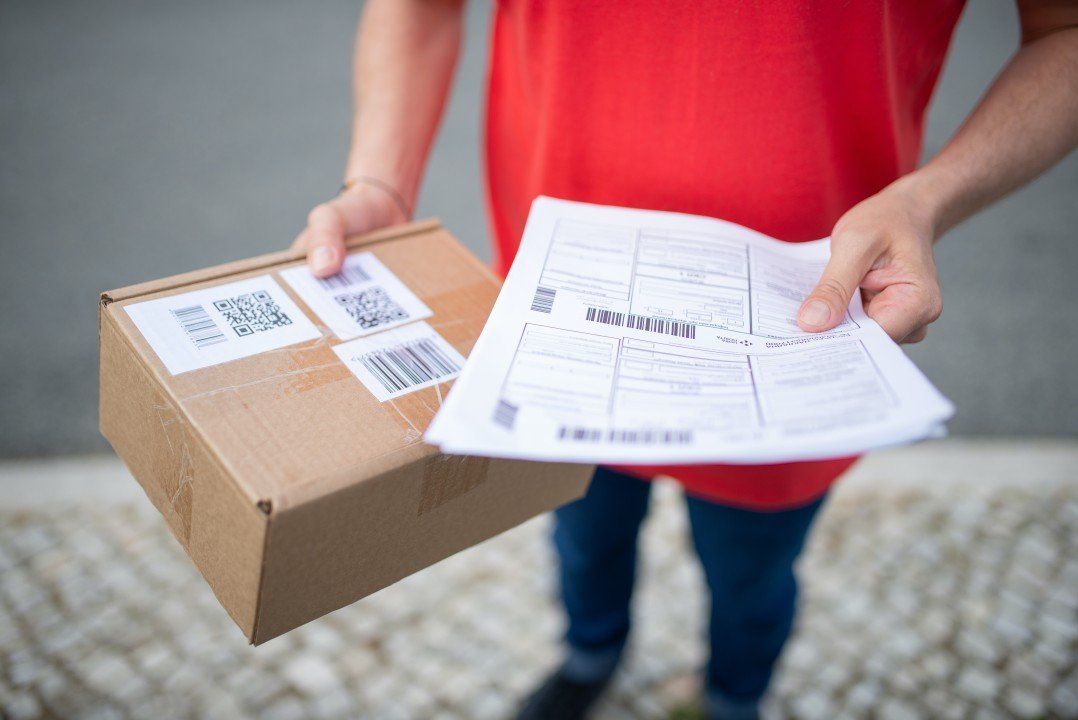

A joint operation by Noida Police and the Special Operations Group has cracked open a delivery network accused of quietly gutting e-commerce parcels of their contents before they ever reached customers’ doorsteps. Five men have been arrested and goods worth approximately ₹75 lakh recovered, in a case that police say may have affected more than 1,000 customers over several months. Two more accused remain absconding as investigators work to map how deep the network ran inside the delivery chain itself.
A Scheme Built on Access, Not Hacking
Unlike the digital scams that dominate cybercrime headlines, this operation required no malware or phishing link, only insider access to the physical movement of goods. Police said the gang exploited its position within the delivery system itself, obtaining consignment details through personnel responsible for carrying parcels from company hubs to customers.
Once packages left the hub, investigators allege, delivery staff would open them mid-route, extract high-value items such as mobile phones and electronic devices, and replace them with cheaper products or empty packaging before resealing and delivering them as if nothing had happened. The customer would receive a parcel that looked untouched, only to find the wrong item, or nothing of value, inside.
The stolen goods were then allegedly funnelled to the identified ringleader, Wasid Khan, a 32-year-old resident of Khoda Colony in Ghaziabad, and his associates, who resold them in the open market at reduced prices. The five arrested, Wasid Khan, Sunil Kumar, Vijay Singh, Dharmendra and Raghuraj Singh, were picked up from Sector 69 on Saturday, with a case now registered at Sector 20 police station.
An Old Vulnerability, Now Exploited at Scale
Delivery-linked theft is not a new phenomenon in India’s e-commerce ecosystem, but this case stands out for the scale investigators believe it reached. Additional Deputy Commissioner of Police Manisha Singh noted that most of those arrested had limited formal education, with qualifications ranging between Class 10 and Class 12, suggesting a low-skill, high-access operation rather than a technically sophisticated one.
That combination, minimal technical barrier paired with direct physical access to parcels, is precisely what has made similar schemes recur across Indian cities in recent years, from delivery agents swapping return items with used goods to staff siphoning off electronics before they reach warehouses. What differentiates the Noida case is its apparent scale and organisation, with a defined leadership structure allegedly coordinating multiple delivery personnel rather than a single rogue employee acting alone.
Deputy Commissioner of Police Saad Mian Khan said preliminary investigation suggests the gang may have cheated more than 1,000 customers, a figure that points to a sustained operation rather than a handful of isolated incidents. He said complaints from customers about missing products and tampered parcels had been mounting with e-commerce companies, whose internal investigations eventually flagged suspicious patterns among delivery-linked personnel and led to police involvement.
Investigators Turn to the Wider Supply Chain
With two accused, identified as Aslam and Bhupendra, still at large, police are now focused on establishing how many delivery employees were part of the network and how long it had been active before detection. Investigators are questioning those already arrested to identify other participants, including the buyers who knowingly purchased the stolen goods at discounted prices.
Officials said more arrests are likely as the investigation widens to trace the full supply chain, from the point of theft inside delivery hubs to the eventual resale of stolen electronics in the open market. Authorities are also examining measures to tighten monitoring within e-commerce delivery systems, an area that has repeatedly proven vulnerable precisely because it relies on a large, often loosely supervised workforce with direct physical custody of high-value goods. For a sector built on speed and convenience, the case is a reminder that the last mile of delivery remains one of its weakest links.
Follow for daily updates on cybercrime, corporate fraud, DFIR, hacking, investigations, and digital forensics
