
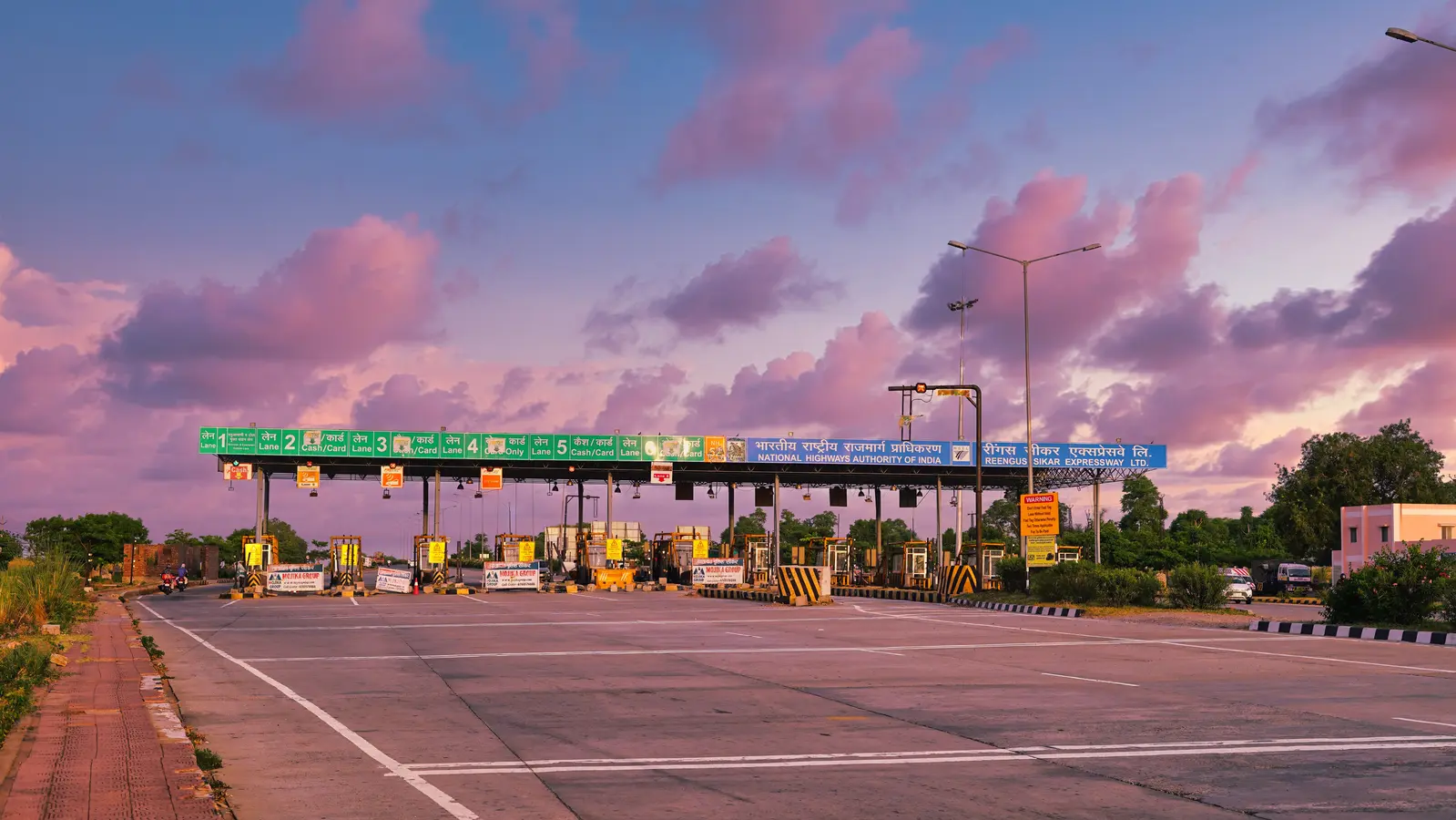
New Delhi: Amid the nationwide rollout of barrier-less toll collection systems, the National Highways Authority of India (NHAI) has raised concerns over new methods allegedly being used to evade toll payments. The authority has written to transport departments and enforcement agencies, including officials in Delhi, urging them to carry out sustained action against vehicles using tampered or obscured number plates to bypass digital tolling systems.
The Challenge at Free-Flow Tolling Plazas
The issue has come into focus particularly at the camera-based barrier-less toll plaza at Mundka-Bakkarwala in Delhi, where the Multi-Lane Free Flow (MLFF) tolling system has been introduced. Under the MLFF model, vehicles are not required to stop at toll plazas. Instead, toll charges are automatically deducted through FASTag-linked systems supported by high-speed RFID readers and AI-powered Automatic Number Plate Recognition (ANPR) cameras installed overhead.
According to NHAI, several vehicle owners have allegedly started manipulating their number plates by covering letters or digits with paper, plastic sheets, tape, mud, or reflective materials in an attempt to escape toll detection. In some instances, number plates were reportedly found bent, faded, partially hidden, or installed in non-standard formats, making it difficult for AI-based cameras to correctly identify the vehicle registration number.
Revenue Leakage and Enforcement Hurdles
The highway authority has warned that if such practices continue unchecked, they could undermine the effectiveness of the barrier-less tolling model. Officials said the MLFF system is heavily dependent on accurate vehicle identification and FASTag verification. Tampered number plates not only result in revenue leakage but also create major enforcement and surveillance challenges for authorities managing the digital tolling network.
Sources indicated that many of the vehicles found with manipulated number plates either did not have FASTags properly affixed or had faulty tag placement, making automatic toll deduction impossible. In such cases, authorities also face difficulty issuing electronic notices because the exact vehicle registration number cannot be retrieved from the VAHAN database due to unreadable or altered plates.
Strict Enforcement of HSRP Guidelines
Although officials estimate that such vehicles currently account for less than one percent of the overall traffic passing through MLFF plazas, the issue is being treated seriously because barrier-less tolling is expected to expand rapidly across the national highway network in the coming months.
NHAI has therefore advised states to strengthen enforcement drives and ensure strict implementation of High Security Registration Plates (HSRP). The authority emphasized that all vehicles must carry clearly visible HSRP plates on both the front and rear sides so that AI-enabled cameras can accurately capture registration details without disruption.
Officials noted that broken, obscured, modified, or non-standard number plates pose a direct risk to the efficiency of automated tolling infrastructure. The authority believes stricter enforcement at an early stage will help prevent larger operational and compliance issues once MLFF systems are scaled nationwide.
Nationwide Expansion and Compliance Monitoring
NHAI has also reportedly alerted states where barrier-less tolling is scheduled to be implemented in the coming weeks. These include the Gharaunda toll plaza on the Delhi-Amritsar highway and the Manoharpura, Shahjahanpur, and Daulatpura toll plazas on the Delhi-Jaipur corridor.
Authorities further stated that after the launch of MLFF systems at Choryasi in Gujarat and Mundka in Delhi, a significant number of electronic notices were issued to violators and unpaid toll users. Nearly half of those who received e-notices reportedly cleared their dues within the prescribed 72-hour period. The number of such notices in Delhi has so far remained comparatively lower, though surveillance and monitoring activities are being intensified continuously.
Transport and highway experts believe that AI-driven tolling systems and digital traffic monitoring infrastructure will expand significantly in the near future. In that context, tampering with vehicle number plates may no longer be viewed merely as toll evasion, but also as a broader issue linked to digital identity manipulation, regulatory compliance, and road security enforcement.
About the author – Rehan Khan is a law student and legal journalist with a keen interest in cybercrime, digital fraud, and emerging technology laws. He writes on the intersection of law, cybersecurity, and online safety, focusing on developments that impact individuals and institutions in India.
