

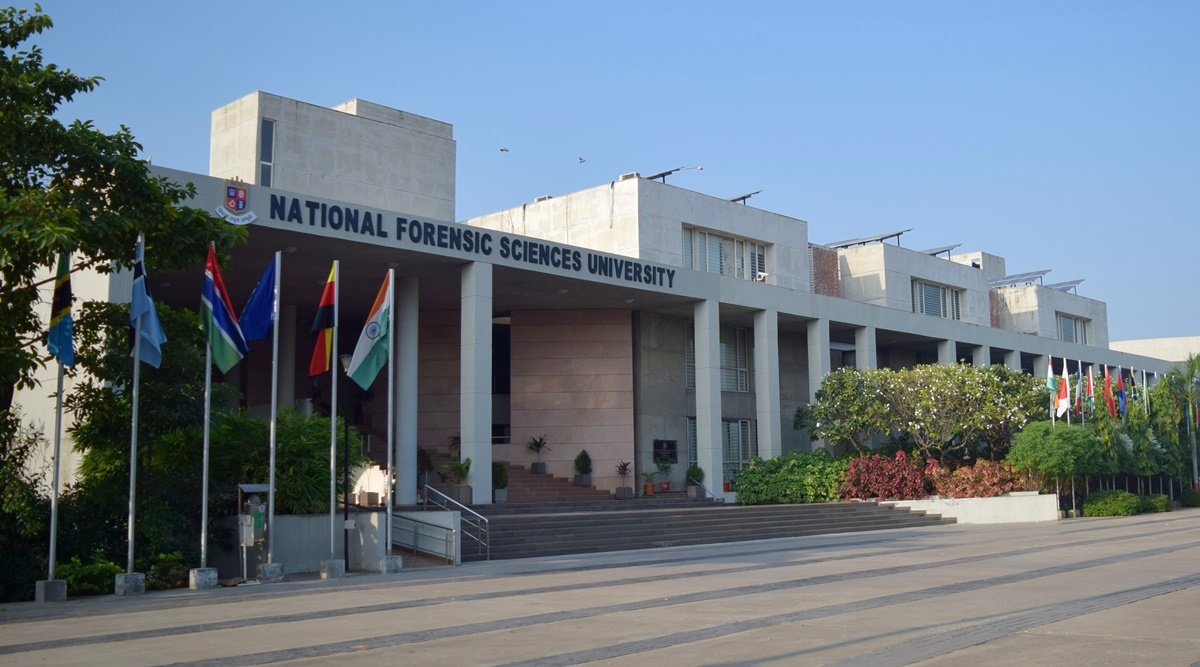
The National Forensic Sciences University (NFSU), India, in collaboration with Tashkent State University of Law (TSUL), Uzbekistan, has invited applications for a dual-degree LL.M. programme in Cyber Crime Law and Digital Forensics for the 2026-27 academic year, offering students interdisciplinary training across law, technology and forensic sciences in both countries.
The programme has been designed for the rapidly evolving field of digital justice and will provide academic and cultural exposure in India and Uzbekistan. It will allow students to examine the legal, investigative, evidentiary and policy dimensions of cybercrime and emerging technologies through a comparative and interdisciplinary framework.
The one-year, regular full-time programme will run across two semesters and carry 60 credits. Semester I will be conducted at NFSU in Gandhinagar, Gujarat, while Semester II will be held at Tashkent State University of Law in Tashkent, Uzbekistan.
Programme Covers Cybercrime, Digital Evidence and Emerging Technologies
The programme will focus on Cyber Crime Law, Digital Forensics, Cybercrime Investigation, Digital Evidence, Emerging Technologies and Comparative Legal Systems.
Its interdisciplinary approach is intended to help students understand how legal principles, forensic methods and technological tools interact in contemporary investigations, adjudication, regulation and policy development.
Students completing the programme will receive two Master’s degrees through the collaborating universities. NFSU will award an LL.M. in Cyber Crime Law and Digital Forensics, while TSUL will award the corresponding Master’s degree in Cyber Law.
NFSU’s School of Law, Forensic Justice & Policy Studies was established to provide interdisciplinary and professionally oriented legal education, with an emphasis on the application of forensic science, technology and policy across different areas of law and justice administration. The school focuses on preparing legal professionals, policymakers, researchers and public officials to respond to challenges involving criminal justice, cybercrime, digital evidence, forensic investigation, governance and technology regulation.
Tashkent State University of Law is described as a higher-education and scientific-methodological institution in Uzbekistan for the education, training and professional development of legal specialists. Its work combines legal education with research on contemporary questions of legislation and legal practice.
30 Seats Available, Tuition Set at USD 1,725 Per Semester
The programme has a total intake of 30 students, with tuition fees set at USD 1,725 per semester.
Applicants must hold a Bachelor’s or Master’s degree in Law from a recognised or accredited institution. They must also demonstrate proficiency in English and participate in the prescribed interview process.
Admission will be subject to verification of academic credentials and fulfilment of applicable requirements prescribed by NFSU and TSUL.
The programme is intended to provide students with academic and cultural exposure in India and Uzbekistan while combining legal education with forensic and technological training. It also includes engagement with global faculty and research opportunities, alongside industry-oriented and policy-driven learning.
The stated career pathways include law firms, cybersecurity, digital investigations, government agencies and international organisations.
NFSU was established in 2009 as Gujarat Forensic Sciences University and was elevated to the status of a Central University in 2020 through an Act of Parliament. It is designated as an Institution of National Importance under the Ministry of Home Affairs, Government of India.
The university focuses on education, training, research and innovation across forensic sciences and allied disciplines, including behavioural sciences, cybersecurity, digital forensics and criminology.
Applications Open Until August 30
The last date to apply for the 2026-27 dual-degree programme is August 30, 2026.
The collaboration combines the expertise of NFSU and TSUL to provide students with exposure to two academic environments while addressing the growing intersection between cybercrime, forensic investigation, digital evidence and law.
The programme’s structure places students at NFSU in India during the first semester before moving to TSUL in Uzbekistan for the second. By combining legal principles with forensic methods and technological tools, the course seeks to prepare professionals for increasingly complex questions surrounding cybercrime investigations, digital evidence, emerging technologies and technology regulation.
With two Master’s degrees awarded through the collaborating institutions and a curriculum spanning cyber law, digital forensics and investigation, the programme is positioned as an interdisciplinary course for law graduates seeking specialised training in the legal and forensic dimensions of the digital environment.
Follow for daily updates on cybercrime, corporate fraud, DFIR, hacking, investigations, and digital forensics
