

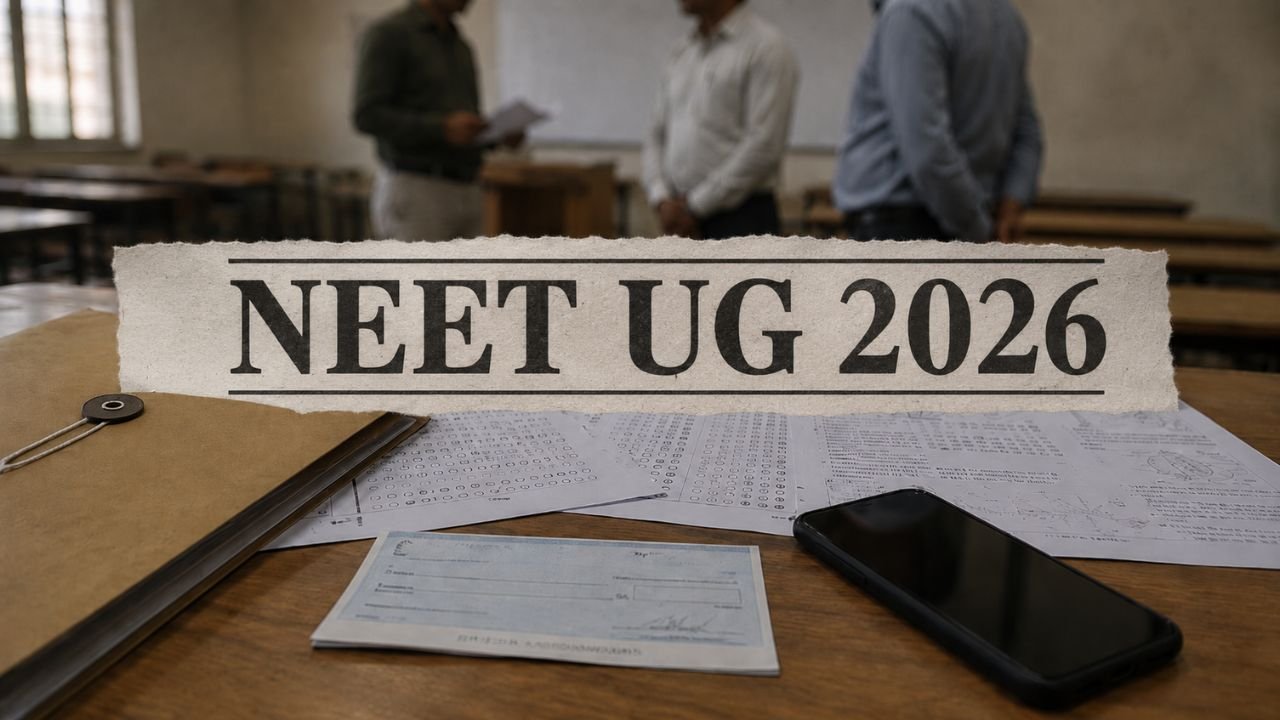

New Delhi | A major and unprecedented shift has been introduced in the security framework of NEET-UG 2026 re-examination scheduled for June 21, following past concerns over paper leaks. The examination authorities have now placed the entire question paper transport and distribution system under a strengthened government-controlled security mechanism, significantly reducing the role of private agencies.
Under the revised system, the transportation of question papers to regional centres across the country will be carried out through air logistics support involving defence-related aviation resources. Once delivered to these centres, further distribution to examination venues will be handled by the postal department, operating under a secured and trackable delivery network.
FCRF’s Flagship Cyber Law Certification Returns With a New Four-Week Cohort
Officials indicate that around 18 regional centres have been integrated into this high-security logistics framework. From these centres, question papers will be dispatched to district-level units and subsequently to examination centres across India. Each stage of movement will be governed by layered security protocols designed to eliminate any possibility of tampering or leakage.
A three-tier security arrangement has been activated for the entire process. The first layer focuses on transportation security, where movement of question papers will be supervised under specialised security units. The second layer involves administrative and examination monitoring teams, responsible for real-time oversight at every stage. The third layer operates at the local level, where police forces and district administration teams will jointly secure examination centres.
Authorities have also confirmed that no private logistics or outsourcing agency will be involved in the distribution process this year. The decision follows earlier incidents and aims to bring complete government oversight into the examination chain, ensuring greater transparency and control.
The examination, which will be conducted across approximately 552 cities in India and select international centres, has seen a significant upgrade in security planning. Sources associated with the examination system state that both digital and physical surveillance mechanisms have been strengthened at all centres.
Another key feature of the new arrangement is the integration of question paper tracking into a technology-driven monitoring system. This will allow real-time visibility of movement at every stage of transport and distribution. In addition, the process of opening and handling question papers at examination centres will strictly follow predefined schedules and security protocols.
Following previous paper leak controversies, concerns regarding the integrity of the examination system had intensified. The latest measures are being viewed as a critical step towards restoring trust and reinforcing credibility. Experts in the education sector believe that such multi-layered security frameworks could set a new benchmark for future competitive examinations in the country.
High-level government meetings have also led to a strategic shift in how examination security is perceived. It is now being treated not only as an administrative responsibility but also as a matter requiring strategic coordination involving key national institutions.
As the examination date approaches, preparations across states have been intensified. Each examination centre is being finalised under strict security guidelines. Authorities have stated that all necessary measures are being implemented to ensure a fully secure and transparent examination process, leaving no room for irregularities or malpractice.
