

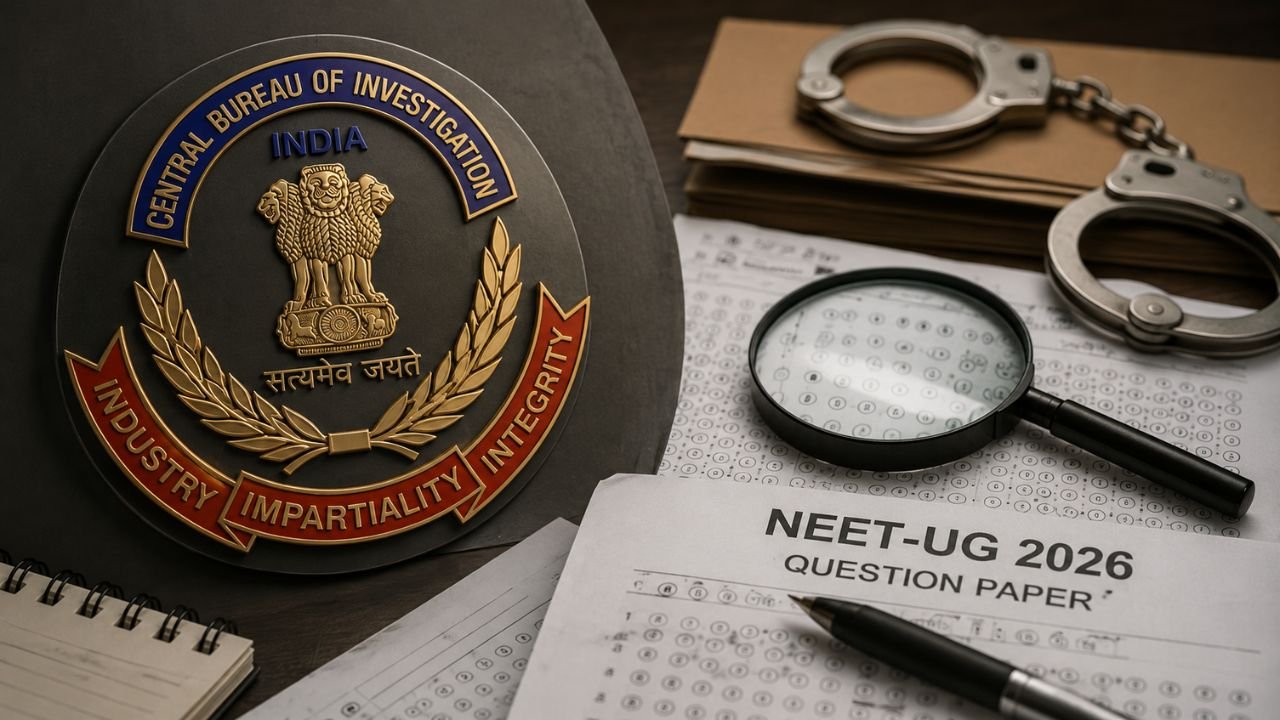

New Delhi | A fresh legal and academic debate has emerged in the high-profile NEET-UG paper leak case after accused Yash Yadav approached a Delhi court seeking 15 days of interim bail to appear for the upcoming NEET-UG re-examination. Hearing the plea, the court directed the Central Bureau of Investigation (CBI) to file its response and fixed June 12 as the next date of hearing. With the re-examination scheduled for June 21, the matter has attracted significant attention from both legal observers and students across the country.
Yash Yadav is among the individuals arrested in connection with the alleged NEET-UG paper leak case. Investigators claim that he played a role in the chain through which the leaked question paper was allegedly circulated. He is currently in judicial custody. In his application, Yadav has requested temporary release solely for the purpose of appearing in the re-examination, arguing that denial of the opportunity could adversely affect his academic future.
FCRF’s Flagship Cyber Law Certification Returns With a New Four-Week Cohort
During the proceedings, the court asked the CBI to place its position on record and submit a detailed reply. The central issue before the court is whether a person accused in a serious criminal case, but not yet convicted, should be allowed to avail educational opportunities while the trial and investigation are ongoing. The court is expected to weigh competing concerns of justice, fairness, and educational rights before reaching a decision.
Earlier this month, the court had granted Yadav limited relief by permitting him to keep books and study material while in custody so that he could continue preparing for the examination. The court had also sought clarification on whether the National Testing Agency (NTA) would permit him to sit for the re-examination and whether an admit card had been issued in his name.
According to the CBI, the alleged paper leak network extended across multiple states. Several other accused have been arrested in the case, including Shubham Khairnar, Manisha Waghmare, Prahalad Kulkarni, Manisha Mandhare, Manisha Sanjay Hawaldar, Shivraj Raghunath Motegaonkar, Dr. Manoj Shirure and Tejas Harshad Kumar Shah. All of them are presently in judicial custody while the investigation continues.
The agency alleges that intermediaries connected students and parents willing to pay for access to the leaked examination paper. Investigators claim that the paper was passed through multiple individuals and circulated for financial gain. The probe has since expanded across Maharashtra, Haryana and Rajasthan, with authorities examining the alleged roles of various participants in the network.
The controversy has raised serious concerns about the credibility and integrity of one of India’s most important medical entrance examinations. For millions of aspirants, NEET serves as the gateway to medical education and professional careers. Allegations of paper leakage have therefore sparked widespread debate about examination security, transparency and public confidence in the system.
Legal experts note that the case presents a complex question that goes beyond a routine bail application. The court must balance the need for an impartial investigation and the seriousness of the allegations against the principle that an accused person remains innocent until proven guilty. At the same time, the judiciary must consider whether denying a student the opportunity to take a crucial examination would amount to an unnecessary restriction on educational rights before guilt has been established.
Attention is now focused on the June 12 hearing, when the CBI is expected to submit its response. Following that, the court may decide whether Yash Yadav should be granted interim bail to appear for the June 21 re-examination. The outcome could have implications not only for the accused student but also for how courts approach similar requests involving educational opportunities during the pendency of criminal proceedings.
