
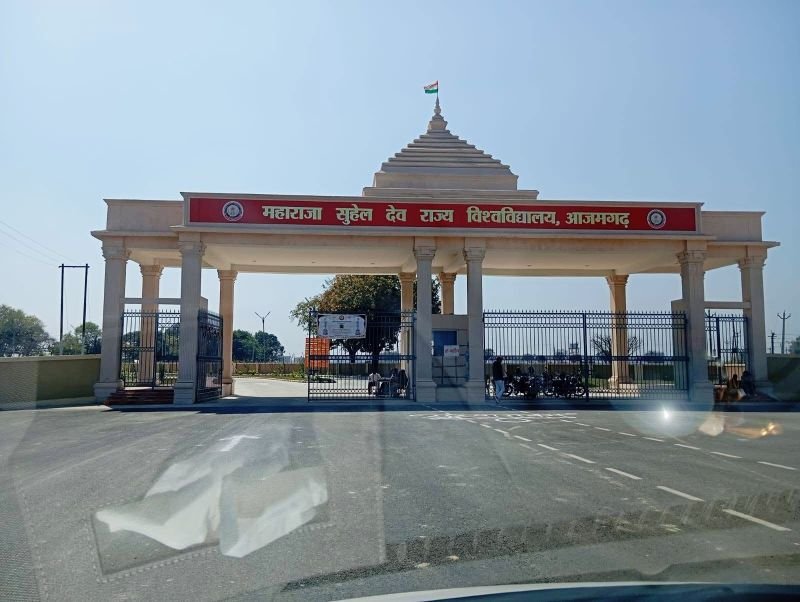
A major case of financial irregularity has surfaced in connection with the construction of Maharaja Suheldev State University in Uttar Pradesh’s Azamgarh. The company awarded the construction contract has been accused of evading taxes worth ₹11.71 crore. The case came to light during a GST department investigation, following which a formal notice has been issued to the firm seeking an explanation.
According to available information, the construction work of the university was assigned to Ahmedabad-based Dynaka Industries India Private Limited. The company secured the contract after registering in Uttar Pradesh during the financial year 2022–23. The university project was completed at an estimated cost of ₹108 crore. At present, the firm is reportedly engaged in government construction projects in other districts such as Meerut and Hathras.
FCRF Academy Launches Premier Anti-Money Laundering Certification Program
GST Evasion, ₹11.71 Crore Gap, and Show‑Cause Notice
The investigation revealed that while the company completed the construction within the stipulated timeline, it failed to deposit the applicable GST in full. Scrutiny of records available on the GST portal exposed significant discrepancies in tax payments. Preliminary findings indicate a tax evasion amounting to ₹11.71 crore, which is considered a direct loss to government revenue.
Departmental officials stated that the notice issued to the company clearly directs it to submit all financial documents and transaction details within a week. If the firm fails to provide a satisfactory response, strict legal action may follow. This could include penalties, additional interest, and other punitive measures under relevant tax laws.
Company Profile, Public‑Sector Concerns, and Wider Probe
Sources indicate that the company’s director is originally a resident of Bulandshahr in Uttar Pradesh, while the firm itself was registered in Ahmedabad. Later, it obtained registration in Uttar Pradesh to secure government contracts in the state. The case is being viewed as particularly serious since it involves a large public-funded educational infrastructure project.
Financial experts believe that such instances of tax evasion not only cause substantial losses to the exchequer but also raise serious concerns about transparency and accountability in public infrastructure projects. When the case pertains to the education sector, the implications become even more critical, as it directly affects public trust.
Following this development, the department is now preparing to conduct a deeper investigation into the company’s other ongoing and completed projects. There are concerns that if similar irregularities are found elsewhere, the scope of the case could widen significantly. Officials are also expected to use this case as a strong warning to other firms against non-compliance with tax regulations.
Local Fallout, Oversight Doubts, and Next Steps
At the local level, the incident has sparked considerable discussion. Allegations against a company involved in building a key educational institution have also raised questions about oversight mechanisms and administrative vigilance. Attention is now focused on the company’s response and the subsequent course of action.
For now, departmental proceedings are underway, and further revelations in the coming days cannot be ruled out.
