

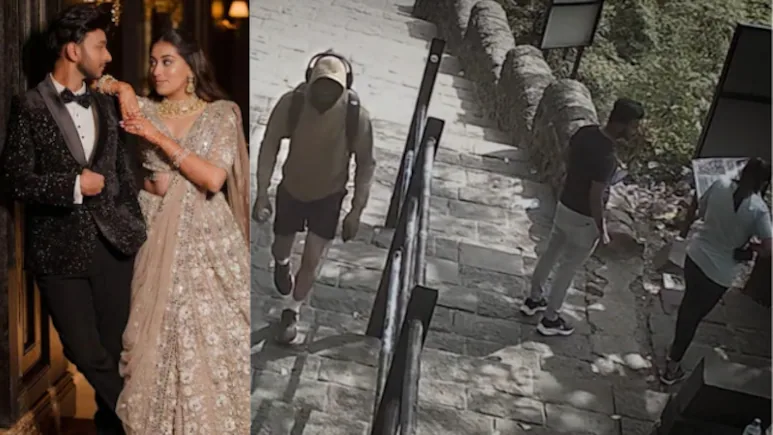
Police investigating the murder of Ketan Agarwal are reportedly considering the use of gait analysis, a forensic technique that helps compare a suspect’s walking pattern with CCTV footage. Investigators believe the method can assist in cases where a suspect’s face is hidden or conventional identification is difficult.
CCTV Footage Under Examination
According to sources, investigators are conducting a detailed review of available CCTV footage. If required, they may compare the suspects’ gait, body structure, walking speed, arm movement, stride length and other physical features with footage captured near the crime scene.
Forensic experts say the technique can be useful when video footage clearly records a person’s movement. It may help narrow the investigation and support other scientific findings.
Gauri Lankesh Case Cited
Gait analysis was also used in the investigation into the 2017 murder of journalist Gauri Lankesh. In that case, the assailant’s face was concealed by a helmet, making facial identification difficult.
After the suspect’s arrest, the Special Investigation Team reconstructed the crime scene and scientifically recorded the accused’s gait. The recorded walking pattern was then compared with surveillance footage and reportedly provided important corroborative evidence.
A similar forensic approach was also used in the 2021 Saki Naka rape and murder case in Mumbai. Experts say such analysis can be particularly useful when suspects try to conceal their identity.
Corroborative Evidence, Not Standalone Proof
Forensic specialists said gait analysis involves documenting a person’s walking pattern, posture, body movement, stride length, height, body proportions and other biomechanical features. These are then compared with video footage from the crime scene.
Cybercrime expert and former IPS officer Prof. Triveni Singh said modern investigations increasingly rely on the combined analysis of digital and forensic evidence. He said techniques such as gait analysis become more reliable when supported by CCTV footage, digital forensics, mobile location data, DNA evidence and other physical evidence.
Experts cautioned that gait analysis is generally not treated as conclusive standalone evidence. Instead, it is used as corroborative material alongside CCTV footage, digital evidence, DNA analysis, fingerprints, witness statements and other investigative findings.
