

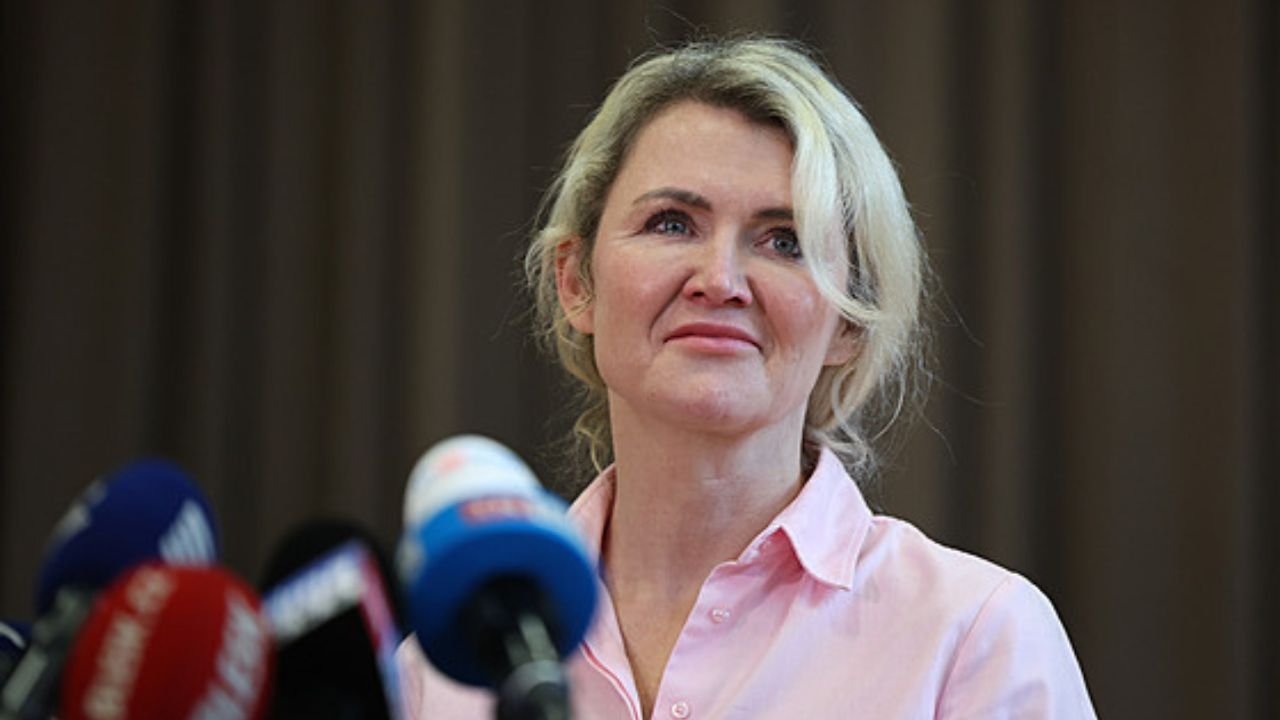

Prague | In a high-profile case involving alleged misuse of European Union subsidies, a court in the Czech Republic has convicted Jana Nagyová, a Member of the European Parliament and former associate of populist Prime Minister Andrej Babiš. The court handed her a three-year suspended sentence along with a financial penalty, marking a significant development in a long-running dispute over EU fund allocation and transparency.
The case concerns an estimated USD 2 million (around ₹18 crore) in EU agricultural and development subsidies linked to a project known as the “Stork’s Nest” farm. While the verdict is not final and remains open to appeal, the ruling has once again brought political scrutiny to the use of public funds within the European Union.
FCRF Academy Launches Premier Anti-Money Laundering Certification Program
The ‘Stork’s Nest’ farm at the center of the controversy
The investigation focused on a farm that allegedly received subsidies intended exclusively for small and medium-sized enterprises (SMEs). According to prosecutors, the ownership structure of the farm was temporarily altered to make it appear eligible for EU funding.
Authorities claimed that the ownership was shifted from Agrofert, a large conglomerate associated with Andrej Babiš, to family members, allowing the farm to qualify for subsidies meant for smaller businesses. Later, the ownership reportedly reverted back to the original corporate structure.
Investigators argued that this arrangement was designed to bypass eligibility rules governing EU subsidy programs. Although the subsidy amount was eventually returned, prosecutors maintained that the initial acquisition violated EU regulations.
Conviction of EU lawmaker and financial penalty
Jana Nagyová, who currently serves as a Member of the European Parliament, was found guilty of involvement in the subsidy process. Along with the suspended prison sentence, the court imposed a fine of 500,000 Czech koruna (approximately ₹18 lakh).
The ruling has triggered political debate across both Czech Republic and European Union institutions, particularly regarding accountability of elected representatives involved in financial irregularities.
Andrej Babiš named but shielded by immunity
Prime Minister Andrej Babiš was also named as a defendant in the case. However, he has not faced sentencing due to parliamentary immunity protections.
In March, lawmakers in the lower house of Parliament rejected a motion to lift his immunity, effectively halting legal proceedings against him for the time being. As a result, any trial involving Babiš is expected to resume only after the end of his current term in 2029.
Babiš has denied all allegations and has repeatedly stated that the case is politically motivated, claiming it is part of a targeted campaign against him.
Political reactions and ongoing debate
The case has intensified political divisions in the Czech Republic. Critics argue that misuse of EU funds undermines public trust in subsidy programs designed to support smaller enterprises and regional development.
Supporters of Babiš, however, insist that the allegations are part of a prolonged political struggle, especially after his party ANO (YES Movement) returned to power following strong electoral performance and formed a governing coalition with smaller political groups.
Analysts note that the coalition’s stance has shown increasing skepticism toward certain EU policies, adding another layer of tension to the ongoing controversy.
Court ruling and legal status
The Prague Municipal Court clarified that while Nagyová’s actions violated EU subsidy regulations, the sentence has been suspended rather than enforced immediately. The court also emphasized that the ruling is subject to appeal and therefore not legally final.
The case has been described as a complex example of corporate restructuring used to access restricted funding schemes. Legal proceedings are expected to continue as appellate review progresses.
Broader concerns over EU funding transparency
The verdict has renewed concerns about oversight mechanisms within EU funding programs. Experts point out that complex corporate ownership structures and political influence can complicate investigations into subsidy misuse.
Legal analysts also highlight that parliamentary immunity and political protection can often delay judicial accountability in such high-profile cases.
