
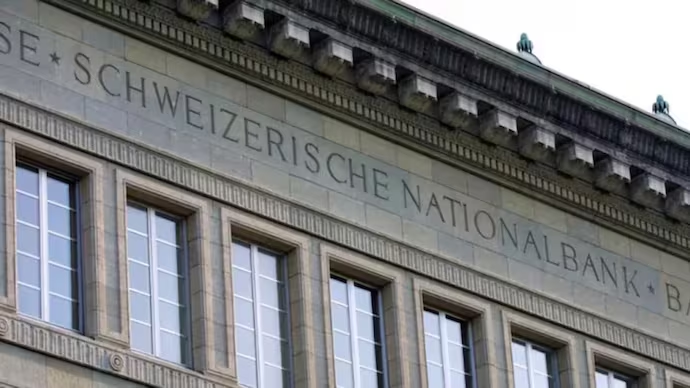
Indian-linked funds in Swiss banks declined by more than 8 percent in 2025 to 3.25 billion Swiss francs, or about ₹36,793 crore, according to fresh data released by the Swiss National Bank. The overall fall came even as deposits held in personal and institutional customer accounts rose by more than 50 percent to 524 million Swiss francs, roughly ₹6,000 crore.
The figures have renewed attention on Indian deposits in Switzerland’s banking system, though the Swiss National Bank has clarified that the data should not be treated as an indicator of alleged black money. The published numbers represent Swiss banks’ liabilities toward Indian clients and do not include assets held through third-country entities by Indian citizens or non-resident Indians.
FCRF’s Flagship Cyber Law Certification Returns With a New Four-Week Cohort
Personal Accounts Rise Despite Overall Fall
The latest data shows a clear divergence between total Indian-linked funds and balances held in personal and institutional client accounts. While the aggregate amount declined, customer account deposits rose sharply during the year.
Even after the increase, these accounts accounted for only about 16 percent of total Indian-linked funds held in Swiss banks. This indicates that a significant portion remained routed through other banking channels, financial institutions and intermediary arrangements.
According to the SNB, the overall decline was mainly driven by a reduction in funds held through local branches and other financial institutions. Indian-linked funds of around 2.6 billion Swiss francs were maintained through banks and financial intermediaries in 2025, a category that recorded an annual decline of about 15 percent.
India Ranked 46th in Swiss Bank Funds
The decline was not limited to Indian-linked funds. Global foreign client deposits in Swiss banks also fell during the year, with SNB data showing an 8 percent decline to 1.05 trillion Swiss francs.
India ranked 46th among countries with funds in Swiss banks. The United Kingdom, the United States and France occupied the top three positions. Bangladesh ranked 81st, while Pakistan was placed 108th.
Financial analysts caution that annual movements in Swiss banking data should not be read through a single lens. The figures cover several categories, including bank deposits, institutional investments, fiduciary liabilities and other financial relationships. As a result, year-to-year changes may not directly reflect individual capital movement alone.
Transparency Framework Strengthens Oversight
India and Switzerland have increased tax-related financial transparency in recent years. Since 2018, the two countries have operated an automatic exchange of information framework, under which financial details of eligible account holders are shared with Indian tax authorities.
The latest figures follow a sharp rise recorded in 2024, when total Indian-linked funds in Swiss banks had nearly tripled to 3.5 billion Swiss francs, the highest level since 2021. The 2025 decline partially reverses that surge, although the total remains substantial by historical standards.
Data from the Bank for International Settlements presents a different picture, showing Indian deposits in Swiss banks rising by about 20 percent in 2025 to nearly $89.7 million, or around ₹780 crore. Experts note that SNB and BIS figures differ because they measure different categories of banking exposure and use separate reporting methods.
