

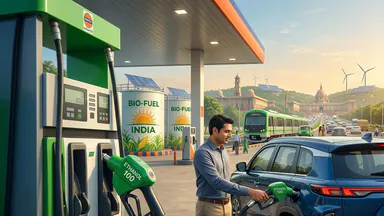

The Indian government has amended the Central Motor Vehicles Rules to establish a clear regulatory framework for flex-fuel vehicles capable of using ethanol blends ranging from above E20 up to E100. This measure forms a central part of the nation’s broader strategy to reduce crude oil consumption and advance alternative fuel adoption across the domestic transport sector. While E100 consists almost entirely of ethanol, the revised statutory provisions clarify that conventional petrol cars and two-wheelers cannot switch to these higher concentrations, as using blends such as E85 or E100 in incompatible vehicles risks damaging engines, fuel delivery mechanisms, and associated mechanical components.
Stringent vehicle standards and revised weight parameters
Under the updated regulatory notification, vehicles are permitted to utilize ethanol blends above E20 only if they have been engineered specifically for high-ethanol operation and have successfully completed designated statutory testing procedures. Flex-fuel vehicles feature modified engines and fuel delivery systems that can dynamically adjust to varying proportions of petrol and ethanol. These purpose-built engineering safeguards ensure that automobiles function safely, efficiently, and cleanly across differing fuel mixtures without mechanical degradation.
Alongside fuel specifications, the Ministry of Road Transport and Highways has modified statutory provisions regarding vehicle classification, emission verification, and fuel parameters under the governing rules. A key adjustment includes raising the maximum permissible weight limit for specific light petrol and diesel vehicles from 3,000 kg to 3,500 kg. This adjustment creates regulatory space to accommodate the mechanical requirements of alternative-fuel systems, while maintaining the rule that road operation remains contingent upon meeting all relevant technical benchmarks.
Automakers test flex-fuel models amid infrastructure challenges
Automobile manufacturers in India have begun adapting existing platforms to test and deploy flex-fuel technology. In June, Maruti Suzuki India showcased a flex-fuel prototype of the WagonR, representing one of the initial passenger vehicle models tailored for the domestic market. The demonstration vehicle was engineered to run on petrol-ethanol combinations ranging anywhere between E20 and E100, showing that local vehicle platforms can transition toward utilizing domestically produced biofuels.
Other prominent manufacturers, including Toyota, Tata Motors, and Hyundai, are actively developing alternative-fuel technologies. However, the commercial expansion of flex-fuel vehicles requires substantial work beyond vehicle engineering. The widespread market integration of these platforms will depend heavily on the continuous availability of specialized fuels, the creation of dedicated retail distribution networks, clear manufacturing standards, and informed consumer adoption across states.
Bolstering energy security against international supply risks
India relies heavily on foreign crude oil imports to satisfy its transport and energy requirements. By promoting higher ethanol blends, the government aims to lower the import bill, conserve foreign exchange reserves, and utilize domestic agricultural and refining resources. With E20 fuel, which contains 20 percent ethanol and 80 percent petrol, already available in parts of the country, moving toward higher blends represents the next phase of diversifying the domestic energy basket.
Ongoing geopolitical conflict in West Asia and broader instability across international petroleum markets have underscored the urgency of insulating the domestic economy from external price spikes and delivery bottlenecks. Higher domestic ethanol usage offers an avenue to cushion these global shocks, provided that agricultural feedstock yields, industrial distillery capacities, and filling station dispensing infrastructure expand at a matched pace. The amended rules create the necessary legal groundwork, but sustained progress will require sustained coordination between policymakers, vehicle manufacturers, fuel suppliers, and certification agencies.
Follow for daily updates on cybercrime, corporate fraud, DFIR, hacking, investigations, and digital forensics
