

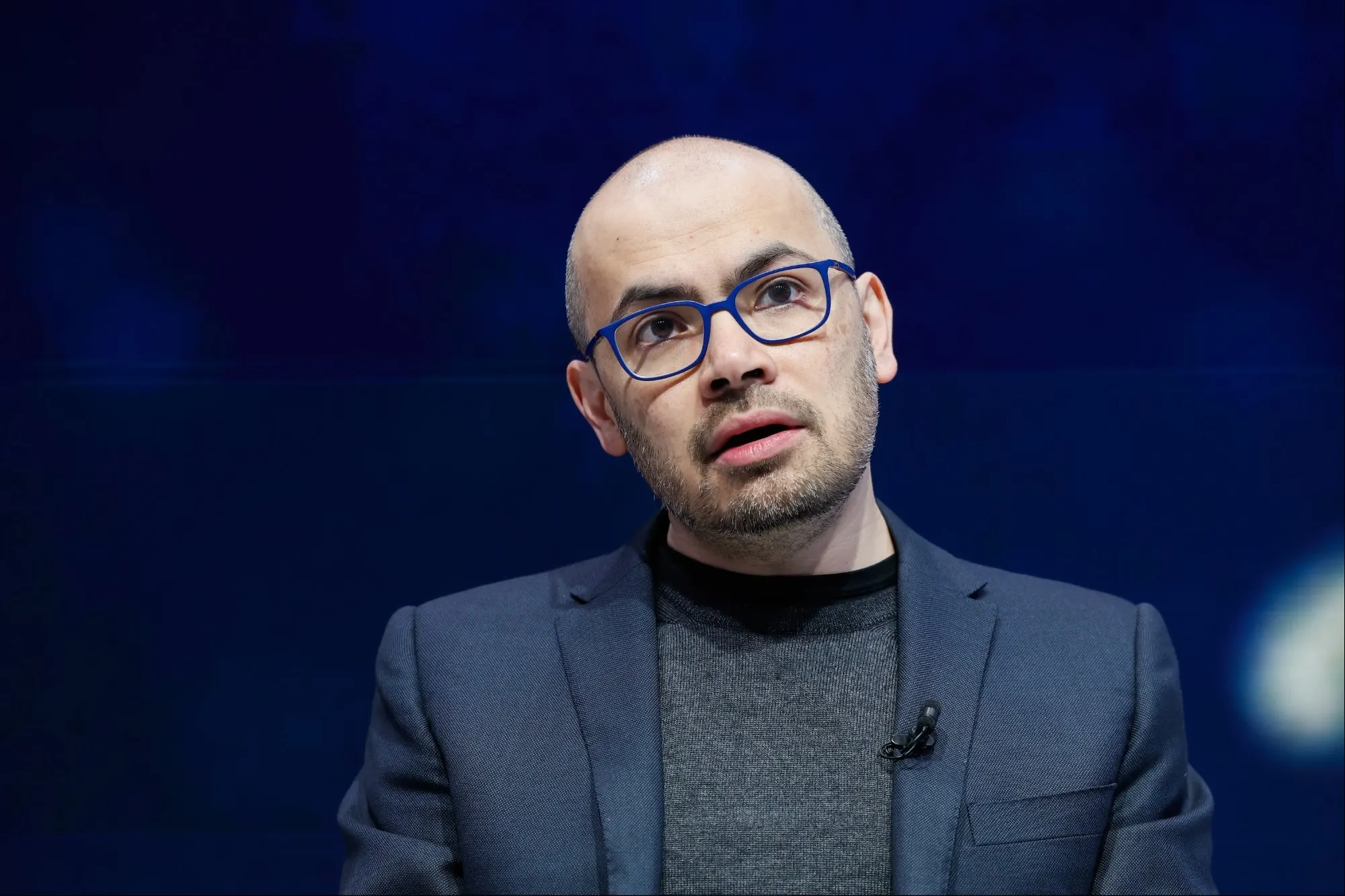

Google DeepMind CEO Demis Hassabis has warned that Artificial General Intelligence, AI systems capable of matching or surpassing human cognitive abilities, could arrive within the next three to five years, describing the moment as comparable in historical weight to humanity’s discovery of fire or electricity. He said the technology could transform science and industry at a pace far exceeding any previous revolution, while cautioning that inadequate safeguards could open the door to serious cybersecurity and biosecurity risks.
A Timeline That Keeps Shrinking
Hassabis’s prediction marks a notable acceleration from his own earlier estimates. As recently as last year, he had placed AGI’s arrival between 2030 and 2035; by May this year, at Google’s I/O conference, he narrowed that window to 2029-30, telling attendees the industry was standing in “the foothills of the singularity.” His latest comments push the timeline in even further, aligning him closer to more aggressive predictions from peers such as Anthropic CEO Dario Amodei.
Speaking separately at the India AI Impact Summit earlier this year, Hassabis quantified his optimism in striking terms, suggesting AGI’s impact could be roughly ten times that of the Industrial Revolution, unfolding over a decade rather than a century. He pointed to potential breakthroughs in medicine, clean energy and advanced materials as evidence of AGI’s upside, arguing it could compress research timelines that currently take years into a fraction of that time.
The Case for a Global AI Watchdog
Alongside the timeline warning, Hassabis has been pushing a concrete regulatory proposal. In a manifesto published this month titled “A Framework for Frontier AI and the Dawning of a New Age,” he called on the United States to establish a new AI watchdog empowered to screen the world’s most advanced models and coordinate an industry-wide slowdown if dangers escalate, an institution he has said should be funded by the industry itself but staffed by independent technical experts.
Hassabis told reporters that today’s AI-driven cyber risks amount to little more than warning shots, cautioning that within roughly 18 months, far graver biological and even nuclear-adjacent capabilities could become embedded in open-source models beyond the reach of any single government’s oversight. Notably, he stressed the deeper risk lies not with open-source systems alone but with the more powerful proprietary models major labs, including his own, are actively racing to build.
A Race Overtaking the Rulebook
Hassabis’s central concern is that governments and AI companies remain focused on competitive advantage rather than building internationally accepted safety standards, leaving a widening gap between capability and governance. He has said stronger global cooperation is essential to ensure powerful AI systems are deployed responsibly, a point he has reportedly raised directly with the Trump administration, fellow AI lab leaders and European officials while building support for his proposal.
Cybersecurity experts have echoed this dual-edged framing, noting that while AI can meaningfully strengthen threat detection and automate cyber defence, the same underlying capabilities can be weaponised for more convincing phishing campaigns, deepfake-driven fraud and large-scale social engineering if left unchecked. Researchers broadly agree that AGI’s ultimate impact will hinge less on the pace of technical progress and more on whether governance and international coordination can keep up with it, a race Hassabis’s own shifting timelines suggest is only getting tighter.
Follow for daily updates on cybercrime, corporate fraud, DFIR, hacking, investigations, and digital forensics
