

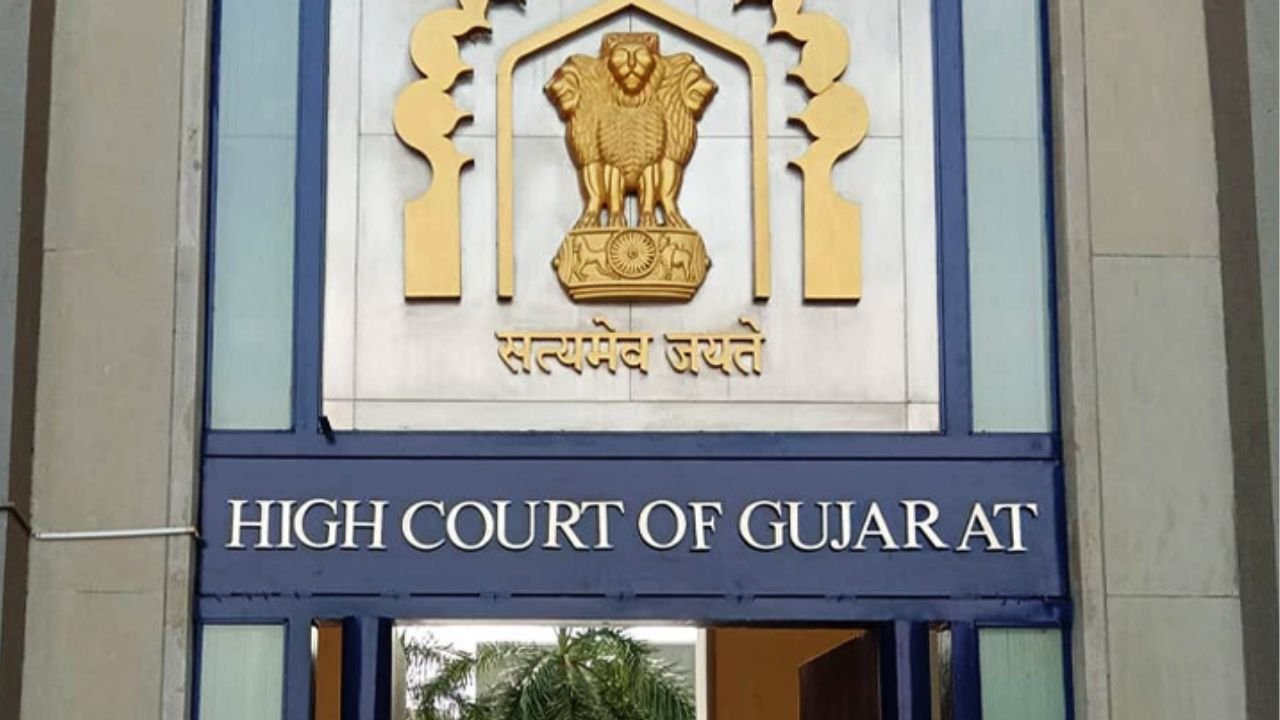

Ahmedabad | In a significant ruling in a cyber fraud case involving ₹3,33,500, the Gujarat High Court has granted regular bail to a garage mechanic accused of being linked to the offence through the use of his mobile hotspot. The court, in its preliminary observations, stated that the available material indicates a limited role of the accused and there is no concrete evidence showing his direct involvement in the alleged offence.
The accused, Banwarilal Yadav, a garage mechanic, was arrested in December 2025 and has been in judicial custody since 22 December 2025. The case relates to a cyber fraud in which a victim was allegedly cheated through a suspicious online message, leading to unauthorized transactions and a financial loss of ₹3,33,500. The complaint was registered at Morbi City ‘A’ Division Police Station.
FCRF Returns With CDPO, Its Premier Data Protection Certification for Privacy Professionals
During the investigation, police claimed that the fraudulent online activity was traced to an IP address linked to the accused’s mobile hotspot. However, further findings suggested that the co-accused, Rahul Meena, had allegedly used the mechanic’s mobile hotspot connection to execute the cyber fraud. This technical linkage formed a key basis of the prosecution’s case.
In the High Court, the defence argued that the accused had no knowledge of the fraudulent activity and that his mobile hotspot was misused without his consent. It was further submitted that mere technical association through an IP address cannot establish criminal intent or participation in the offence. The defence emphasized that there was no evidence indicating financial benefit or communication between the accused and the principal accused.
After hearing both sides, the court observed that prima facie there is nothing to suggest that the accused knowingly facilitated or participated in the commission of the offence. The bench noted that digital or technical evidence alone, without corroborative proof of intent or active involvement, may not be sufficient to justify continued incarceration.
The court also took into account that the investigation had already reached the stage of filing of charge sheet and that the accused had no prior criminal record. Considering these factors, the High Court granted regular bail. However, it clarified that the observations were strictly limited to the bail proceedings and would not influence the final outcome of the trial.
Investigating agencies believe the case could be part of a broader cyber fraud network where criminals allegedly exploit unsecured or borrowed internet connections to conceal their identities. In such schemes, unsuspecting individuals often become linked to crimes simply because their network access points are misused by others.
Cybersecurity experts have highlighted that the case underscores the growing challenges in digital investigations, where IP addresses and hotspot connections alone are insufficient to conclusively establish criminal liability. They stressed the need for deeper forensic examination, including device-level analysis, communication records, and financial transaction tracing.
With bail granted, the accused will remain out of custody while the trial proceeds. The prosecution is expected to present further evidence during the trial to establish the exact chain of events and determine whether the accused had any intentional role beyond the technical connection of his mobile hotspot.
Meanwhile, investigators continue to probe the wider suspected network behind the fraud, as authorities believe multiple individuals may have used similar methods to mask their digital identities and carry out financial crimes. The matter remains under judicial consideration.
