
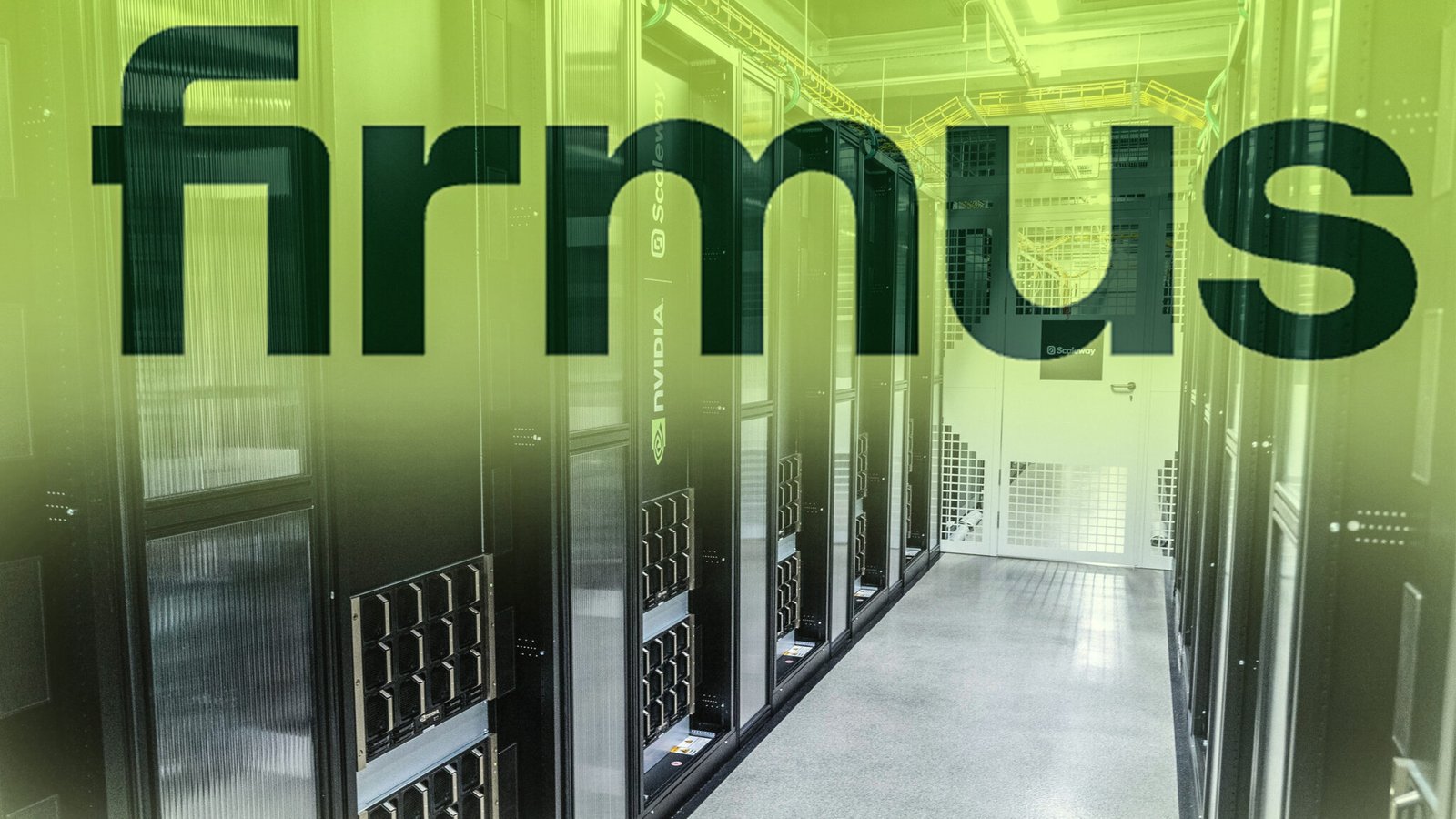

The relentless global appetite for artificial intelligence infrastructure has found its newest epicentre in Batam, a strategically positioned Indonesian island just off the coast of Singapore. Australian AI infrastructure firm Firmus Technologies, an enterprise that initially cut its teeth in cryptocurrency mining, is developing a sprawling 360-megawatt Nvidia DSX AI Factory campus. Scheduled to come online between the first quarter of 2027 and early 2028, the facility will host a staggering 170,000 Nvidia graphics processing units. This deployment will incorporate the latest Grace Blackwell and Vera Rubin chip architectures, positioning the centre as a formidable regional hub.
By anchoring this colossal project in Batam, Firmus is capitalising on the island’s immediate proximity to Singapore’s established financial and technological ecosystem. The geographical choice effectively bypasses the severe land and power constraints that currently choke data centre expansion within Singapore itself. For the broader Southeast Asian market, the campus represents a critical leap forward in sovereign compute capabilities. Emerging AI developers across the region will soon have direct access to multi-petaflop density without relying exclusively on established Western hyperscalers.
Redefining Procurement Through Revenue Sharing
Perhaps the most disruptive element of the Firmus-Nvidia alliance is the underlying financial architecture of the hardware deployment. Rather than demanding upfront multi-billion-dollar capital expenditures, Nvidia is executing this deal through a sophisticated revenue-sharing mechanism under its DGX Cloud Lepton programme. The American chip giant will capture traditional product revenue while simultaneously taking a cut of the cloud services income generated by the Batam facility. This structure effectively transforms Nvidia from a mere silicon vendor into a long-term stakeholder in the operational success of the data centre.
For Firmus, this arrangement is a vital tool to level the playing field against incumbent technology giants. Smaller, AI-native startups often lack the pristine credit ratings required to secure the massive hardware volumes necessary for foundation model training. By absorbing the upfront capital shock, the revenue-sharing model democratises access to elite compute resources. If successful, this framework could serve as a blueprint for how artificial intelligence infrastructure is deployed across emerging markets globally.
Financial Muscle and the Deferred Public Offering
The sheer economic scale of the Indonesian campus has triggered a significant recalibration of Firmus’s corporate strategy. The company’s leadership projects an astonishing $25 billion to $30 billion in committed offtake agreements over the first six years of the facility’s operation. Armed with this robust revenue forecast, Firmus has comfortably delayed its highly anticipated initial public offering on the Australian Securities Exchange. Instead of rushing to public markets, the firm is choosing to validate its massive compute-selling capability first.
Firmus already commands a formidable financial war chest, having recently closed a funding round led by Coatue Management that pushed its valuation to $5.5 billion. Nvidia’s direct participation as an equity investor in these earlier rounds further deepens the entanglement between the two corporations. The startup has also reportedly secured massive debt facilities to finance its overarching infrastructure buildout across the Asia-Pacific. Consequently, the immediate pressure to list publicly has dissipated, allowing the company to focus entirely on execution and customer acquisition.
The Evolution of Energy-Intensive Infrastructure
Deploying 170,000 high-performance GPUs in a tropical climate introduces unprecedented thermal management challenges. To counter this, the Batam facility will deliberately move away from traditional, power-hungry air conditioning systems. Firmus is engineering the campus from the ground up to utilise advanced immersion and liquid cooling technologies. This vertical integration of cooling, power, and silicon orchestration is designed to drastically lower energy consumption and water use.
The push for energy efficiency is no longer just an environmental mandate; it is a fundamental economic necessity for modern AI factories. As the global race for artificial intelligence supremacy intensifies, grid capacity has become the ultimate bottleneck. By engineering high-density, liquid-cooled modules that mitigate power loss, Firmus is attempting to solve the very physical limits of the AI boom. The success of the Batam campus will test whether the industry can sustain its exponential growth without overwhelming regional energy grids.
Follow for daily updates on cybercrime, corporate fraud, DFIR, hacking, investigations, and digital forensics
