
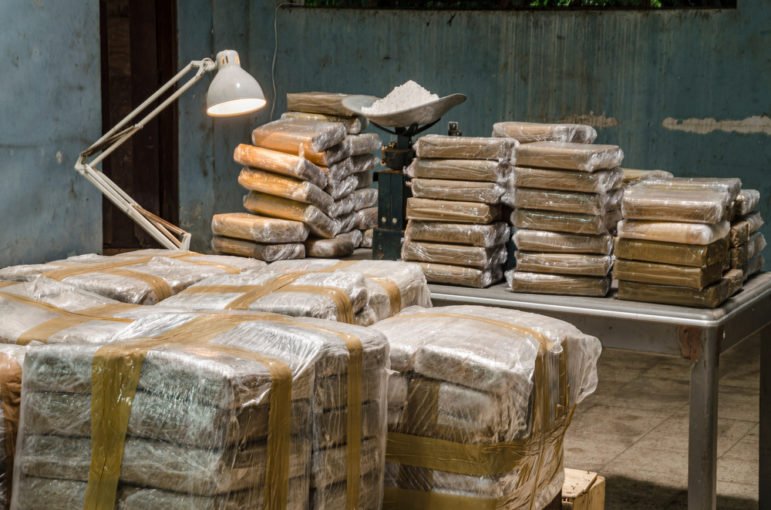
An international law enforcement operation led by the Spanish Guardia Civil and coordinated through Europol has disrupted a major trans-Atlantic cocaine trafficking route used by criminal networks to move drugs from Latin America to Europe. Conducted between April 13 and 26, 2026, the operation led to the seizure of 11 tonnes of cocaine, 8.5 tonnes of hashish, the arrest of 54 people and the interception of eight vessels.
Atlantic Corridor Used for Offshore Drug Transfers
The operation focused on the eastern Atlantic corridor between the Spanish Canary Islands and the Portuguese Azores, an area increasingly used by criminal networks for large-scale cocaine transhipment. Maritime assets were deployed across the Atlantic to detect, track and intercept vessels suspected of transferring drugs at sea.
FCRF Academy Launches Premier Anti-Money Laundering Certification Program
Europol had earlier warned that criminal networks were shifting cocaine trafficking away from major European ports and toward fragmented offshore routes. The latest operation directly targeted this changing method, which relies on multiple vessels and crews to reduce exposure to law enforcement.
Criminal Networks Shift Away From Major Ports
According to the operational findings, cocaine shipments are now being moved in stages across the Atlantic. Mother vessels collect cocaine in Latin America and travel into international waters before cargo is transferred mid-ocean to high-speed vessels capable of long-range crossings.
Final-stage transfers then move the drugs to smaller boats for landing in remote coastal areas in Portugal and Spain, including beaches and small marinas. Law enforcement agencies said this model is designed to spread risk across vessels and crews while avoiding traditional detection points.
International Agencies Join Maritime Crackdown
The operation was led by Spain’s Guardia Civil with cooperation from law enforcement authorities in Italy, Portugal, the United Kingdom and the United States. Europol provided operational coordination, intelligence development and analytical support throughout the two-week action.
A Europol expert was also deployed to Spain to cross-check operational data as vessels were monitored and intercepted at sea. Participating agencies included Italy’s Guardia di Finanza, Portugal’s Polícia Judiciária, Guarda Nacional Republicana and Polícia Marítima, Spain’s Guardia Civil, Spanish Navy and Agencia Estatal de Administración Tributaria, the UK’s National Crime Agency and the United States Drug Enforcement Administration.
Europol said intelligence gathered during the operation will continue to be analysed to identify linked criminal networks and support further investigations. Authorities said more arrests and seizures are expected as follow-up operational work continues.
