
Follow us on Google News

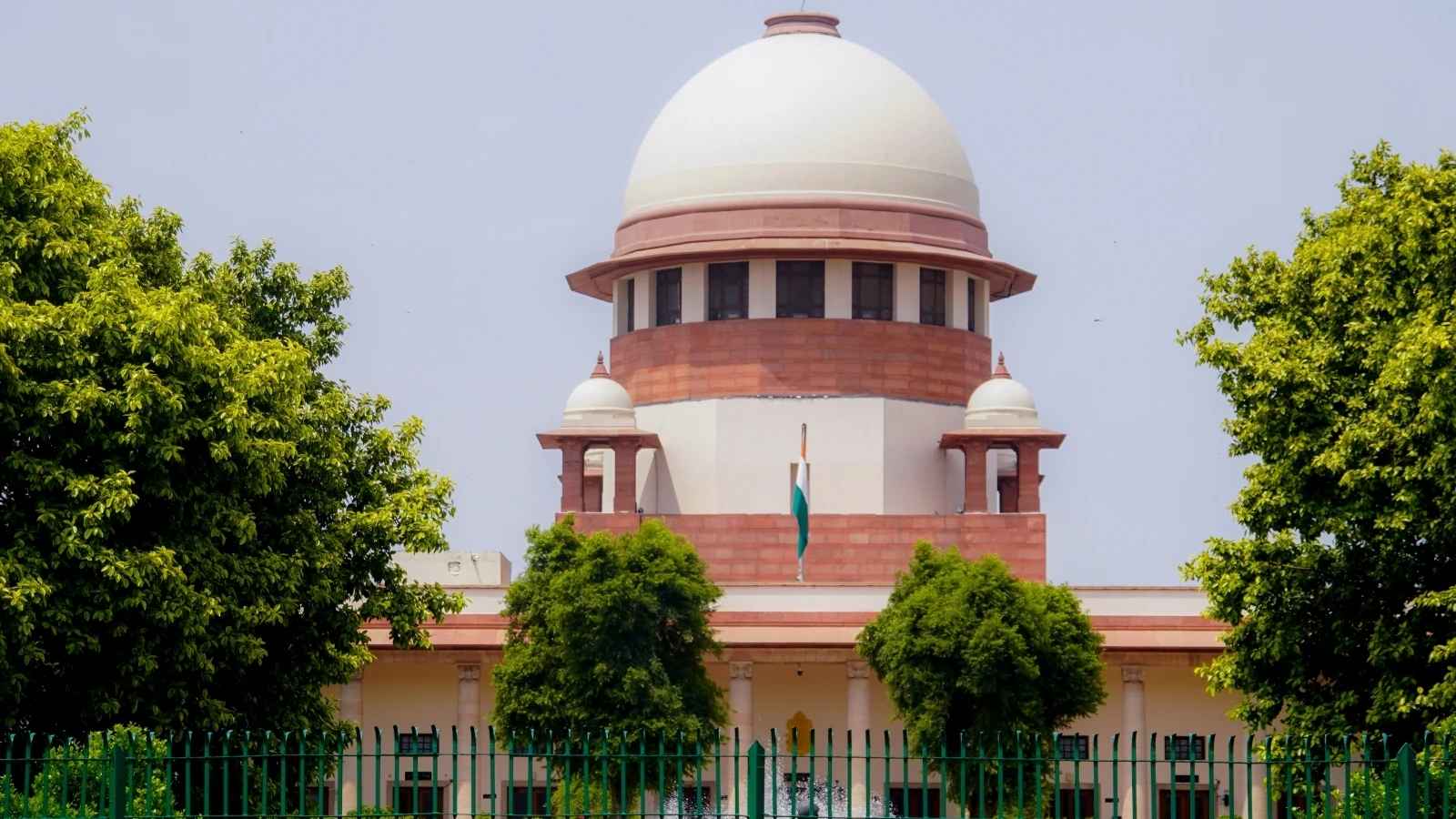
The Supreme Court has strongly criticized the conduct of a sessions judge in Bihar over the misuse of judicial powers after the officer convicted and fined a Superintendent of Police (SP) on the same day for failing to register a First Information Report (FIR) despite a court order. Questioning the authority under which such summary punishment was handed down, the top court told the judicial officer not to act like a strongman and urged him to understand his jurisdiction and follow the procedure established by law.
A bench comprising Chief Justice Surya Kant and Justice Joymalya Bagchi made the remarks while hearing a petition filed by the judicial officer. Expressing sharp displeasure over the manner in which the sessions judge handled the matter, Justice Bagchi described the judge’s understanding of the law as deeply disappointing and questioned the legal basis for summoning a senior police officer and convicting him on the very same day.
Summary Conviction Over Non-Registration of FIR
The dispute originated when the sessions judge in Bihar directed the police to register an FIR in a particular case. When the concerned police officials did not comply with the directive, the judge treated the non-compliance as an offence committed in the presence of the court and summoned the Superintendent of Police. According to the allegations, the judge passed a conviction order against the officer on the same day and imposed a fine.
Taking serious exception to the procedure adopted, the Supreme Court questioned whether a sessions judge possesses the authority to summon a District Magistrate or a Superintendent of Police to the courtroom, treat their absence or non-compliance directly as contempt of court, and sentence them on the spot. The bench advised the petitioner’s counsel to explain to his client that such an aggressive approach is inappropriate and that judges must operate strictly within the boundaries prescribed by law.
Scope of Section 384 of BNSS and Section 345 of CrPC Explained
During the hearing, Justice Bagchi referred to Section 384 of the Bharatiya Nagarik Suraksha Sanhita (BNSS) and its corresponding provision in the earlier Code of Criminal Procedure (CrPC), Section 345. These sections empower a court to take immediate action in specific circumstances when certain offences are committed directly in the view or presence of the court.
Clarifying the legal scope, the bench stated that this power is not unlimited. It can only be invoked when a serious act takes place inside the courtroom during proceedings or in the direct presence of the judge, obstructing the administration of justice. Giving examples, the court explained that immediate summary action is justified if an individual slaps someone inside the courtroom, hurls abuses during a hearing, or refuses to leave the courtroom despite an explicit direction from the judge. Such acts directly disrupt court proceedings and threaten judicial decorum.
Non-Compliance Outside Court Requires Separate Legal Process
The bench emphasized that mere failure to comply with a court order outside the courtroom does not automatically fall into the category of an offence committed in the face of the court that warrants instant conviction and sentencing. If a police officer or any other government official fails to implement a judicial directive outside the courtroom, the law prescribes a separate procedure to address the lapse, and the concerned court is bound to follow that established process.
Highlighting the distinction between contempt of court and an offence committed in the presence of a judge, the Supreme Court underscored the necessity of judicial restraint and accurate legal comprehension. While non-compliance with judicial orders by administrative or police officials is a serious issue, the top court made it clear that judicial officers cannot step outside their defined jurisdiction or exercise summary powers arbitrarily.