
Follow us on Google News

GHAZIABAD: A private company employee in Ghaziabad discovered that fraudsters had misused his PAN card to register a fake Goods and Services Tax (GST) firm and conduct business transactions exceeding Rs 11 crore in his name. The fraud came to light five years later when the Income Tax Department issued him a notice detailing high-value transactions worth crores of rupees. Shocked by the financial figures, the victim approached the authorities, leading the Kavinagar police to register a first information report (FIR) against unidentified accused.
According to the victim, Vikas Gupta, a resident of the Kavinagar area, he worked as a salaried employee at Capgemini Technology Services India Limited during the financial year 2020-21 (assessment year 2021-22). His annual income during that period was approximately Rs 3,71,400. Because his earnings fell below the taxable income limit, he had not filed an income tax return for that year.
On March 29, 2026, the Income Tax Department in Ghaziabad issued a show-cause notice under Section 148A(1) linked to his PAN. The notice recorded GST-related high-value sales transactions exceeding Rs 11 crore. When Gupta subsequently downloaded his Form 26AS from the income tax portal, he found that unknown individuals had used his PAN to secure a fake GST registration and execute large-scale bogus commercial transactions. Gupta stated that he had neither applied for GST registration nor engaged in any business or trading activities.
Victim Denies Sharing Documents, Police Register Case
Gupta maintained that he never handed over his PAN card, Aadhaar, or any other identity documents to anyone. He expressed ignorance as to how a fake firm was established using his credentials without his consent. He also alleged that GST officials failed to verify the physical address of the firm before granting the registration. Since receiving the notice, he has been repeatedly visiting the offices of the GST and Income Tax departments to get the matter resolved.
To support his complaint, the victim submitted copies of his identity card, Form 26AS, the Income Tax Department notice, his company salary certificate, Form-16, bank statements for the financial year 2020-21, and a previous complaint to the police. Assistant Commissioner of Police (ACP) Abhay Daga confirmed that based on the written complaint and supporting documents, a case has been registered under Sections 318(4), 319(2), 338, 336(3), and 340(2) of the Bharatiya Nyaya Sanhita. Police are thoroughly examining the income tax and GST records to identify and arrest the culprits involved in misusing the PAN card for fraudulent transactions.
Job Seekers Often Lured Into Becoming Fake Company Owners
Investigations by cyber police in earlier cases have revealed a broader pattern where fraudsters exploit citizens’ identities to set up shell companies for tax evasion and cybercrime. Unemployed individuals are frequently targeted with false promises of employment. Under the pretext of conducting interviews and recruitment processes, scammers collect essential documents such as PAN and Aadhaar cards from unsuspecting candidates.
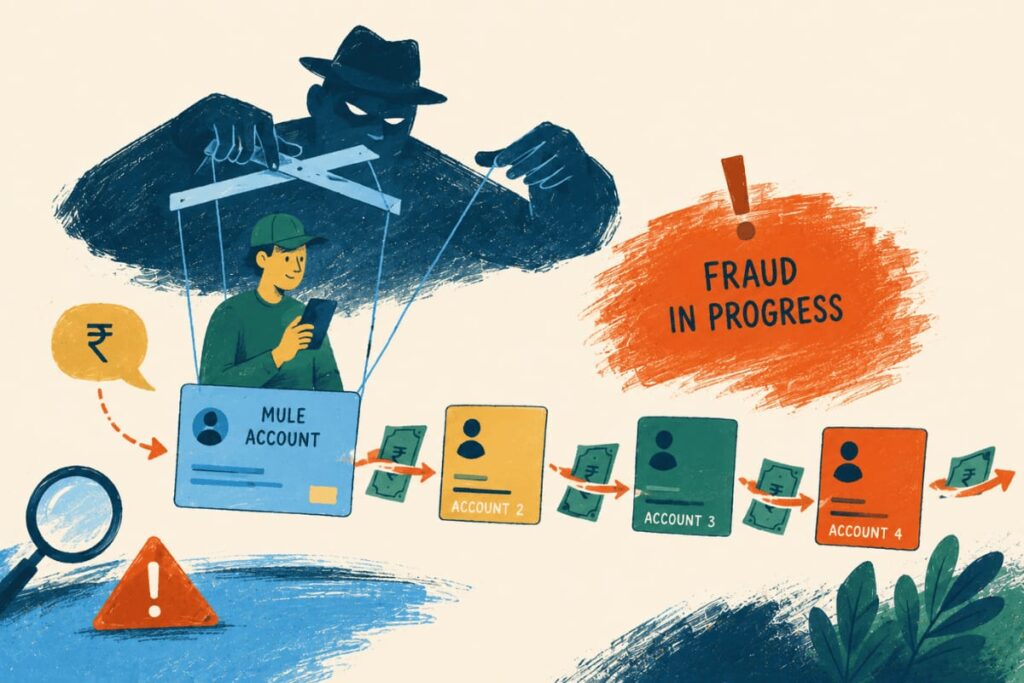
These documents are later misused to register companies in the victims’ names. Police findings indicate that such fraudulent firms are primarily used to open current bank accounts, which then serve as conduits to launder money obtained through cyber fraud. Through this modus operandi, ordinary job seekers are unknowingly dragged into organized cybercrime networks.
Minor Digital Lapses Can Lead to Identity Theft
Additional Deputy Commissioner of Police (Crime) Piyush Singh cautioned that minor lapses while browsing online can expose citizens to severe financial trouble. He noted that many people use unverified mobile applications or unknown web links to check their CIBIL scores, inadvertently sharing sensitive details like their PAN numbers with fraudsters.
Similarly, scammers circulate deceptive links on social media platforms offering quick checks for loan eligibility. Although these pages closely mimic official bank websites, they are fake portals designed to harvest personal data. Once users enter their PAN and Aadhaar details, fraudsters capture the information to commit identity theft. Singh advised citizens to avoid unknown websites or apps for financial checks and strictly use the official portals of authorized banks and institutions.