
Follow us on Google News

Cyber fraudsters in Bihar are successfully pocketing nearly 70 percent of cheated funds, while police and enforcement agencies manage to freeze only 30 percent of the stolen money. Despite identifying 1.09 lakh mule bank accounts across the state, authorities continue to face steep hurdles in intercepting the money trail before criminals withdraw the cash. To dismantle this sprawling financial network, the Cyber Crime Security Unit has launched a targeted enforcement drive named Operation Prahar-5.
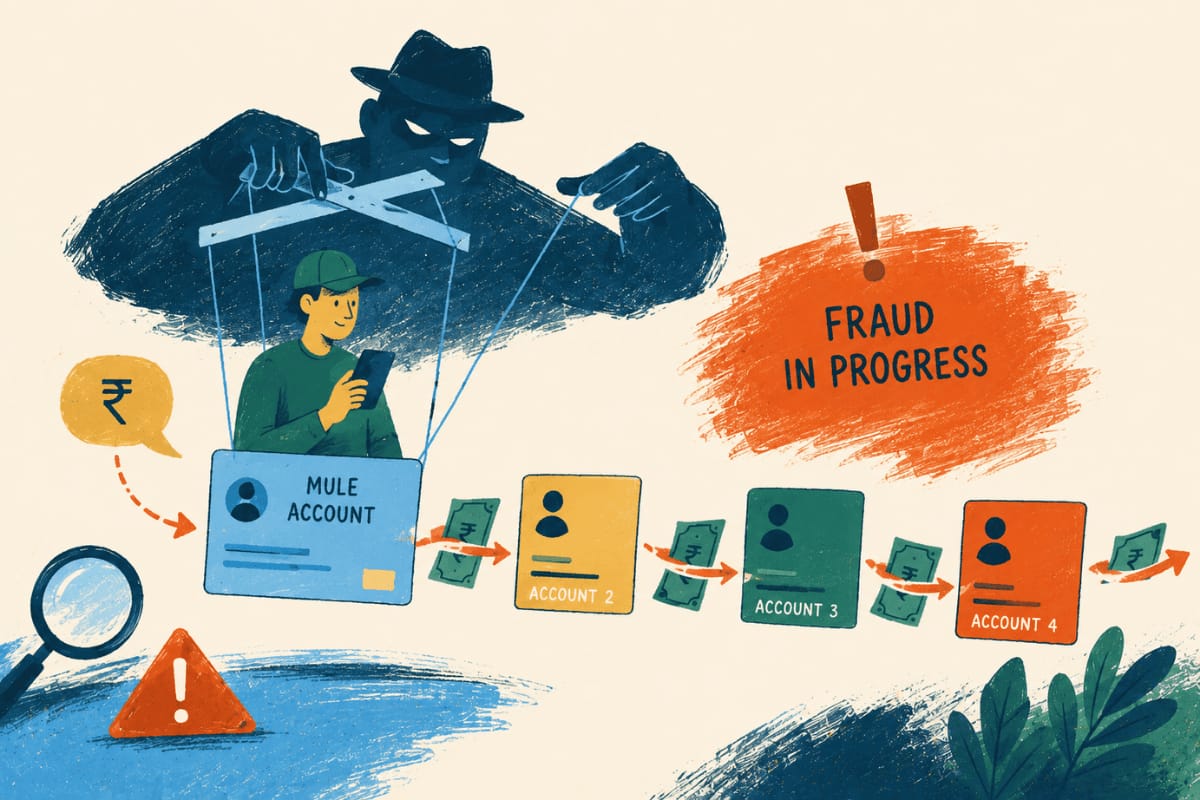
According to officials, mule accounts serve as critical conduits for cyber criminals to launder and route illicit proceeds. Fraudsters typically rent these accounts from ordinary citizens by offering small commissions or luring them with financial incentives. Once a victim is cheated, the stolen money is first deposited into these mule accounts and then rapidly transferred across multiple linked accounts within minutes. This swift layering makes it exceedingly difficult for investigators to trace the money or apprehend the masterminds operating behind the scenes, even after specific accounts are flagged.
Patna Tops Mule Account Tally as Operation Prahar-5 Begins
Inspector General Ranjeet Mishra, who monitors the Cyber Crime Security Unit, stated that out of the 1.09 lakh mule accounts identified statewide, Patna accounts for the highest concentration with 14,000 suspicious accounts. Muzaffarpur has also emerged as a notable hub, with more than 600 mule accounts detected in the district so far. Overall, fraudulent transactions exceeding 80 crore rupees have been routed through these mule accounts across Bihar.
Data compiled up to Operation Prahar-4.1 reveals that fraudsters routed over 60 crore rupees through identified mule accounts during that phase alone. Law enforcement agencies managed to put a hold on just over 30 percent of this amount. Officials noted that the national average for freezing cyber fraud funds stands at 28 percent, placing Bihar’s recovery rate roughly two percentage points higher than the national benchmark. Nevertheless, the sheer volume of unrecovered funds indicates that criminals still retain the upper hand in moving stolen cash.
Delayed Reporting and Complicit Account Holders Aid Fraudsters
Statistics from Operation Prahar-4.1 show that despite sustained police efforts, cyber criminals walked away with approximately 42 crore rupees. Senior officers attribute this heavy loss primarily to delays in reporting crimes. Victims frequently take time to realize they have been duped and delay calling the 1930 national cyber helpline or approaching a cyber police station. By the time an official complaint is registered, the funds have already passed through several banking channels and been withdrawn.
Another major obstacle confronting investigators is the deliberate involvement of mule account holders. Many individuals knowingly hand over their bank credentials and ATM cards to fraudsters in exchange for a commission. When police track down these account holders during investigations, they routinely feign ignorance and claim they were unaware of the illegal transactions. This lack of cooperation complicates legal proceedings and slows down efforts to establish culpability.
Court Seeks Progress Report Over Unreturned Victim Funds
The challenges in recovering frozen money are highlighted by a recent judicial intervention in Muzaffarpur. A local court has sought a formal progress report from the police after a fraud victim failed to receive his money despite a judicial order. Ganesh Kumar, a resident of Saraiyaganj in Muzaffarpur, was cheated of 19.6 lakh rupees by cyber fraudsters last year.
Following Kumar’s timely complaint, police successfully froze more than six lakh rupees in the suspects’ bank accounts. The victim stated that the court subsequently ordered the release of 50 percent of the frozen sum, amounting to three lakh rupees, back to him. However, the funds have yet to be credited to his account, prompting the court to demand accountability from the investigating officers. With Operation Prahar-5 now underway, the Cyber Crime Security Unit aims to tighten surveillance on suspicious banking channels, verify the roles of account holders, and ensure faster relief for victims.