

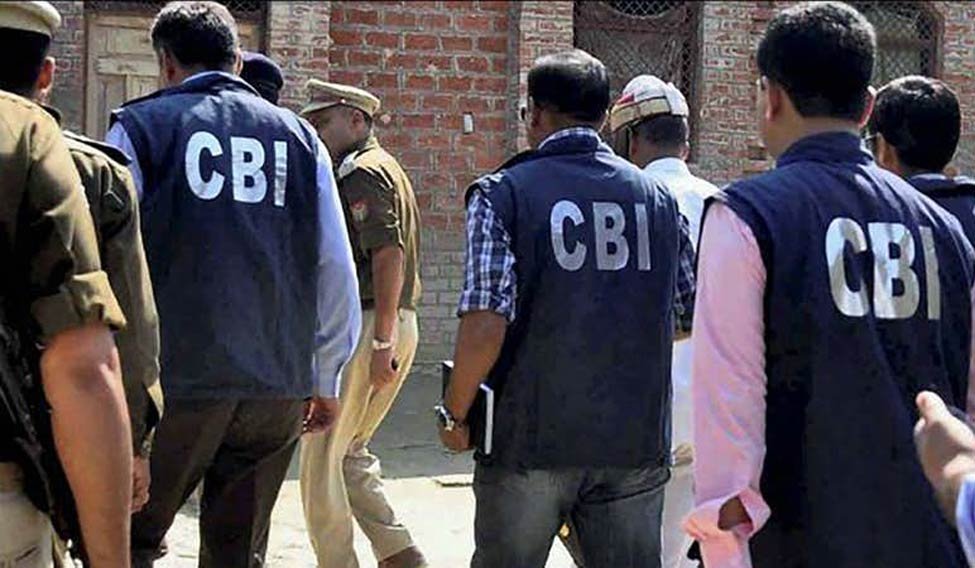
New Delhi: In a major crackdown on the rising menace of ‘digital arrest’ cyber fraud, the Central Bureau of Investigation (CBI) has arrested three accused, including a former bank manager, in connection with a ₹1.6 crore fraud case. The case involves a senior citizen who was allegedly coerced into transferring a large sum under the threat of a fake arrest.
Fake Arrest Threats Turned Fear Into a ₹1.6 Crore Cyber Heist
According to the investigating agency, the high-profile cyber fraud is linked to a well-organised network operating across multiple states through a web of bank accounts and digital channels. The probe was intensified following directions from the Supreme Court of India, after which coordinated search operations were launched.
The CBI conducted raids at five locations across Telangana and Andhra Pradesh, leading to the seizure of crucial documents and electronic devices. Investigators revealed that these devices contain significant digital evidence exposing the entire conspiracy and the complex money trail used to move the defrauded funds.
FCRF Returns With CDPO, Its Premier Data Protection Certification for Privacy Professionals
Former Bank Manager Allegedly Helped Fraudsters
The arrested accused have been identified as Dubbaka Mahesh, Rajesh Kanna, and Vayala Srinivas. Mahesh, a former assistant manager at a private bank, is alleged to have played a key role in facilitating the fraudulent opening of bank accounts. These accounts were reportedly used to channel and conceal the proceeds of the crime.
Raids Reveal a Layered Network of Mule Accounts and Digital Evidence
The other two accused were allegedly involved in arranging ‘mule accounts’—bank accounts used to receive and transfer illicit funds. Through these accounts, the money extracted from the victim was routed across multiple layers to evade detection and tracing by authorities.
Investigations indicate that the victim, a senior citizen, was targeted through a ‘digital arrest’ scam—an emerging cyber fraud technique. The accused allegedly impersonated law enforcement or investigative officials and created a false narrative that the victim was under investigation in a serious case. By instilling fear and psychological pressure, they compelled the victim to transfer money in multiple transactions.
Cyber experts note that ‘digital arrest’ scams have seen a sharp rise in recent times. Fraudsters use video calls, forged documents, and fake identities to make their claims appear credible. Victims are often told that immediate payment is necessary to avoid arrest or legal consequences, pushing them into panic-driven decisions.
A cybersecurity researcher explained that such scams rely heavily on social engineering, exploiting fear, urgency, and confusion to manipulate victims. Beyond technical tools, psychological coercion plays a critical role in extracting money from unsuspecting individuals.
Scam May Be Bigger Than It First Appeared
The CBI has stated that further investigation is underway and that the roles of additional suspects are being examined. Authorities are also probing whether the network has links to larger or even international cybercrime syndicates.
Experts have urged the public to remain vigilant against such threats. Individuals are advised not to trust unsolicited calls, video communications, or messages claiming to be from authorities. Under no circumstances should money be transferred under pressure or fear. In such situations, citizens should immediately contact local police or cybercrime helplines.
Follow for daily updates on cybercrime, corporate fraud, DFIR, hacking, investigations, and digital forensics
