

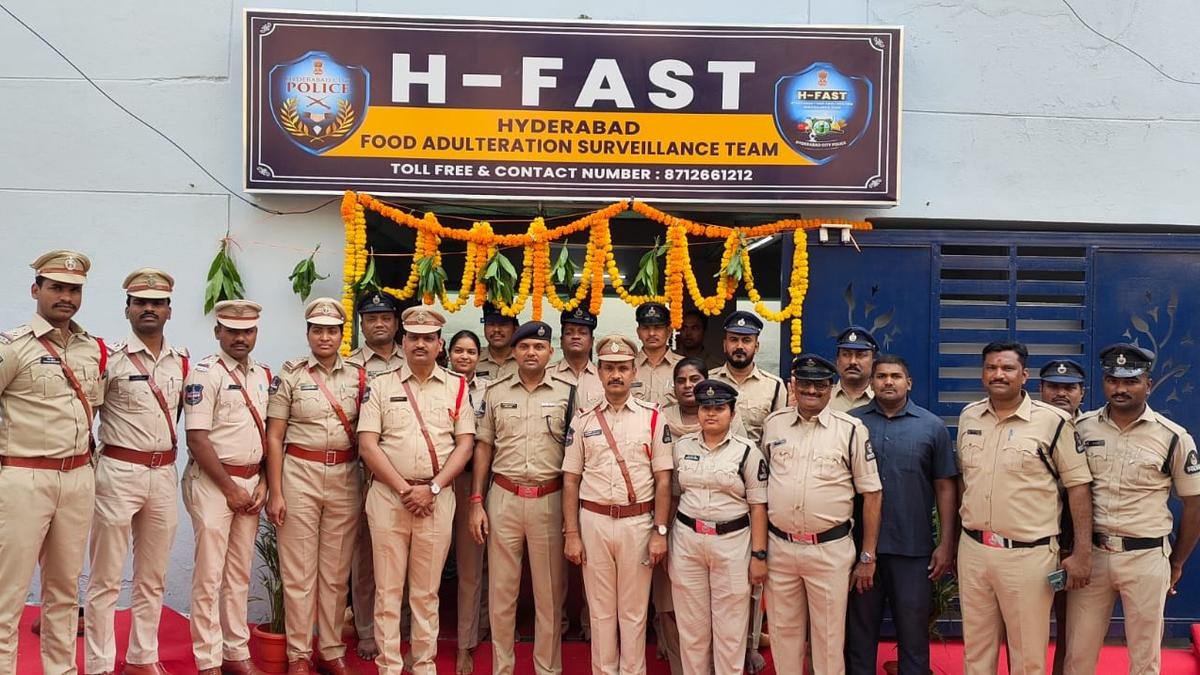
The Hyderabad City Police have concluded the first operational phase of a comprehensive urban safety sweep, seizing approximately 122 tonnes of toxic, sub-standard, and adulterated food materials across the metropolitan area. Operating under a unified multi-agency deployment strategy, the newly established Hyderabad Food Adulteration Surveillance Team completed a intensive one-hundred-day enforcement push resulting in the formal registration of 185 criminal cases. The multi-district intervention unraveled systemic supply chain vulnerabilities where independent manufacturing hubs and distribution platforms were systematically injecting chemically altered commodities into local retail food inventories.
Registration Begins for FutureCrime Summit 2026, India’s Largest Cybercrime Conference
The Adulteration Matrices and Structural Supply Violations
The operational mechanics of the illicit network targeted highly vulnerable consumer sectors, focusing on high-volume dairy products, basic kitchen condiments, and mass-market protein supplies. A specialized unit consisting of 36 trained personnel coordinated directly with inspection cells from the Greater Hyderabad Municipal Corporation, the Food Safety Department, and the Veterinary Department to isolate these illicit production grids.
The criminal networks managed their illicit production and subsequent commercial layering through three heavily synchronized operational phases. The operation initiated with the toxic raw material substitution phase, where manufacturers systematically bypassed health standards by processing over 60 tonnes of hazardous chicken waste and 15 tonnes of sub-standard meat to inflate commercial margins. Moving immediately into the chemical stabilization and camouflage phase, processing hubs utilized restricted chemical agents to artificially accelerate production, deploying hazardous preservation methods to stabilize 27 tonnes of industrial-grade ginger-garlic paste and over 25 tonnes of chemically ripened seasonal fruits. Finally, the sequence culminated in complete market distribution as the networks funneled more than nine tonnes of stale pickles, four tonnes of adulterated khoya, nearly four tonnes of spurious tea powder, and significant volumes of synthetic paneer and contaminated curd directly into municipal hostels, local quick-commerce delivery platforms, and neighborhood fast-food stalls, leaving retail consumers exposed to severe physiological risks.
Regional Case Densities and Grid Mapping Operations
The geographical mapping of the 185 registered offenses revealed highly concentrated manufacturing clusters across the city’s perimeter. Surveillance logs confirm that the Rajendranagar Zone recorded the highest administrative volume with 55 distinct cases, followed by 44 filings in Golconda, 35 in Secunderabad, 21 in Charminar, 13 in Shamshabad, 12 in Jubilee Hills, and five within the Khairatabad sector.
To permanently cripple the logistics backing these operations, the task force transferred 247 supplementary enforcement files to regional food safety officers for immediate statutory closures. These secondary actions target 70 unverified paneer processing plants, 11 illicit samosa production centers, nine unpermitted water packaging facilities, and multiple specialized delivery hubs. Investigators are currently deploying advanced technical audits to evaluate the financial ledgers of these establishments, tracking the sourcing pathways of bulk chemical additives and auditing the digital delivery logs of quick-commerce vendors to isolate secondary distribution routes.
Legal Directives and Systemic Compliance Overhauls
The public exposure of this massive municipal market compromise has prompted senior administrative leadership to issue direct penal warnings to commercial operators. Commenting on the scale of the enforcement data, Hyderabad Police Commissioner V.C. Sajjanar declared that systematic food adulteration cannot be treated as a routine regulatory variance or minor commercial infraction, characterizing the deliberate distribution of toxic preservatives as a heinous attempt to endanger human life. The Commissioner confirmed that the department is actively preparing legal files to invoke the stringent Preventive Detention Act against habitual offenders and ringleaders within the adulteration syndicates.
To permanently insulate the urban food infrastructure from future logistical subversion, municipal boards are enforcing non-negotiable operational guidelines across all hospitality and processing sectors. All active food establishments are now required to hold valid, verifiable FSSAI licenses, mandate the strict use of protective gear among floor staff, and fully adopt the First-In, First-Out inventory tracking protocol to eliminate product decay. Furthermore, enforcement squads have banned the repeated recycling of commercial cooking oils, warning that localized teams will execute continuous surprise biochemical testing across public food zones, while encouraging residents to report suspicious manufacturing activity directly to the central H-FAST communication cells to dismantle illicit networks at an early phase.
